Thomas Sully: The Architect Who Shaped New Orleans
At the close of the 19th century, few figures were as influential in defining the visual landscape of New Orleans as Thomas Sully. A prolific architect whose work spanned residential estates, commercial hubs, and civic institutions, Sully blended technical precision with the unique aesthetic demands of the Gulf South. From grand hotels to private mansions, his legacy remains etched into the historic fabric of Louisiana.
Early Life and Education
Born on November 24, 1855, in Mississippi City, Mississippi, Thomas Sully was the son of George Washington Sully and Harriet Jane Green. He shared his name with his great-uncle, the renowned portrait painter Thomas Sully. Although born in Mississippi, he was raised in New Orleans, the city that would eventually become the primary canvas for his professional career.
Sully's architectural training was diverse and geographically broad. He began his professional journey as an apprentice, honing his craft in Austin, Texas, under the firm Larmour & Wheelock, and later in New York City with Slade & Marshall. This exposure to different regional styles provided him with a versatile toolkit that he brought back to Louisiana in 1877.
Professional Career and Influence
By 1881, Sully had established his own firm in New Orleans. His commitment to the city's growth was evident not only in his clients' projects but in his own life; in 1886, he designed and built his family home at 4010 St. Charles Avenue.
Throughout his career, Sully collaborated with other prominent figures. In 1887, he partnered with Albert Toledano to form Sulley & Toledano. He later transitioned back to solo practice before forming the partnership Sully, Burton & Stone. His influence extended beyond individual buildings to the profession itself; Sully served as the first president of the Louisiana State Association of Architects, a local chapter of the American Institute of Architects (AIA) established in 1887.
Sully also acted as a mentor to the next generation of designers. Notably, New Orleans architect Sam Stone—who later founded Stone Brothers—began his professional career working within Sully's firm.
One of his more unique professional achievements was the design of a top-floor penthouse office addition for the Hennen Building. This addition replaced a rooftop garden and served as the headquarters for his own architectural practice.
Key Facts
- Full Name: Thomas O. Sully
- Lifespan: November 24, 1855 – March 15, 1939
- Primary Location: New Orleans, Louisiana
- Professional Milestone: First president of the Louisiana State Association of Architects (AIA).
- Notable Works: Columns Hotel, Sully Mansion, and Poplar Grove Plantation.
- Education: Apprenticed in Austin, Texas, and New York City.
Notable Architectural Works
Sully's portfolio is characterized by its diversity, ranging from the opulent to the utilitarian. His work on the Columns Hotel (1883) remains one of the most recognizable landmarks on St. Charles Avenue.
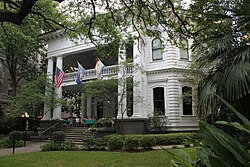
Beyond hospitality, he designed the NRHP-listed Poplar Grove Plantation (1884) in Port Allen and the Abita Springs Pavilion (1888). His civic contributions include the Confederate Memorial Hall Museum (1890) and the Orphanage (1887), a building constructed in response to a yellow fever epidemic that now serves as apartments.
Residential architecture was a particular strength. The Sully Mansion (1890) on Prytania Street stands as a testament to his style and currently operates as a bed and breakfast.
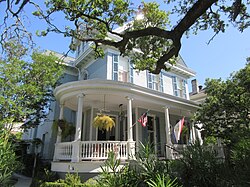
Other significant projects include the St. Charles Hotel (third version, 1896), the Gulfport Yacht Club clubhouse (1903), and various educational and religious structures such as the Frank T. Howard No. 1 School and the Valence Street Baptist Church.
| Project Name | Year | Location | Current Status/Note |
|---|---|---|---|
| Columns Hotel | 1883 | New Orleans, LA | Historic Hotel |
| Poplar Grove Plantation | 1884 | Port Allen, LA | NRHP-listed |
| Sully Mansion | 1890 | New Orleans, LA | Bed & Breakfast |
| Confederate Memorial Hall Museum | 1890 | New Orleans, LA | Museum |
| Hennen Building (Addition) | 1893 | New Orleans, LA | Penthouse Office |
| St. Charles Hotel (3rd version) | 1896 | New Orleans, LA | Hospitality |
Personal Interests and Later Life
Outside of architecture, Sully was a passionate boating aficionado. He spent two terms as the commodore of the Southern Yacht Club in New Orleans and was an active designer of boats. He was frequently associated with his yacht, the Helen.
Sully retired from his architectural practice in 1906. He spent his later years in the Sully-Wormouth House, where he resided until 1915. He passed away from pneumonia on March 15, 1939, at the age of 83. Today, researchers can find his archival documents at the Southeastern Architectural Archive at Tulane University.
Frequently Asked Questions
Who was Thomas Sully named after?
He was named after his great-uncle, the famous portrait painter Thomas Sully (1783–1872).
Where did Thomas Sully receive his architectural training?
Sully apprenticed with the firms Larmour & Wheelock in Austin, Texas, and Slade & Marshall in New York City.
What was Sully's role in the American Institute of Architects?
He served as the first president of the Louisiana State Association of Architects, which was a chapter of the AIA established in 1887.
Which of Sully's buildings are listed on the National Register of Historic Places (NRHP)?
Both the Poplar Grove Plantation in Port Allen and the Abita Springs Pavilion are NRHP-listed works.
What was the original purpose of the building now known as an apartment building on Magazine Street?
The building, known as The Orphanage (1887), was originally constructed to serve as an orphanage following a yellow fever epidemic.