Vascular Plants: The Biological Engineering of Tracheophytes
From the towering conifers of ancient forests to the delicate flowering plants in a backyard garden, vascular plants—scientifically known as tracheophytes—form the backbone of terrestrial ecosystems. Unlike mosses, which are limited in size by their lack of internal transport systems, vascular plants have evolved sophisticated biological plumbing that allows them to grow large, reach toward the sunlight, and thrive in diverse environments across the globe.
The term "vascular" is derived from the Latin vasculum, meaning "duct," referring to the specialized tissues that move life-sustaining resources throughout the organism. This evolutionary leap, which began in the mid-Silurian period with early forms like Cooksonia, transformed the face of the planet.
Key Facts
- Scientific Name: Tracheophyta (Tracheophytes).
- Temporal Range: Existed from the Silurian period to the present (approx. 425 million years ago).
- Core Components: Xylem (water transport) and Phloem (nutrient transport).
- Primary Life Phase: The sporophyte (diploid) is the dominant generation.
- Diversity: Includes approximately 300,000 accepted species, such as ferns, conifers, and flowering plants.
The Anatomy of Transport: Xylem and Phloem
The defining characteristic of a tracheophyte is the presence of vascular tissue. These tissues are typically organized into structures called vascular bundles, where a strand of xylem sits adjacent to a strand of phloem.
Xylem: The Water Highway
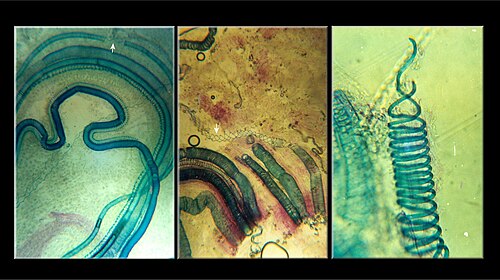
The xylem is responsible for conducting water and inorganic minerals from the roots up to the rest of the plant. In flowering plants, this tissue consists of vessels, while in other vascular plants, it is composed of tracheids. Xylem cells are unique because they are dead, hard-walled, and hollow at maturity. Their cell walls are reinforced with lignin, a complex polymer that provides the structural rigidity necessary for plants to stand upright.
Phloem: The Nutrient Network
While xylem moves water upward, the phloem manages the distribution of organic compounds, such as sucrose, produced during photosynthesis. Unlike the dead cells of the xylem, phloem consists of living cells known as sieve-tube members. Because these cells lack nuclei and ribosomes, they rely on adjacent companion cells to maintain their biological functions and keep them alive.
How Plants Move Water: Transpiration and Osmosis
One of the most remarkable feats of plant biology is transpiration—the process by which water moves through a plant and evaporates from leaves via small pores called stomata. This movement is largely passive, meaning the plant spends very little energy to move water.
As water evaporates from the leaf surfaces, it creates a transpiration pull (or tension). Because water molecules are connected by hydrogen bonds, they act like a continuous chain; as one molecule evaporates at the top, it pulls the next one up, creating a steady upward flow through the xylem. This process also assists in the absorption of soluble salts and nutrients from the soil through the roots via osmosis.
In certain conditions, such as at night when stomata are closed, water pressure can build up. To prevent damage, plants may excrete excess water through specialized pores called hydathodes, a process known as guttation.
Classification and Evolution
Vascular plants are categorized into several major groups based on their evolutionary lineage and reproductive methods. While they were historically referred to as "higher plants," modern science views this term as unscientific, preferring to focus on their phylogenetic relationships.
| Group | Common Examples | Key Characteristics |
|---|---|---|
| Lycophytes | Clubmosses | Non-seed-bearing vascular plants |
| Monilophytes | Ferns, Horsetails | Spore-reproducing vascular plants |
| Gymnosperms | Conifers, Cycads, Ginkgo | Seed-bearing, "naked" seeds |
| Angiosperms | Flowering plants | Seed-bearing with flowers and fruits |
Frequently Asked Questions
What is the difference between vascular and non-vascular plants?
Vascular plants possess specialized tissues (xylem and phloem) to transport water and nutrients, allowing them to grow much larger. Non-vascular plants, such as mosses, lack these tissues and are generally restricted to small sizes and moist environments.
Why is lignin important for plants?
Lignin is a polymer found in the cell walls of xylem. It provides the structural strength and rigidity required for plants to grow tall and support their own weight against gravity.
What is the role of the sporophyte in vascular plants?
In vascular plants, the sporophyte is the principal generation. It is a diploid phase (containing two sets of chromosomes) that is responsible for producing spores through the process of meiosis.
How do plants transport food from leaves to roots?
Plants use the phloem to transport organic nutrients, like sugars produced in the leaves (the source), to areas of growth or storage, such as the roots and shoots (the sinks).
Can plants move water without using energy?
Yes. Much of the water movement in vascular plants is driven by transpiration pull and osmosis, which are largely passive processes that do not require the plant to expend significant metabolic energy.