Units of Measurement: The Science and History of Standardized Quantities
A unit of measurement is a definite magnitude of a quantity, defined and adopted by convention or law, used as a standard for measuring the same kind of quantity. Essentially, any other quantity of that type can be expressed as a multiple of that unit. For example, length is a physical quantity, and the metre (m) is a unit of length representing a predetermined, definite length. When we refer to "10 metres," we are describing ten times that specific, predetermined length.
The ability to define, agree upon, and practically apply units has been vital to human progress from ancient times to the modern era. While many different systems once coexisted, the world has largely moved toward a global standard: the International System of Units (SI), which is the modern form of the metric system.
Key Facts
- Metrology is the formal science of developing nationally and internationally accepted units of measurement.
- The International System of Units (SI) is the most widely used global standard for measurement.
- The International Bureau of Weights and Measures (BIPM) ensures worldwide uniformity and traceability to the SI.
- The United States is the only industrialized nation that has not fully converted to the metric system, operating as a dual-system society.
- Standardization is critical; errors in unit conversion have historically led to significant scientific and aviation accidents.
The Evolution of Measurement Systems
Units of measurement were among the earliest tools invented by humans. Primitive societies required rudimentary measures for constructing dwellings, fashioning clothing, or bartering food and raw materials. Before the decimal metric system was established in France during the late 18th century, many units of length were determined by the size of human body parts.
The earliest known uniform systems of measurement emerged in the 4th and 3rd millennia BC among the ancient peoples of Mesopotamia, Egypt, the Indus Valley, and potentially Elam in Persia. Even religious texts, such as the Bible, emphasize the importance of fair measures, commanding honesty in trade.
From the Magna Carta to the Metric Convention
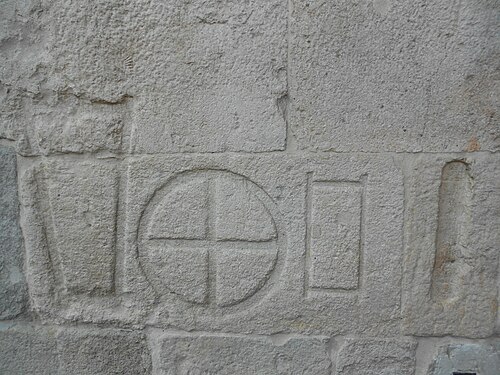
As civilizations grew, the need for legal regulation increased. The Magna Carta of 1215, signed by King John, included specific clauses to standardize measures for wine, ale, corn, and cloth throughout the realm. This laid the groundwork for the concept of "statute measure," where national laws define standard units to prevent retail fraud.
The systematic effort to create a universal system began in 1790 when the French National Assembly tasked the French Academy of Sciences with developing a new standard. This precursor to the metric system gained international traction following the Metric Convention Treaty of 1875, signed by 17 nations. This treaty led to the establishment of the General Conference of Weights and Measures (CGPM), which eventually produced the current SI system adopted in 1954.
Understanding SI and Other Systems
Modern measurement systems are categorized into several types. The International System of Units (SI) is based on seven base units: the second, metre, kilogram, ampere, kelvin, mole, and candela. All other SI units are derived from these fundamentals.
Common Systems in Use Today
- Metric System (SI): The international standard used in science, medicine, and most of the world.
- Imperial System: Historically used in the British Commonwealth and former British Empire.
- United States Customary System: The primary system used in the U.S. outside of specialized scientific and military sectors.
While most systems use arbitrary values, natural units in physics are based on physical principles to simplify complex equations. An example is atomic units (au), designed to simplify the wave equation in atomic physics.
The Importance of Precision and Dimensional Homogeneity
In science and engineering, units must be handled with mathematical rigor. According to ISO 80000-1, any value of a physical quantity is expressed as the product of a numerical value and a unit. For example, in "2 metres," 2 is the numerical value and the metre is the unit.
A critical concept is dimensional homogeneity. This rule dictates that units can only be added or subtracted if they are of the same type (e.g., you cannot add metres to seconds). However, units can be multiplied or divided, which allows for the creation of derived units, such as the Newton (N), which is equivalent to 1 kg⋅m/s².
The High Cost of Measurement Errors
Miscommunication regarding units can have catastrophic real-world consequences. History provides several sobering examples:
- NASA Mars Climate Orbiter (1999): The spacecraft was destroyed because different computer programs used different units (newtons versus pound force).
- Korean Air Flight 6316 (1999): A cargo flight was lost due to the crew confusing tower instructions in metres with altimeter readings in feet.
- The "Gimli Glider" (1983): A Boeing 767 ran out of fuel mid-flight because of confusion between metric and imperial measures regarding mass and volume.
- Christopher Columbus (1480s): Columbus's estimates for the Earth's circumference were roughly 25% too small because he confused the Arabic mile with the much shorter Italian mile.
Summary of Measurement Systems
| System | Primary Usage | Key Characteristic |
|---|---|---|
| International System (SI) | Global science, medicine, and industry | Based on seven fundamental base units |
| Imperial System | Former British Empire/Commonwealth | Derived from older English units |
| US Customary | United States (general use) | Dual-system usage with SI in specialized fields |
| Natural Units | Theoretical Physics | Based on physical principles (e.g., atomic units) |
Frequently Asked Questions
What is metrology?
Metrology is the scientific study and practice of measurement, involving the development of nationally and internationally accepted units and ensuring their accuracy.
What is the difference between base and derived units?
Base units are fundamental quantities (like the metre or second) that are not defined by other units. Derived units are created by combining base units through multiplication or division (like the Newton or Joule).
Why does the United States still use the US Customary System?
While the US is a dual-system society that uses SI in science and the military, it remains the only industrialized nation that has not fully converted to the metric system for general daily use.
How does unit conversion work?
Unit conversion is the process of changing the unit of a quantity using a multiplicative conversion factor. This changes the unit used to express the value without changing the actual physical quantity itself.
Why is standardization so important in trade?
Standardization ensures fairness and transparency. By having legally defined "statute measures," governments can prevent fraud and ensure that consumers receive the exact amount of goods they pay for.