Millimetre: A Comprehensive Guide to the SI Unit of Length
The millimetre (symbol: mm) is a fundamental unit of length within the International System of Units (SI). Whether you are measuring the thickness of a sheet of paper or calculating the wavelength of a high-frequency signal, the millimetre provides a precise scale for small-scale measurements. Known as "millimeter" in American English, the term is derived from the metric prefix mille, meaning one thousand, combined with the metre.
Key Facts
- SI Symbol: mm
- Relationship to Metre: 1/1,000 of a metre
- Relationship to Inch: Exactly 5/127 of an inch (approximately 0.03937 in)
- Standard Definition: The distance light travels in 1/299,792,458,000 of a second
- Common Use: Precision engineering, manufacturing, and electronics
Scientific Definition and Scale
To understand the millimetre, one must first understand the metre, which is the SI base unit of length. Since 1983, the metre has been defined by the speed of light: it is the length of the path travelled by light in a vacuum during a time interval of 1/299,792,458 of a second. Consequently, a millimetre is defined as the distance light travels in 1/299,792,458,000 of a second.
In the hierarchy of metric measurements, the millimetre sits between the centimetre and the micrometre. It is a vital component of the metric system, allowing for granular accuracy in scientific and industrial applications.
Metric and Imperial Conversions
Because the inch is officially defined as exactly 25.4 millimetres, converting between metric and imperial units is a matter of precise mathematical ratios. This is particularly important in international manufacturing and construction where specifications may cross borders.
| Unit | Conversion Value (1 mm =) |
|---|---|
| Micrometres (µm) | 1,000 |
| Centimetres (cm) | 0.1 |
| Metres (m) | 0.001 |
| Kilometres (km) | 0.000001 |
| Inches (in) | 0.039370 |
| Feet (ft) | 0.0032808 |
Practical Applications and Measurement
In everyday life, we encounter millimetres in various forms. A standard sheet of copy paper is typically about 0.1 mm thick, while a human hair is roughly 0.02 to 0.04 mm—the smallest object generally visible to the naked eye. In the world of stationery, mechanical pencil leads are frequently sold in 0.5 mm and 0.7 mm diameters.
In technical fields, the millimetre is essential for high-precision work:
- Engineering: Precision-machined parts and automotive components are often specified in millimetres.
- Electronics: Printed circuit boards (PCBs) require millimetre-scale accuracy for component placement.
- Instrumentation: While standard rulers use millimetre increments, precision engineering rulers may use 0.5 mm increments, and digital calipers can measure down to 0.01 mm.
Millimetre Waves and Communication
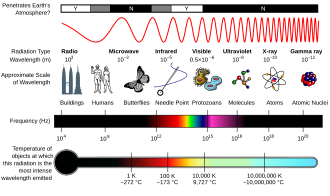
Beyond physical objects, the millimetre scale is critical in telecommunications. Millimetre-wave communications utilize frequencies between 30 and 300 GHz. For example, a microwave with a frequency of 300 GHz has a wavelength of exactly 1 mm. These high-frequency waves allow for high-speed data transfer, reaching speeds such as 10 Gbps.
Terminology and Typography
While the term "mil" is sometimes used colloquially to refer to a millimetre, users should exercise caution. In the United States, a "mil" traditionally refers to one-thousandth of an inch, which can lead to significant errors in measurement if confused with millimetres.
In digital typography, particularly in East Asian scripts (CJK), Unicode provides specific square symbols to ensure unit symbols align correctly with text characters:
- ㎜ (U+339C): Square Millimetre
- ㎟ (U+339F): Square Millimetre Squared
- ㎣ (U+33A3): Cubic Millimetre
Frequently Asked Questions
How many millimetres are in an inch?
One inch is defined as exactly 25.4 millimetres. Therefore, one millimetre is approximately 0.03937 inches.
What is the difference between a millimetre and a micrometre?
A millimetre is a larger unit of length. One millimetre is equal to 1,000 micrometres (also known as microns).
Is "mil" the same as a millimetre?
Not necessarily. While some use "mil" colloquially for millimetre, in the United States, a "mil" specifically refers to 1/1000th of an inch.
What is the smallest thing I can see with my eyes in millimetres?
The human eye can generally see objects as small as 0.02 to 0.04 mm, such as a very thin human hair.
Why are millimetres used in high-speed data transfer?
Millimetre-wave communications use frequencies (30–300 GHz) that correspond to wavelengths of approximately 1 mm, which enables high-speed data transfer rates like 10 Gbps.