Tropical Climates: Characteristics and Köppen Classifications
Tropical climates are characterized by consistent warmth, high humidity, and intense sunlight throughout the year. In the Köppen climate classification—the most widely used system for categorizing the world's climates—these regions are designated as Group A. To be classified as a tropical climate, a region must maintain a monthly average temperature of 18 °C (64 °F) or higher during its coolest month.
These climates are typically found within 23.5 degrees latitude of the Equator in both the Northern and Southern Hemispheres. This includes vast areas across Central America, northern and central South America, central Africa, southern Asia, northern Australia, and various Pacific islands.
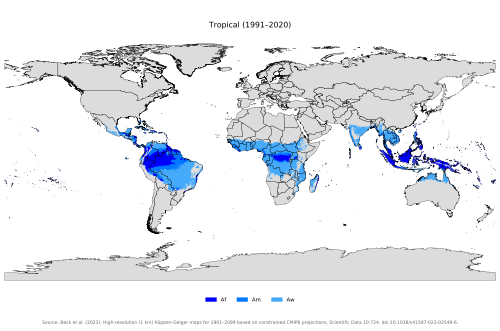
Key Facts
- Temperature: The coolest month must average at least 18 °C (64 °F).
- Seasonality: Most tropical regions experience only two seasons: a wet season and a dry season.
- Temperature Range: Annual temperature fluctuations are generally very small.
- Classification: Divided into three main subtypes (Af, Am, Aw/As) based on the precipitation of the driest month.
- Vegetation: High heat and moisture support diverse plant life, including epiphytes (plants that grow on other plants) and layered forest structures.
The Three Types of Tropical Climates
The primary distinction between the three tropical subtypes is the amount of precipitation received during the driest month (P dry).
Tropical Rainforest Climate (Af)
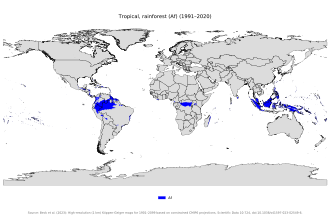
The tropical rainforest climate, denoted as Af (where 'f' stands for the German word feucht, meaning moist), is typically found within 5 to 10 degrees of the equator. These regions experience high yearly average temperatures between 21 and 30 °C (70 to 86 °F) and can receive over 100 inches of rain annually.
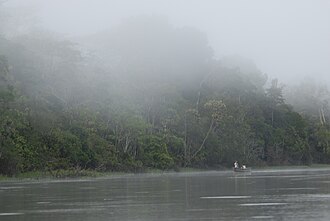
Because precipitation is evenly distributed, there is virtually no drought period. This abundance of water leads to high rates of transpiration—the process where water evaporates from plant surfaces into the atmosphere—which further increases local humidity. This environment supports a complex vertical stratification of vegetation to maximize sunlight exposure.
Tropical Monsoon Climate (Am)
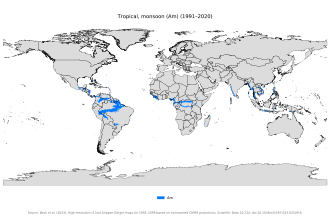
The tropical monsoon climate (Am) is characterized by high temperatures and plentiful precipitation, but unlike the rainforest, it features a short dry season, usually occurring in the winter. These regions are common in South and Southeast Asia (between 10°N and the Tropic of Cancer), West Africa, and South America.
The monsoon climate is defined by uneven precipitation throughout the year. It typically follows three seasons: a cool dry season (fall to late winter), a hot dry season (spring), and a rainy or monsoon season (summer). The vegetation often forms a layered structure consisting of a surface layer of shrubs and grasses, an understory of trees up to 15 meters, a canopy layer of trees 25 to 40 meters tall, and an emergent layer of sporadic trees exceeding 35 meters.
Tropical Savanna Climate (Aw or As)
Also known as the tropical wet and dry climate, the savanna (Aw for dry winters or As for dry summers) generally occurs between 10° and 25° north and south latitudes. These regions are often found on the outer margins of the tropics, including central Africa, northern and eastern Australia, and parts of South America.
Savannas have annual precipitation between 700 and 1000 mm, with the driest months receiving less than 60 mm of rain. The landscape is dominated by flat grasslands with scattered woodlands, a biome that covers approximately 20% of the Earth's surface.
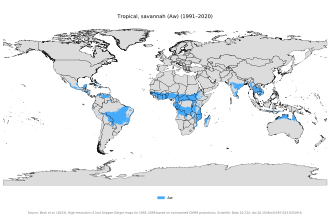
Summary of Tropical Climate Subtypes
| Climate Type | Köppen Code | Driest Month Precipitation (P dry) | Primary Characteristics | Typical Vegetation |
|---|---|---|---|---|
| Rainforest | Af | ≥ 60 mm | No drought; high humidity | Banana, Coconut, Bamboo |
| Monsoon | Am | Between 0 and 60 mm | Short dry season; heavy summer rain | Teak, Sandalwood, Rosewood |
| Savanna | Aw / As | < 60 mm | Pronounced wet/dry seasons | Acacia, Eucalyptus, Lemongrass |
Frequently Asked Questions
What defines a tropical climate in the Köppen system?
A tropical climate is defined as a region where the mean temperature of the coldest month is 18 °C (64 °F) or higher and does not meet the criteria for B-group (dry) climates.
How do the three tropical subtypes differ?
They are distinguished by their precipitation levels during the driest month. Rainforests have the most consistent rain, monsoons have a short dry season, and savannas have a more pronounced dry season with the lowest monthly rainfall.
What is transpiration and why is it important in rainforests?
Transpiration is the process by which water evaporates from the surface of living plants into the atmosphere. In tropical rainforests, the massive volume of trees contributes significantly to the overall humidity of the climate through this process.
What are epiphytes?
Epiphytes are plants that grow on other plants. The high temperatures and humidity of tropical climates provide the ideal environment for these plants to thrive.
Which crops are commonly associated with tropical climates?
Tropical regions are rich in valuable resources, including coffee, cocoa, and oil palm.