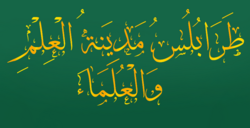
Tripoli: The City of Knowledge and Scholars
Known by the evocative nickname "The City of Knowledge and Scholars," Tripoli is a cornerstone of Lebanon's North Governorate. With a population of 892,398 and a rich tapestry of cultural layers, the city serves as a living museum where Phoenician roots, Crusader fortifications, and Mamluk elegance converge. From its strategic port to its avant-garde modern architecture, Tripoli offers a profound glimpse into the Mediterranean's complex history.
Key Facts
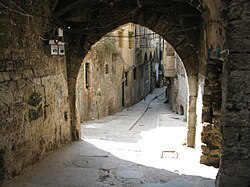
- Location: North Governorate, Lebanon (34°26′12″N 35°50′04″E).
- Total Area: 27.39 km².
- Historical Significance: Established as a Phoenician colony in the 8th century BC.
- UNESCO Site: Home to the Rachid Karami International Fair, designed by Oscar Niemeyer.
- Demographics: Predominantly Sunni Muslim (82.15%), with Alawite (8.67%) and Christian (7.31%) populations.
A Journey Through History
Tripoli's history is a chronicle of conquest and resilience. Evidence of settlement dates back to 1400 BC, but the city flourished as a Phoenician trading station in the 8th century BC. Over the millennia, it transitioned through Persian, Hellenistic, and Roman rule, the latter beginning around 64 BC. A devastating earthquake and tsunami in 551 AD severely damaged the Byzantine city.
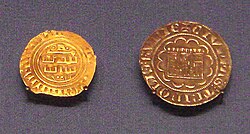
The Arab Muslim conquest in 635 AD ushered in a period of commercial growth and shipbuilding under the Umayyads. During the Fatimid era, Tripoli evolved into a renowned center of learning. However, this intellectual golden age was interrupted in 1109 when Crusaders captured the city, leading to the burning of the Dar al-'Ilm (House of Knowledge), a library containing thousands of volumes.
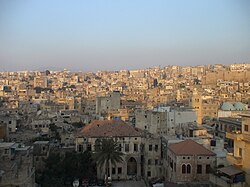
The Mamluk and Ottoman Eras
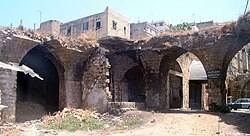
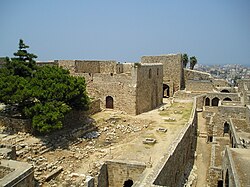
In 1289, the Mamluks reclaimed the city, destroying the old port and establishing a new inland city near the castle. This era saw a diverse population of Arabs, North Africans, and Christians. Later, from 1516 to 1918, the Ottoman Empire maintained Tripoli's commercial importance. Notable Ottoman contributions include the restoration of the Citadel by Suleiman the Magnificent and the construction of Khan al-Saboun (the Soap Khan), originally a military barrack used to maintain order.
Architectural Landmarks and Cultural Heritage
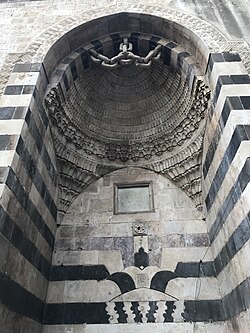
Tripoli is defined by its stunning religious and secular architecture. The Mansouri Great Mosque, dating from the late 13th century, features Mamluk arches and a courtyard, though its minaret is believed to be an older Christian structure.
![The Mansouri Great Mosque (late 13th century). The arches and courtyard date from the Mamluk period but the minaret is believed to be an earlier Christian structure.[26]](/images/9d/c6/9dc6011625a8dda4afae9aa2a1f3276cffbade945887a2c69fa1e0cc61792c99.jpg)
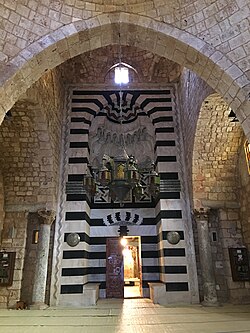
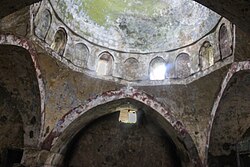
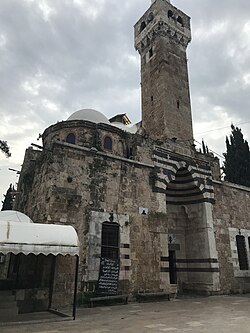
Other significant sites include the Taynal Mosque (built in 1336) and the Al-Burtasi Mosque. The city's traditional commercial life is still visible in the Tailors' Khan (Khan el-Khayyatin) and the various historic hammams, such as Hammam al-Jadid and Hammam an-Nuri.
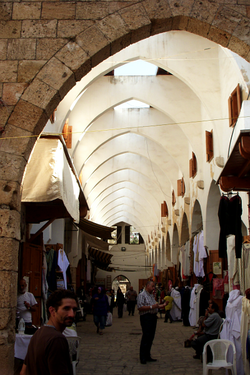
The Rachid Karami International Fair
A striking contrast to the ancient city is the Rachid Karami International Fair, a UNESCO World Heritage Site. Commissioned in 1962 and designed by the legendary Brazilian architect Oscar Niemeyer, this 75.6-hectare complex was intended for a World's Fair. Construction was halted by the Lebanese Civil War in 1975, leaving 15 partly-completed buildings that stand as masterpieces of modernist architecture.
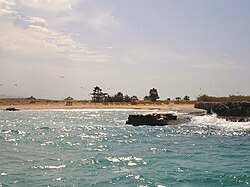
Geography, Climate, and Economy
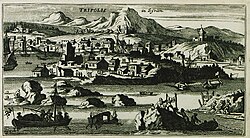
Tripoli is situated at a low elevation of 6 meters at El Mina. Its Mediterranean climate is characterized by mild, rainy winters and hot, dry summers. The city's economy is bolstered by the Tripoli Special Economic Zone (TSEZ), established in 2008. This 55-hectare site adjacent to the port offers tax exemptions to attract investment projects with capital exceeding $300,000.
| Category | Detail/Value |
|---|---|
| Average Annual Max Temp | 23.6°C (74.5°F) |
| Average Annual Min Temp | 16.1°C (60.9°F) |
| Primary Religion | Sunni Islam (82.15%) |
| Total Population | 892,398 |
| Key Economic Zone | TSEZ (55 hectares) |
Modern Challenges
Despite its heritage, Tripoli has faced significant socio-economic hardships. Following the departure of the Syrian army in 2005, living conditions declined. By 2016, the UN Human Settlements Program estimated that 58% of Lebanese residents in Tripoli lived in poverty, a situation exacerbated by the 2019 financial crisis.
Frequently Asked Questions
![Taynal Mosque built in 1336[50]](/images/dc/da/dcda8fd268af71b954b5e71b7cf77f3b9ffc624d47d38af9852915f830da6545.jpg)
Why is Tripoli called the "City of Knowledge and Scholars"?
The city earned this nickname due to its historical role as a center of learning, particularly during the Fatimid period and the era of the Dar al-'Ilm (House of Knowledge) library.
Who designed the Rachid Karami International Fair?
The complex was designed by the renowned Brazilian architect Oscar Niemeyer starting in 1962.
What is the significance of the Citadel of Tripoli?
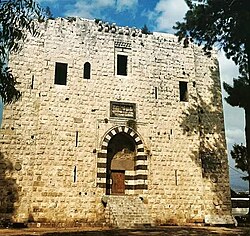
Also known as the Castle of Saint-Gilles, it was originally built by Raymond de Saint-Gilles in 1102 and later rebuilt by Emir Essendemir Kurgi in 1307–08.
What is the Tripoli Special Economic Zone (TSEZ)?
Established in 2008, the TSEZ is a 55-hectare area near the port that provides tax and duty exemptions for investment projects meeting specific capital and employment criteria.
Which religious groups reside in Tripoli?
The population is predominantly Muslim (approximately 92.21%), with a significant Sunni majority, alongside Alawites and a Christian minority (approximately 7.31%).