Tohono O'odham: Culture, Society, and Resilience in the Sonoran Desert
The Tohono O'odham are a resilient Indigenous people whose ancestral lands span the arid landscapes of southern Arizona and northern Mexico. Sharing deep linguistic and cultural roots with the Akimel O'odham (People of the River), historically known as the Pima, the Tohono O'odham have developed a sophisticated way of life tailored to one of the most challenging environments in North America.
Rather than being defined by a centralized political structure, the O'odham identity is forged through shared traditions, language, legends, and the collective experience of surviving in a beautiful but inhospitable land. While some historians suggest they migrated north roughly 300 years ago, others believe they are descendants of the Hohokam, the ancient builders of the Casa Grande Ruins.
Key Facts
- Ancestry: Closely related to the Akimel O'odham; potential descendants of the Hohokam.
- Social Structure: Intensely communal, focusing on family roles and village loyalty.
- Dietary Staple: The Saguaro cactus fruit is central to both nutrition and spiritual ceremony.
- Agriculture: Utilized Ak cin (monitoring storm clouds) for monsoon-based farming.
- Health Crisis: Government intervention in water rights led to a shift toward processed foods and high rates of type 2 diabetes.
- Education History: Children were historically forced into assimilation through institutions like the Tucson Indian School.
Social Structure and Daily Life
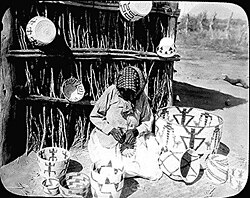
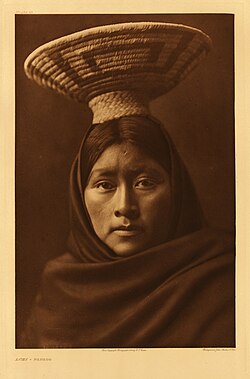
Tohono O'odham society is built upon the family unit, where every member holds a specific, vital role. Women manage food preparation, gather the majority of the diet, weave baskets, and create pottery, such as ollas (ceramic jars). Men are responsible for hunting and the heavier tasks of farming. In these communities, elders hold significant prominence, and decisions are typically made by men in a communal fashion.
Education is an informal, lifelong process. Children are free to play until age six, after which they begin learning their societal roles from grandparents and older siblings, as parents are often occupied with survival tasks.
Marriage and Community
Marriages are generally arranged by parents or older siblings and typically occur between different villages to avoid marrying close relatives. While wives usually move to the husband's village, this can be reversed if the wife's village requires more labor. Polygamy is permitted, and while women have limited choice in their partners, they maintain the right to leave an unhappy marriage and return to their home village.
The culture is defined by extreme generosity. Hunters share their catches with the entire village, and supplies are provided to those in need with the expectation of future reciprocity. While loyalty is primarily tied to the individual village rather than a centralized nation, the O'odham maintain friendly relations with neighbors, gathering for trade, socialization, and athletic competitions.
Recreation and Sport
Gambling is a common pastime, with men using sticks similar to dice and women tossing painted sticks to bet beads, shells, or blankets. Racing is the most prestigious sport, with daylong courses spanning 10–15 miles (16–24 km). Additionally, women play toka, a game similar to field hockey that remains a school sport on modern reservations.
Regional Subgroups
Despite a shared heritage, the O'odham were historically divided into several loosely connected groups, often distinguished by their geography, dialect, and origin stories. By the 1700s, at least six distinct groups existed.
| Group | Primary Location/Trait | Key Characteristics |
|---|---|---|
| Himuris | Modern Mexico | First to make contact with Europeans. |
| Hia C-eḍ | Western border | Hunter-gatherers; fastest dialect; large migration ranges. |
| Hu:huhla | East of Hia C-eḍ | Considered the oldest group; often referred to as "orphans." |
| Kohatk | Northern extent | Intermingled and traded heavily with the Pima. |
| Koklolodi | Central region | Located between the Himuris and Totokwan. |
| Sobapuris | Easternmost (San Pedro/Santa Cruz rivers) | Permanent settlements; suffered most from colonization. |
| Totokwan | Gu Achi Peak | Inhabited the northern ceremonial center. |
Diet and Agricultural Ingenuity
The traditional O'odham diet is a blend of foraging and strategic farming. They consume wild game, insects, and plants such as ironwood seed, honey mesquite, and organ-pipe cactus fruit. They also cultivate white tepary beans, peas, and Spanish watermelons.
The Saguaro Harvest
The Saguaro cactus is central to O'odham life. Every June, villages travel to saguaro stands to harvest fruit using a kuibit (a tool made from bundled saguaro ribs). The fruit is boiled into a thick syrup, as it spoils quickly. This syrup is used for jams and porridge, and a portion is fermented by the medicine man into a ceremonial wine. This wine is used in rainmaking celebrations, and the resulting state of intoxication is viewed as holy and portentous.
Monsoon Farming
To survive the desert, farmers use a method called Ak cin ("mouth of the wash"), where they monitor the horizon for storm clouds. When rain is imminent, they quickly seed their plantations to capture the summer monsoons, often planting in basins designed to hold the water.
Challenges of Colonization and Modernity
The arrival of Anglo-European settlers brought systemic oppression. Under the Dawes Act of 1888, communal lands were broken into individual allotments, and "surplus" land was sold to non-Natives. Missionaries from Presbyterian, Catholic, and Mormon faiths worked to convert the O'odham, while the cotton industry utilized them as agricultural labor.
One of the most damaging policies was the mandatory attendance at Indian boarding schools, such as the Tucson Indian School (founded in 1886). These institutions forced children to speak English and practice Christianity, aiming to assimilate them into the American mainstream by training them for low-level domestic and agricultural labor.
The Health Crisis
In the 1960s, government intervention restricted access to traditional water sources, making it impossible to grow nutrient-dense crops like tepary beans and squash. This forced a shift toward high-fat, high-calorie processed foods, leading to a diabetes epidemic. Currently, nearly 60% of the adult population and 75% of children are affected by type 2 diabetes.
Cultural Revitalization
Despite these hardships, the Tohono O'odham continue to preserve their heritage. The annual Sells Rodeo and Parade, held since 1938, celebrates traditional frontier skills. In the arts, figures like Michael Chiago and Leonard Chana have gained recognition for depicting traditional O'odham life, while Danny Lopez has been honored for his lifelong commitment to sustaining the desert people's way of life.
Organizations like Tohono O'odham Community Action (TOCA) are working to combat health crises by restoring traditional food systems and advocating for the restoration of water privileges to bring back ancestral crops.
Frequently Asked Questions
Who are the Tohono O'odham?
They are an Indigenous people of southern Arizona and northern Mexico, closely related to the Akimel O'odham (Pima) and potentially descended from the ancient Hohokam culture.
What is the significance of the Saguaro cactus?
The Saguaro provides a critical food source (fruit) and is used to create a ceremonial wine used in rainmaking rituals, which is the only time alcohol is traditionally consumed.
How did the Tucson Indian School affect the community?
Founded in 1886, the school was part of a federal effort to assimilate Native children by forcing them to abandon their culture, language, and religion in favor of English and Christianity.
Why is there a high rate of diabetes in the tribe?
Government intervention in the 1960s closed off water sources, preventing the cultivation of traditional, healthy crops and forcing a transition to processed, high-calorie diets.
What is Ak cin?
Ak cin, meaning "mouth of the wash," is a traditional farming technique where farmers monitor storm clouds to time their seeding with the arrival of summer monsoon rains.