Thomas Austin and the Introduction of Rabbits to Australia
Thomas Austin is a name etched into Australian history, though perhaps for a reason he never intended. An English settler who arrived in the early 19th century, Austin became a prominent pastoralist and a member of the Acclimatisation Society of Victoria—an organization dedicated to introducing foreign plants and animals to the Australian environment to make it feel more like home for European settlers.
While many settlers brought domestic animals to the colonies, Austin's decision to release wild rabbits for sport triggered one of the most significant biological invasions in history. Modern science has since confirmed that the vast majority of Australia's feral rabbit population can be traced back to a single event on Austin's estate.
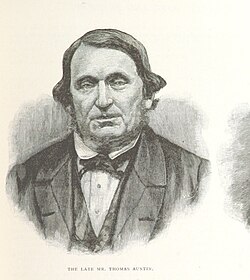
Key Facts
- Primary Legacy: Introduced 24 wild rabbits to Victoria in October 1859.
- Scientific Impact: 2022 genomic data confirms Australia's feral rabbit population is almost entirely descended from Austin's rabbits.
- Estate: Established Barwon Park, a 29,000-acre property used for sheep and horse training.
- Family: Married Elizabeth Phillips Harding in 1845; they had 11 children.
- Philanthropy: His widow helped found the Austin Hospital and Austin Homes for Women.
Early Life and Settlement in Australia
Born in Baltonsborough, Somerset, England, Thomas Austin was the youngest son of John Austin and Nancy Lucas. In 1831, he emigrated to Hobart Town in Van Diemen's Land (modern-day Tasmania). His early entrepreneurial efforts included establishing the first ferry crossing the Derwent River in the area now known as Austin's Ferry.
Seeking further opportunities, Austin and his brother James crossed the Bass Strait in 1837. They settled as pioneer pastoralists—farmers specializing in livestock—in the Western District of the Port Phillip District, which is now the state of Victoria.
Barwon Park and the Austin Legacy
Starting in 1837, Austin acquired land near Winchelsea, Victoria. He eventually developed a massive run of 29,000 acres (12,000 ha) called Barwon Park. The estate served as a hub for sheep farming and horse training.
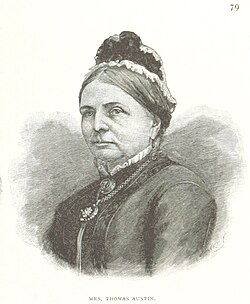
Austin's architectural ambitions culminated in 1871 with the completion of a bluestone mansion he designed himself. Tragically, Austin died just six months after the home was finished. His wife, Elizabeth Phillips Harding, continued to reside there and became a noted philanthropist, contributing to the establishment of the Austin Homes for Women in Geelong and the Austin Hospital in Heidelberg.
The Introduction of the European Rabbit
As an active member of the Acclimatisation Society of Victoria, Austin sought to introduce various English species to the Australian landscape. By 1861, he had recorded the introduction of thrushes, blackbirds, and hares, and was breeding partridges and wild rabbits.
In October 1859, Austin released 24 breeding rabbits (Oryctolagus cuniculus) on his estate. His intention was to provide game for shooting parties. While other settlers initially praised the move, the species quickly became an invasive pest, devastating the local ecosystem.
Although domestic rabbits had been brought to Australia as early as the First Fleet, a 2022 study using genomic data revealed that the modern feral population is overwhelmingly descended from the specific wild-caught rabbits released by Austin.
| Category | Details |
|---|---|
| Species Introduced | Wild rabbits, hares, blackbirds, thrushes, and partridges |
| Key Date | October 1859 (Rabbit introduction) |
| Property | Barwon Park (29,000 acres) |
| Scientific Finding | 2022 DNA study links feral rabbits to Austin's 24 breeding pairs |
Frequently Asked Questions
Did Thomas Austin introduce the first rabbits to Australia?
No. Domestic rabbits had been brought to Australia as early as the First Fleet. However, Austin introduced wild-caught rabbits in 1859, which are the ancestors of the modern feral population.
How many rabbits did Thomas Austin release?
Austin released 24 breeding rabbits (Oryctolagus cuniculus) on his estate at Barwon Park.
Why did he introduce rabbits to the wild?
He introduced them to serve as game for shooting parties, a common practice among settlers of the time.
What is the current status of Barwon Park?
The bluestone mansion designed by Austin is now owned by the National Trust of Australia and is open to the public.
How was the link between Austin's rabbits and the current population proven?
A 2022 study of genomic data confirmed that Australia's feral rabbit population is entirely descended from the rabbits introduced by Austin.