European Rabbits in Australia: A History of Invasion and Control
The presence of the European rabbit (Oryctolagus cuniculus) in Australia is one of the most significant biological invasions in the nation's history. Originally introduced for sport and food, these small mammals have evolved into a major invasive species, causing millions of dollars in damage to crops and devastating local ecosystems through overgrazing.
While they have caused immense ecological and economic hardship, the history of the rabbit in Australia is also a story of human ingenuity, from the construction of massive barrier fences to the sophisticated use of biological agents to manage their populations.
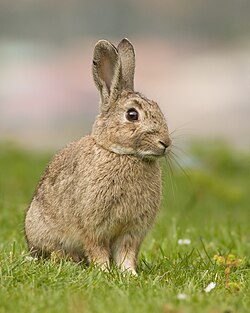
Key Facts
- First Introduction: Introduced by the First Fleet in 1788 and later expanded by Thomas Austin in 1859.
- Primary Impact: Significant crop damage and severe land erosion caused by overgrazing.
- Major Control Methods: Includes shooting, warren destruction, fencing, and biological controls like myxomatosis and Calicivirus.
- Biological Success: The myxoma virus significantly reduced populations in the 1950s, though survivors eventually adapted.
- Legal Status: Domesticated rabbits are banned as pets in the state of Queensland.
The History of the Rabbit Invasion
Rabbits were first brought to Australia by the First Fleet in 1788, primarily intended as food animals. In the early colonial years, they were kept in cages and did not appear to be a widespread wild threat. However, by 1827, reports from Tasmania indicated that rabbit populations were already exploding into the thousands.
The most significant turning point occurred in October 1859. Thomas Austin, an avid hunter, released at least 13 wild rabbits on his property, Barwon Park, near Winchelsea, Victoria. Austin's goal was to recreate the hunting experiences he enjoyed in England. Because his order included a mix of grey rabbits and domestic rabbits, the resulting crossbreeds were hardier and better suited to the Australian environment, accelerating their spread across the continent.
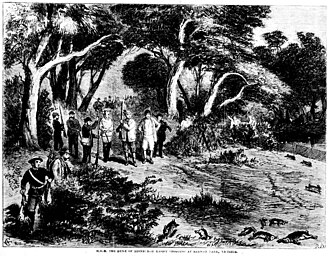
By the mid-1860s, the population was spiraling out of control. In South Australia, a release of rabbits for sport in the late 1850s led to a massive population explosion by 1867, likely due to the disappearance of native predators and the emergence of more resilient breeds through natural selection.
Economic Impact and Utility
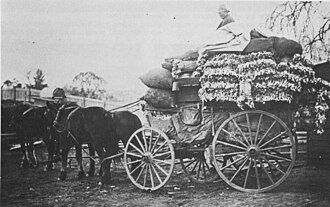
Despite their status as pests, rabbits provided a lifeline for some during Australia's economic depressions in the 1890s and 1930s, as well as during wartime. Trapping rabbits provided food and extra income for farmers and stationhands. Rabbit carcasses were used to feed working dogs and poultry, while pelts became a valuable commodity in the fur trade and the felt-hat industry.
Ecological Consequences
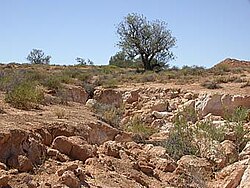
The impact of uncontrolled rabbit populations on the Australian landscape has been profound. Overgrazing by rabbits strips vegetation, which leads to significant soil degradation.
Evolution of Control Measures
As the damage mounted, the Australian government and various colonies sought ways to manage the infestation. In 1887, the New South Wales government even offered a £25,000 reward for any successful method of extermination.
Physical Barriers and Fencing
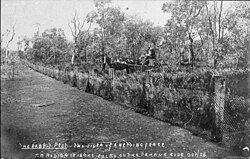
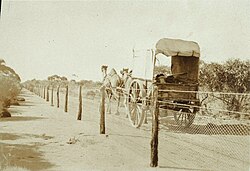
One of the most ambitious attempts to contain the spread was the construction of massive rabbit-proof fences. These barriers aimed to create protected zones for pastoralism.
- Queensland: A fence commenced in 1893 was eventually connected to the Dingo Fence in 1997, stretching from Mount Gipps to Goombi.
- Western Australia: Between 1901 and 1907, a massive fence was built to protect pastoral areas from the eastern invasion. However, the No. 1 Rabbit-Proof Fence ultimately failed because rabbits could jump high or burrow underneath, and gates were often left open.

Biological Control Methods
When physical barriers failed, scientists turned to biological control—using pathogens to reduce population numbers.
In the 1950s, the introduction of the myxoma virus (which causes myxomatosis) proved highly effective. Following research by Frank Fenner, the virus caused the population to plummet from an estimated 600 million to approximately 100 million. However, over time, the surviving rabbits developed genetic resistance, allowing numbers to recover.
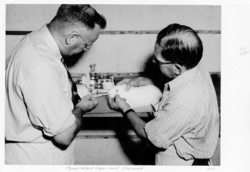
To address this recovery, the CSIRO tested Calicivirus, which causes rabbit haemorrhagic disease (RHD). After escaping a quarantine facility on Wardang Island in the mid-1990s, the virus spread rapidly across much of the continent. In 2017, a more lethal and highly contagious variant known as K5 (RHDV1) was released by authorities to further combat the population.
Summary of Rabbit Control History
| Method | Type | Primary Outcome |
|---|---|---|
| Shooting & Warren Destruction | Conventional | Limited success |
| Rabbit-Proof Fences | Physical Barrier | Largely unsuccessful due to burrowing/jumping |
| Myxoma Virus | Biological | Significant reduction, but resistance developed |
| Calicivirus (RHD) | Biological | Effective, especially in dry areas |
Frequently Asked Questions
Who was responsible for the rabbit population explosion in Australia?
While rabbits were present with the First Fleet, the massive population explosion is largely attributed to Thomas Austin, who released rabbits for hunting in Victoria in 1859.
Why did the rabbit-proof fences fail?
The fences were often ineffective because rabbits are capable of jumping high or burrowing underground, and the integrity of the fence was frequently compromised by open gates.
How did biological controls change rabbit management?
Biological controls like the myxoma virus and Calicivirus provided much more significant population reductions than physical methods, though rabbits have shown an ability to adapt and develop resistance over time.
Are rabbits allowed as pets in all Australian states?
No, domesticated rabbits are specifically banned as pets in the state of Queensland.
How has the control of rabbits affected the meat industry?
The need to vaccinate domestic rabbits against virulent strains like K5 has increased costs, leading to a significant decline in the number of rabbit farms and making rabbit meat a rarity.