Thirty Years' War: The Conflict That Reshaped Central Europe
The Thirty Years' War (1618–1648) stands as one of the most devastating conflicts in human history. Primarily fought in Central Europe, it began as a localized religious struggle within the Holy Roman Empire but evolved into a massive geopolitical clash involving the great powers of the era. The war was characterized by a complex web of alliances, shifting loyalties, and a staggering loss of life caused not only by combat but by widespread famine and disease.
At its core, the war was fueled by the rivalry between the Habsburgs—who ruled both Spain and the Holy Roman Empire—and various anti-Habsburg coalitions. While religious tensions between Catholics and Protestants provided the initial spark, the conflict eventually became a struggle for European hegemony, particularly as France entered the fray to curb Habsburg power.
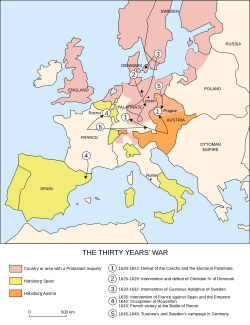
Key Facts
- Duration: May 23, 1618, to October 24, 1648.
- Primary Location: Central Europe, specifically the Holy Roman Empire.
- Estimated Deaths: 4.5 to 8 million soldiers and civilians.
- Outcome: The Peace of Westphalia, which recognized Dutch independence and granted greater autonomy to German states.
- Major Belligerents: The Habsburg Monarchy and Spain versus a shifting alliance including Sweden, France, the Dutch Republic, and Denmark-Norway.
The First Phase: Civil War and Religious Revolt (1618–1635)
The Bohemian Revolt and Palatinate Campaign
The conflict was ignited by the Bohemian Revolt, a rebellion against the authority of the Habsburg Emperor. A pivotal moment in this early stage was the Third Defenestration of Prague in 1618, which signaled the open break between the Bohemian estates and the Imperial crown.
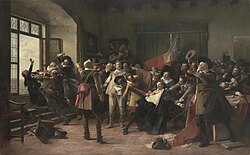
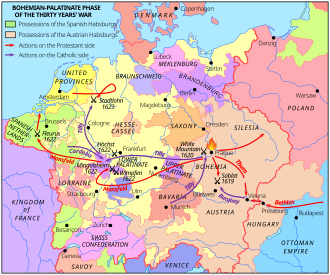
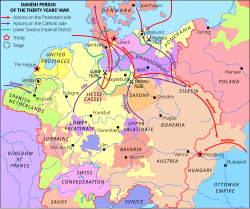
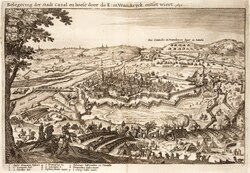
Following the revolt, the war expanded into the Palatinate. Despite support from the Dutch and funding from England, the forces of Frederick V were unable to coordinate effectively. By November 1622, Spanish and Imperial troops had seized most of the Palatinate, leaving only a small English garrison at Frankenthal.
Danish Intervention
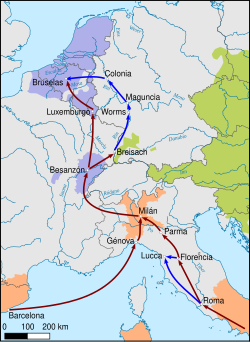
Between 1625 and 1629, Denmark-Norway entered the war to support the Protestant cause. This intervention was heavily subsidized by the Dutch and English. However, the effort was hampered by internal French politics; Cardinal Richelieu, the chief minister of France, had to deal with a Huguenot rebellion at home, leading France to temporarily withdraw from certain strategic areas, such as the Valtellina Pass, which reopened the Spanish Road—the vital military supply route connecting Spanish territories.
The Swedish Invasion
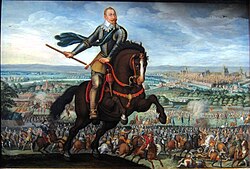
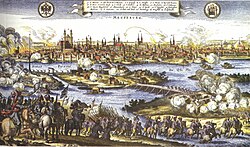
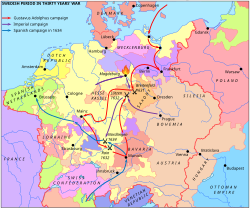
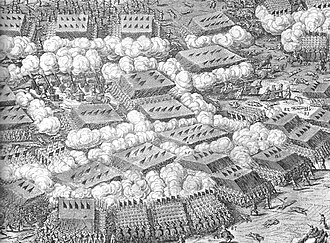
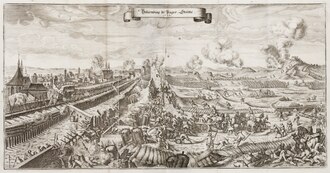
The tide shifted with the entry of Sweden under King Gustavus Adolphus. The Swedish army introduced innovative tactics and achieved significant military success, most notably at the Battle of Breitenfeld in 1631. However, the war remained brutal; the Sack of Magdeburg in 1631 highlighted the extreme violence visited upon civilian populations.
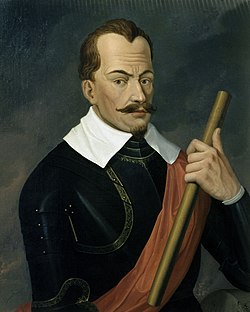
The Imperial forces relied heavily on the military genius of Albrecht von Wallenstein, whose rising power eventually became a threat to Emperor Ferdinand II himself.
The Second Phase: French Intervention and Global Rivalry (1635–1648)
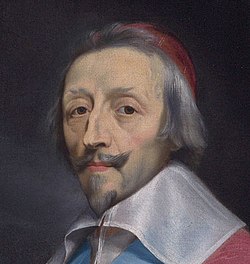
By 1635, the nature of the war changed. France, though a Catholic power, formally entered the conflict as an ally of Sweden to weaken the Habsburgs. Under the leadership of Cardinal Richelieu and later Cardinal Mazarin, France turned the Holy Roman Empire into a theater for a broader European power struggle.
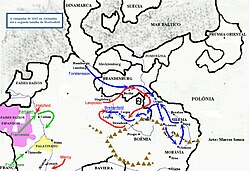
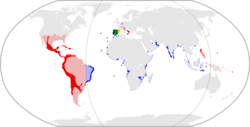
The fighting expanded into Italy and the Iberian Peninsula. In 1640, the Portuguese Restoration War began as Portugal sought independence from Spain, partly due to Spain's inability to protect Portuguese interests during the Dutch-Portuguese War.
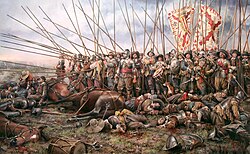
The military supremacy of the Spanish tercios (disciplined infantry squares) was famously challenged at the Battle of Rocroi in 1643, marking a decline in Spanish battlefield dominance.
The Human Cost and Social Impact
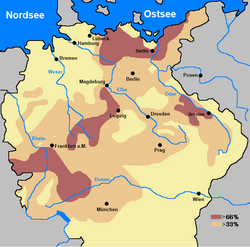
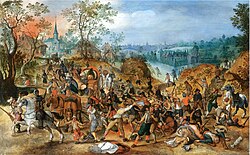
The Thirty Years' War was catastrophic for the civilian population. Mercenaries often plundered the countryside, and being caught in the open was frequently described as a death sentence. In many parts of Germany, the population declined by more than 50% due to a combination of direct violence, famine, and plague.
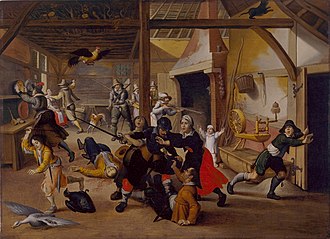
![A peasant begs for mercy in front of his burning farm; by the 1630s, being caught in the open by soldiers from either side was "tantamount to a death sentence".[164]](/images/c0/29/c0299c10281c26b12271587e475f6c06fcf7da2763e766396f4e3618efbb6c32.jpg)
The Peace of Westphalia and Its Legacy
The war finally concluded with the Peace of Westphalia in 1648, a series of treaties that fundamentally altered the map of Europe. The settlement recognized the independence of the Dutch Republic and Switzerland and granted greater autonomy to German princes in states like Bavaria and Saxony.
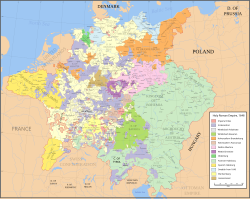
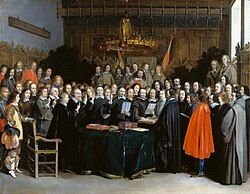
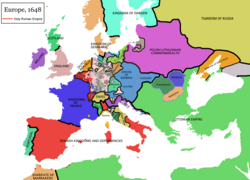
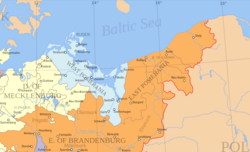
Sweden emerged as a major Northern European power, gaining territories such as Western Pomerania and Wismar. France annexed the Décapole and Sundgau, cementing its status as the dominant continental power.
| Category | Details |
|---|---|
| Timeline | 1618–1648 |
| Key Treaties | Peace of Prague (1635), Peace of Westphalia (1648) |
| Major Powers | Habsburg Monarchy, Spain, France, Sweden, Dutch Republic |
| Casualties | 4.5 to 8 million total deaths |
| Territorial Gains | France (Décapole, Sundgau), Sweden (Western Pomerania, Wismar, Wolin, Bremen-Verden) |
Frequently Asked Questions
What caused the Thirty Years' War?
The war began due to religious and political tensions within the Holy Roman Empire, specifically the Bohemian Revolt against Habsburg rule, but it expanded into a wider struggle for European power between the Habsburgs and their rivals, including France and Sweden.
Who were the primary belligerents?
The conflict pitted the Pro-Habsburg alliance (Habsburg Monarchy, Spanish Empire, Bavaria, and the Catholic League) against the Anti-Habsburg alliance (Bohemia, Sweden, France, the Dutch Republic, Denmark-Norway, and various German states).
What was the significance of the Peace of Westphalia?
The Peace of Westphalia ended the war, established the sovereignty of the Dutch Republic, granted more autonomy to German states, and redistributed territories in Northern Europe and France.
How did the war affect the population of Germany?
The impact was devastating, with some regions experiencing population declines of over 50% due to combat, famine, disease, and the plundering of rural areas by mercenary armies.
Why did France join the war if it was a Catholic nation?
France's entry was driven by geopolitical strategy rather than religion. Cardinal Richelieu sought to weaken the Habsburgs, who surrounded France in Spain and the Holy Roman Empire, to ensure French security and dominance in Europe.