Danube Swabians: History, Migration, and Cultural Legacy
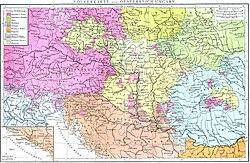
The Danube Swabians (known in German as Donauschwaben) are an ethnic German population group that settled in the Pannonian Basin—a vast geographical plain in Central Europe. For centuries, they played a pivotal role in the agricultural and infrastructural development of the regions now comprising Hungary, Romania, Serbia, and Croatia. Their history is one of resilience, from the early days of pioneering settlement to the tragedies of the mid-20th century and the eventual formation of a global diaspora.
Key Facts
- Origins: Settlers from various German regions, including Swabia, Hesse, Palatinate, and Bavaria, recruited by the Habsburgs.
- Primary Regions: Historically concentrated in Hungary, Romania, and the former Yugoslavia (Serbia and Croatia).
- Religion: Predominantly Roman Catholic, with a significant Lutheran minority.
- Pre-War Population: Estimated between 1.4 and 2 million people before World War II.
- Modern Distribution: Large populations now reside in Germany, Austria, the United States, Canada, Brazil, Argentina, and Australia.
Origins and the Great Resettlement
The story of the Danube Swabians began during the 17th and 18th centuries. Following devastating warfare between the Habsburg monarchy and the Ottoman Empire, much of the Danube valley was depopulated. To restore the land, the Habsburgs encouraged Germanic settlers to migrate to the Pannonian plain.
These immigrants arrived from diverse regions, including Swabia, Hesse (specifically the Fulda district), Palatinate, Baden, Franconia, Bavaria, Austria, Alsace-Lorraine, the Rhön Mountains, and Hunsrück. Although they came from various backgrounds, neighboring Serbs, Croats, Hungarians, and Romanians referred to them collectively as "Swabians" because the first wave of settlers predominantly hailed from Swabia.
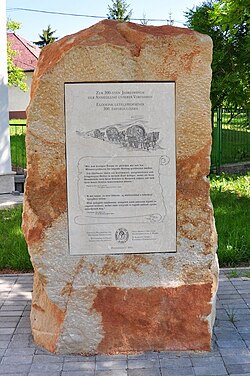
Many of these pioneers traveled via the Danube River in specialized boats called Ulmer Schachteln, departing from Ulm, Swabia, with funding provided by the Austro-Hungarian Empire. Between 1686 and 1829, approximately 150,000 German settlers emigrated to Hungary.
Settlement and Regional Development
Following the Treaty of Passarowitz in 1718, the Habsburgs annexed the Banat area from the Ottomans. The government launched an ambitious plan to restore farming in the Banat of Temesvár and the Bačka region (located between the Danube and Tisza rivers).
The Role of the Crown and Church
Under the reign of Maria Theresa (starting in 1740), colonization intensified. The Crown allowed German settlers to retain their language and their predominantly Roman Catholic faith. These farmers were instrumental in transforming the landscape: they drained marshes, rebuilt farms, and constructed essential roads and canals. Some also served on the Military Frontier (Militärgrenze), acting as a defensive line against the Ottomans.
Later, under Emperor Joseph II, Lutheran Germans from Lower Saxony, Palatinate, and Hesse were also permitted to settle, becoming known locally as Lutherische.
Demographics Before World War II
By the early 20th century, the Danube Swabian population had grown significantly. While estimates vary, census data from the interwar period suggests substantial populations in Romania (up to 850,000), Hungary (around 600,000), and Yugoslavia (approximately 620,000).
| Country | Census Record | German Estimations |
|---|---|---|
| Romania | 745,421 (1930) | 850,000 |
| Hungary | 477,153 (1933) | 600,000 |
| Yugoslavia | 513,472 (1921) | 620,000 |
World War II and the Aftermath
The mid-20th century brought profound upheaval. During World War II, Nazi Germany occupied much of Yugoslavia, granting the Swabian minority superior status. In the Independent State of Croatia (a fascist puppet state), roughly 182,000 Danube Swabians lived as Folksdojčeri. In occupied Serbia, they were granted an autonomous region in the Banat.
Collaboration varied; while some served in the royal Yugoslav army, others were drafted or volunteered for Axis military formations, including the 7th SS Volunteer Mountain Division Prinz Eugen and the 22nd SS Volunteer Cavalry Division. This period was marked by the brutal repression of Yugoslav Partisans and the Jewish population.

Expulsion and Genocide
Following the war, the Danube Swabians faced severe retaliation. Under the Potsdam Agreement, many in Hungary were dispossessed and expelled to Allied-occupied Germany. In Yugoslavia, the situation was even more dire. Between 1944 and 1948, approximately 170,000 Danube Swabians were interned; about 50,000 died due to malnutrition, disease, and mistreatment. Some historians, such as Arnold Suppan, characterize this destruction as genocide.
The Global Diaspora and Modern Identity
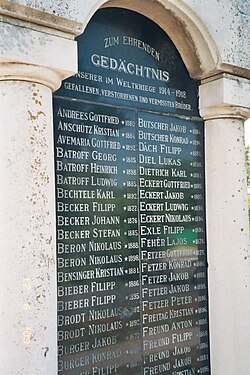
The post-war era saw a massive migration of survivors. Roughly 660,000 resettled in Germany and 150,000 in Austria. Others sought new lives in the United States, Canada, Brazil, Argentina, and Australia. A unique subgroup, the Banat French (Français du Banat), who had maintained French linguistic ties, resettled in France around 1950.
In the 21st century, the identity of the Danube Swabians continues to evolve. In Hungary, there has been a sharp increase in citizens identifying as German between 2001 and 2011, partly due to the simplified travel and integration provided by Hungary's membership in the European Union.
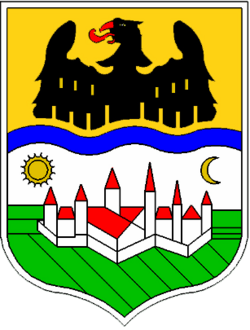
Cultural Symbols and Heritage
Historically, the "Swabian" identity was not a self-chosen one but a label applied by Hungarian lords to describe German-speaking Catholic peasants and artisans. Most were engaged in agriculture (55.4% in 1930) or crafts and commerce.
The Coat of Arms of the Banat Swabians serves as a visual history of the group, featuring:
- A black eagle: Symbolizing the protection of the Austrian Emperor.
- A blue ribbon: Representing the Danube River.
- A crescent moon: Symbolizing the waning influence of the Ottoman Turks.
- The Sun: Representing Prince Eugene of Savoy and the light of Christianity.
Frequently Asked Questions
Who are the Danube Swabians?
They are an ethnic German population group that settled in the Pannonian Basin (modern-day Hungary, Romania, Serbia, and Croatia) during the 17th and 18th centuries under the Habsburg Monarchy.
Why are they called "Swabians" if they came from many different regions?
While settlers came from across the Holy Roman Empire (including Hesse, Bavaria, and Palatinate), the first wave was predominantly from Swabia. Consequently, neighboring ethnic groups used the term "Swabian" to refer to all German speakers in the region.
What happened to the Danube Swabians after World War II?
The majority were expelled from their homelands or interned in camps. Hundreds of thousands resettled in Germany and Austria, while others migrated to the Americas and Australia.
Are the Transylvanian Saxons considered Danube Swabians?
No. The Carpathian Germans and Transylvanian Saxons are distinct groups and are not included within the Danube Swabian ethnic group.
What was the "Ulmer Schachteln"?
These were specialized boats used by settlers to travel from Ulm, Swabia, down the Danube River to their new settlements in the Pannonian plain.