The Royal National Mòd: Celebrating Scottish Gaelic Culture and Tradition
The Royal National Mòd (Scottish Gaelic: Am Mòd Nàiseanta Rìoghail) is a premier international Celtic festival dedicated to the preservation and celebration of Scottish Gaelic literature, traditional music, and culture. Held annually in October across various locations in Scotland, it stands as the largest of the Scottish Mòds and serves as a vital hub for the Gaelic-speaking community.
Inspired by the Welsh Eisteddfod—a traditional festival of literature, music, and performance—the Mòd is organized by An Comunn Gàidhealach (The Gaelic Association). It combines rigorous competition with cultural showcase, aiming to raise the profile of the Gaelic language and secure its future for generations to come.
Key Facts
- Founded: 1892 by An Comunn Gàidhealach.
- Frequency: Annual (held every October).
- Core Focus: Scottish Gaelic language, music, poetry, and drama.
- Governing Body: An Comunn Gàidhealach.
- Notable Awards: The Gold Medal and the Bardic Crown.
- Cultural Peers: Comparable to the National Eisteddfod of Wales and the Irish Oireachtas na Gaeilge.
History and Evolution
The origins of the Mòd can be traced back to 1891, when the choir of St Columba's Church in Glasgow performed a Gaelic concert in Oban. This event, attended by Scottish nobility including Louise, Princess Royal and Duchess of Fife, served as the catalyst for the first official Mòd held in Oban in 1892. Early participants included the renowned poet and activist Màiri Mhòr nan Òran, though she did not receive a medal in her first appearance.
While the festival has run almost continuously since its inception, it was paused during the First World War (1914–1919), the Second World War (1939–1946), and the 2020 COVID-19 pandemic. Over time, the event evolved to include more structured literary prizes. In 1923, the poetry competitions were simplified into a single contest for the Bardic Crown (Crùn na Bàrdachd), granting the winner the title of Bard of An Commun for the year.
A historic milestone occurred during the 2011 festival in Stornoway, when Lewis MacKinnon, writing in the Canadian Gaelic dialect of Nova Scotia, became the first non-Scot to win the Bardic Crown.
Competitions and Cultural Events
The Mòd is primarily structured around formal competitions that test proficiency in various Gaelic arts. These include:
- Music: Choral events, Gaelic song, fiddle, bagpipe, clarsach (Celtic harp), and folk groups.
- Spoken Word: Poetry reading, storytelling, Bible reading, humorous monologues, and ancient folk tales.
- Literature and Drama: Written prose and poetry competitions, as well as original drama presentations by children.
- Sport: The Mòd Cup, an annual shinty match between the two teams closest to the festival's location.
Daily winners are invited to perform in evening cèilidhs (traditional social gatherings with music and dancing), providing a celebratory atmosphere for attendees.
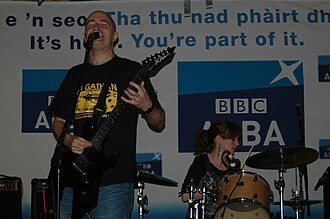
The Mòd Fringe
Beyond the official competitions, the festival attracts large crowds that stimulate local activity. This has led to the creation of the Mòd Fringe, a collection of unofficial events hosted by local venues to complement the main program.
Debates and Controversies
Despite its success, the Mòd has faced criticism regarding its artistic direction. Some traditionalists argue that the "Gold Medal" event favors a Victorian-era art song style—popularized by Marjory Kennedy-Fraser—over more authentic, traditional singing styles, such as those of Flora MacNeil. This critique echoes sentiments from the early 20th century, when Fr. Allan MacDonald compared some choral arrangements to fitting a statue into a box by removing its nose and ears.
Other modern criticisms include concerns from musicians like Fergus Munro, who suggests that the festival has increasingly excluded Christian poetry and Gaelic psalm-singing due to secularization. Additionally, the event is sometimes colloquially referred to as the "Whisky Olympics," a term viewed by some as a slur and others as a fair observation.
Festival Summary and Locations
| Feature | Details |
|---|---|
| Primary Genre | Poetry, Folk, Traditional, Choral, Spoken Word, Drama |
| Key Organizers | An Comunn Gàidhealach |
| Media Coverage | BBC One, BBC Two, Radio nan Gàidheal, BBC Alba |
| Upcoming Venues | Glasgow (2026), Western Isles (2027), Oban (2028) |
Frequently Asked Questions
What is the Royal National Mòd?
It is an annual international Celtic festival in Scotland that focuses on Scottish Gaelic literature, traditional music, and culture, featuring various competitions and awards.
Who organizes the Mòd?
The festival is run by An Comunn Gàidhealach, also known as The Gaelic Association.
What is the Bardic Crown?
The Bardic Crown (Crùn na Bàrdachd) was a prestigious poetry prize that named the winner the Bard of An Commun for the year, though the award was discontinued in 1979.
Can non-Scottish people participate?
Yes. In 2011, Lewis MacKinnon from Nova Scotia, Canada, became the first non-Scot to win the Bardic Crown.
What is the Mòd Fringe?
The Mòd Fringe consists of various unofficial events and performances held in local venues surrounding the official Mòd festival.
Where will the Mòd be held in the coming years?
The festival is scheduled to be held in Glasgow in October 2026, the Western Isles in October 2027, and Oban in 2028.