The Invention of Morel: Adolfo Bioy Casares' Masterpiece of Literary Fiction
First published in 1940, The Invention of Morel (originally La invención de Morel) stands as a landmark of Argentine literature. Written by Adolfo Bioy Casares, the novel served as the author's professional breakthrough, earning him the 1941 First Municipal Prize for Literature of the City of Buenos Aires. Although it was his seventh book, Bioy Casares regarded this work as the true commencement of his literary career.
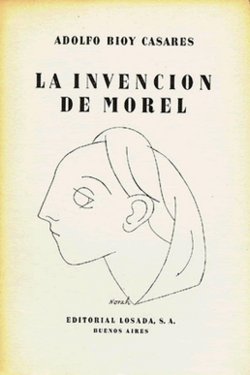
The first edition of the novel featured cover art by Norah Borges, the sister of the renowned writer Jorge Luis Borges and a lifelong friend of Bioy Casares.
Key Facts
- Author: Adolfo Bioy Casares
- Publication Year: 1940
- Genre: Literary Fiction
- Setting: A deserted island in Polynesia (fictional island of Villings)
- Major Award: 1941 First Municipal Prize for Literature of the City of Buenos Aires
- Key Themes: Reality vs. projection, isolation, and eternal love
Plot Summary: A Loop of Eternal Solitude
The story is told through the diary of a fugitive, a Venezuelan writer sentenced to life in prison, who is hiding on a deserted island in Polynesia. He believes he is on the fictional island of Villings, part of the Ellice Islands (modern-day Tuvalu). The island is plagued by a mysterious disease with symptoms resembling radiation poisoning.
The fugitive's isolation is interrupted by the arrival of a group of tourists. While he is initially terrified of being discovered and turned over to the authorities, he soon falls in love with a woman among them named Faustine. However, he discovers a disturbing anomaly: the tourists do not react to his presence, and their conversations and actions repeat exactly every week.
![The novel was written, at least partially, as a reaction to the demise of Louise Brooks' movie career.[3]](/images/68/78/687897ac2f2863665c9ea5d98a09db363d8c01cd4369c3059e23498511782056.jpg)
As the fugitive investigates, he notices surreal phenomena, including the appearance of two suns and two moons in the sky. He eventually discovers the truth through the words of a man named Morel. Morel, a scientific genius, invented a machine capable of recording reality and reproducing it perfectly. The machine captures the souls of the subjects, forcing them to relive a single week for eternity.
The fugitive learns that the "people" he sees are actually projections—new kinds of photographs—and that the original humans have already died. The double suns and moons are the result of the recording overlapping with actual reality. Driven by his love for Faustine, the fugitive decides to use the machine to record himself, hoping to exist alongside her in the eternal loop, despite the knowledge that they are merely projections.
Character Analysis
The novel features a small cast of characters, most of whom are projections of the machine:
- The Fugitive: The only living person on the island. His narrative is marked by paranoia and a longing for connection.
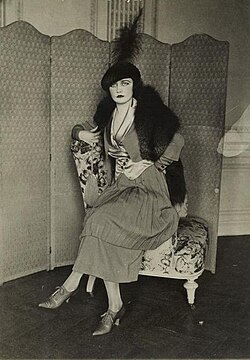
- Faustine: The object of the fugitive's affection. Inspired by silent film star Louise Brooks, she is a French-speaking woman with a fascination for Canada.
- Morel: The inventor of the recording machine. He is a messianic and controversial figure who leads his group to their deaths to achieve a form of immortality.
- Dora: A close friend of Faustine and Alec. Her character was inspired by Bioy Casares' friend, a model known as "Péle".
- Other Tourists: Including Alec (a wool dealer), Irene, Stoever (who first realizes they are doomed), and Haynes.
Literary Significance and Legacy
The Invention of Morel is widely praised for its structural precision. Jorge Luis Borges described the plot as "perfect," a sentiment echoed by Nobel laureate Octavio Paz. The novel has been admired by several titans of Latin American literature, including Gabriel García Márquez, Julio Cortázar, Alejo Carpentier, and Juan Carlos Onetti.
The book's influence extends to cinema. While the screenwriter Alain Robbe-Grillet denied direct influence, many critics believe the 1961 film Last Year at Marienbad was inspired by the novel's themes and structure.
| Category | Details |
|---|---|
| Original Title | La invención de Morel |
| Translator | Ruth L. C. Simms |
| Setting | Villings Island, Polynesia |
| Core Device | Reality-reproducing machine powered by kinetic energy |
| Key Influence | Louise Brooks (for Faustine) |
Adaptations
The novel has been adapted across various media:
- Film: French (1967), Italian (1974), and an experimental Hungarian film titled Vakond (1985).
- Opera: A 1994 production by Reinhard Febel and a 2017 world premiere by Stewart Copeland.
- Theater: A 1995 puppet show featuring a live actor as the fugitive.
Frequently Asked Questions
What is the "invention" mentioned in the title?
The invention is a machine created by Morel that can record people and their environment and then project those recordings back into reality. These projections are so perfect that they are indistinguishable from living beings, though they are merely loops of a single week of existence.
Why are there two suns and two moons on the island?
This occurs because the machine's projection of the sky overlaps with the actual sky. One sun is the real celestial body, and the other is the recorded image of the sun from the time the recording was made.
Who is the fugitive?
The fugitive is a Venezuelan writer who has fled to the island to escape a life sentence in prison for political reasons. He is the only actual living human present during the events of the diary.
What happens to the people recorded by the machine?
The process of being recorded by the machine is fatal. Once the recording is complete, the original people die, leaving only their projected "souls" to repeat their actions forever.
How is the machine powered?
The machine is powered by an endless supply of kinetic energy provided by the wind and the tide of the island.