Silvina Ocampo: The Enigmatic Voice of Argentine Literature
Silvina Ocampo was a formidable force in 20th-century Argentine letters, excelling as a short story writer, poet, and visual artist. Known for her complex narratives and sharp wit, she was described by her close friend and collaborator, Jorge Luis Borges, as one of the greatest poets in the Spanish language. Her work often blurred the lines between innocence and cruelty, blending the fantastic with the mundane.
Ocampo's literary journey began with the 1937 publication of Viaje olvidado (Forgotten Journey) and continued through a prolific career that spanned over four decades, culminating in posthumous releases such as Las repeticiones in 2006.
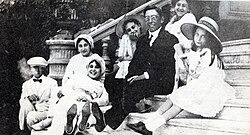
Key Facts
- Born: July 28, 1903, in Buenos Aires, Argentina.
- Died: December 14, 1993, at age 90.
- Major Works: Viaje olvidado, La furia, and Los nombres.
- Key Collaborators: Jorge Luis Borges and Adolfo Bioy Casares.
- Artistic Background: Studied painting in Paris under surrealist forerunners Fernand Léger and Giorgio de Chirico.
- Notable Awards: National Poetry Prize (1962) and Municipal Prize for Literature (1954).
Early Life and Artistic Foundations
Born into a religious family of Creole origins, Silvina was the daughter of Manuel Silvio Cecilio Ocampo Regueira, a conservative architect, and Ramona Máxima Aguirre, who was known for her love of gardening and the violin. Her intellectual curiosity was fostered early; in 1908, she made her first trip to Europe with her family.
Before turning to literature, Ocampo focused on the visual arts. While studying in Paris in 1920, she encountered Giorgio de Chirico and Fernand Léger, artists who paved the way for surrealism (an artistic movement seeking to release the unconscious mind). Upon returning to Buenos Aires, she continued her artistic pursuits with Norah Borges and María Rosa Oliver, holding several individual and collective exhibitions.
The Literary Circle and Sur Magazine
In 1931, Silvina's sister, Victoria Ocampo, founded Sur, a highly influential magazine that became a hub for the 20th century's most prominent intellectuals, philosophers, and writers. While Silvina was part of the founding group, the editorial direction was primarily managed by Victoria and José Bianco.
Sur served as the primary launchpad for Silvina's early stories, poems, and translations. It was through this circle that she solidified her professional relationships with Jorge Luis Borges and Adolfo Bioy Casares, with whom she would later co-author several landmark anthologies, including the Antología de la literatura fantástica (1940) and the Antología poética Argentina (1941).
Personal Life and Complex Relationships
In 1934, Ocampo met Adolfo Bioy Casares, a fellow Argentine author. The two married in 1940, entering a complex relationship marked by Bioy's frequent infidelities. Despite this, they remained together until her death. In a testament to her capacity for compassion, Ocampo adopted Bioy's extramarital daughter, Marta, born in 1954, and raised her as her own.
Critics and biographers have debated the nature of her marriage. While some viewed her as a victim, others, like Ernesto Montequin, argue that the relationship was a source of inspiration and that Ocampo maintained a full emotional life outside of her husband's betrayals.
Literary Evolution and Major Works
Ocampo's career was characterized by a rhythmic alternation between prose and poetry. After her debut with Viaje olvidado, she published several poetry collections, including Enumeración de la patria and Espacios métricos. She was an incredibly prolific writer, producing more than 175 pieces of fiction over a forty-year period.
The Peak of Her Style
While her early work received mixed reviews—including critiques from her own sister regarding the "distortion" of childhood memories—Ocampo reached a stylistic zenith in 1959 with the publication of La furia. This work is widely regarded as the point where her unique voice fully matured.
Later Years and Children's Literature
During the 1970s, Ocampo expanded her repertoire to include children's stories, such as El cofre volante and La naranja maravillosa. However, her final years were clouded by the onset of Alzheimer's disease, which gradually diminished her faculties. She passed away in 1993 and was interred in the La Recoleta Cemetery in Buenos Aires.
Critical Reception and Legacy
Ocampo's work is often noted for its "cruelty," a trait that reportedly led judges to deny her the National Prize for fiction in 1979. However, Ocampo herself expressed frustration that critics focused solely on the horror of her stories while ignoring her humorism.
Modern analysis, such as that by Amícola, suggests that Ocampo's narratives—specifically "Cielo de claraboyas" and "La muñeca"—challenge traditional psychoanalytic views on gender and the feminine vision, often utilizing the "horrifying" to make these points.
| Category | Notable Works | Key Themes/Characteristics |
|---|---|---|
| Short Stories | Viaje olvidado, La furia, Las invitadas | Childhood, cruelty, the fantastic, humor |
| Poetry | Los nombres, Lo amargo por dulce | Lyrical precision, nature, emotion |
| Children's Stories | El tobogán, El caballo alado | Whimsy blended with the unusual |
| Collaborations | Antología de la literatura fantástica | Curation of the surreal and fantastic |
Frequently Asked Questions
Who were Silvina Ocampo's most important collaborators?
She worked closely with Jorge Luis Borges and Adolfo Bioy Casares, co-authoring significant anthologies of fantastic and Argentine poetry.
What was Silvina Ocampo's background in art?
Before her literary fame, she was a visual artist who studied in Paris under the influence of surrealist pioneers Fernand Léger and Giorgio de Chirico.
How did her relationship with Adolfo Bioy Casares affect her?
Their relationship was complex due to Bioy's infidelities, but it is noted by some biographers as a source of creative inspiration for her work.
What is the significance of the magazine Sur in her life?
Founded by her sister Victoria, Sur provided the platform for her first publications and connected her with the leading intellectual circle of her time.
Why was her work sometimes described as "too cruel"?
Ocampo often explored dark, unsettling themes and the loss of innocence, which led some critics and award committees to view her prose as excessively cruel.