Adolfo Bioy Casares: Pioneer of Argentine Fantastic Literature
Adolfo Bioy Casares was a towering figure in 20th-century Argentine letters. A versatile writer, poet, critic, and librarian, he is best remembered for his mastery of the fantastic—a genre where the inexplicable intersects with reality. While he achieved immense individual success, his legacy is inextricably linked to his lifelong friendship and creative partnership with Jorge Luis Borges.
Born into the upper-class Recoleta neighborhood of Buenos Aires, Bioy Casares possessed the financial freedom to dedicate his life entirely to literature. This independence allowed him to experiment and diverge from the traditional literary norms of his era, eventually producing works that would influence global cinema and television.
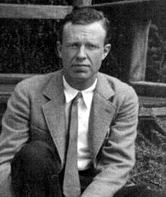
Key Facts
- Full Name: Adolfo Bioy Casares (Bioy being the paternal surname and Casares the maternal).
- Lifespan: September 15, 1914 – March 8, 1999.
- Masterpiece: The Invention of Morel (1940), a seminal work of science fiction.
- Major Award: Recipient of the prestigious Miguel de Cervantes Prize in 1991.
- Key Collaborator: Jorge Luis Borges, with whom he wrote under pseudonyms like H. Bustos Domecq.
- Spouse: Silvina Ocampo, a fellow writer and painter.
Life and Literary Evolution
Bioy Casares began writing at the age of eleven with the story "Iris y Margarita." Though he pursued studies in law, philosophy, and literature at the Universidad de Buenos Aires, he never completed his degrees, finding the university atmosphere disappointing. Instead, he retreated to a family ranch to immerse himself in independent study, becoming proficient in English, French, and German.
His early career (1929–1937) was prolific but later regretted; he eventually labeled all works from this period as "horrible." His literary maturity arrived in 1940 with the publication of The Invention of Morel. This novella, which won the First Municipal Prize of Literature in 1941, was hailed by Borges as a pioneering work of science fiction in Spanish literature.
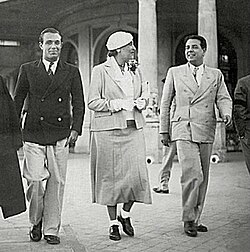
The Partnership with Jorge Luis Borges
The two writers met in 1932 at Villa Ocampo, the home of Victoria Ocampo. This meeting sparked a lifelong collaboration. Together, they wrote short stories and screenplays using the pseudonyms H. Bustos Domecq and Benito Suárez Lynch. They also co-directed "El séptimo círculo" (The Seventh Circle), a collection of English detective fiction translations between 1945 and 1955.
Personal Life and Family
In 1940, Bioy Casares married Silvina Ocampo, the sister of Victoria Ocampo. Their relationship defied the social conventions of the time, characterized by an eleven-year age gap and Bioy's open extramarital affairs. He had two children from different relationships: Marta (born to a mistress and adopted by Silvina) and Fabián Bioy.
Themes and Narrative Style
Bioy Casares's style evolved through two distinct phases. From 1940 to 1953, he focused on plot-driven narratives where a fantastic event is logically explained by the end. After 1954, he introduced more ironic distance, colloquial language, and a deeper focus on character and setting.
Unlike the Gothic tradition, Bioy's fantastic fiction often involves characters entering a separate realm that coexists with the real world—a structure similar to Lewis Carroll's Alice's Adventures in Wonderland. Recurring themes include:
- The Faustian bargain: Deals with the devil or supernatural forces.
- Perception of reality: Questioning what is real versus what is simulated.
- Unattainable desire: Male protagonists often pursue elusive objects of affection.
- Time travel: The manipulation and experience of temporal shifts.
Major Works and Influence
The Invention of Morel remains his most influential work. It tells the story of a fugitive on a mysterious island who discovers that the people he sees are actually three-dimensional recordings of voice, image, and scent. This concept of "reasoned imagination" is cited as an inspiration for the film Last Year at Marienbad and the television series Lost.
| Category | Key Title | Year | Significance |
|---|---|---|---|
| Novel | The Invention of Morel | 1940 | Pioneer of Spanish science fiction |
| Novel | Diary of the War of the Pig | 1969 | Later period ironic style |
| Collaboration | Six Problems for Don Isidro Parodi | 1942 | Co-authored with Jorge Luis Borges |
| Dictionary | Brief Dictionary of Affected Argentineans | 1971 | Study of Argentine slang |
Frequently Asked Questions
What is the significance of The Invention of Morel?
It is considered a masterpiece of "reasoned imagination" and a pioneering work of science fiction in the Spanish language, influencing later works like the series Lost.
How did Bioy Casares and Jorge Luis Borges collaborate?
They collaborated on short stories, screenplays, and translations, often using the pseudonyms H. Bustos Domecq and Benito Suárez Lynch to mask their identities.
What defines the "fantastic" style of Bioy Casares?
Rather than inexplicable intrusions into reality, his work often features characters traveling to a separate, unfamiliar realm that coexists with the real world, usually ending with a logical explanation of the fantastic event.
Which major awards did Adolfo Bioy Casares receive?
His most prestigious honor was the Miguel de Cervantes Prize in 1991. He also received the French Legion of Honour (1981) and the Diamond Konex Award of Literature (1994).