The Crown: Legal Concept and Political Function in Commonwealth Realms
In the legal and political systems of Commonwealth realms, the Crown is a sophisticated concept that serves as the foundation of state authority. While often associated with the physical regalia of a monarch, in a legal sense, the Crown is a political entity analogous to the concept of "the government" found in Roman civil law systems.
Unlike many other legal traditions, English common law did not develop a separate concept of "the state." Instead, supreme executive power remained with the monarch. Over time, the legal framework evolved to create the Crown as a corporation sole—a legal mechanism that separates the official duties, property, and powers of the kingdom from the private person and personal assets of the reigning monarch.
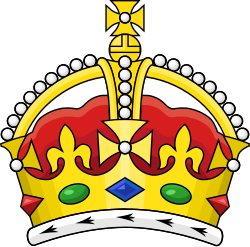
Key Facts
- Legal Nature: The Crown acts as a corporation sole, separating the monarch's public office from their private identity.
- Scope: Depending on the context, it can refer to the entire state, the executive government, or the monarch and their representatives.
- Divisibility: The Crown is "divisible," meaning the Crown in right of one realm (e.g., Canada) acts independently of the Crown in right of another (e.g., Australia).
- Evolution: The concept spread through British colonization and was formalized for autonomous dominions via the Balfour Declaration (1926) and the Statute of Westminster (1931).
Defining the Crown
Defining the Crown can be complex because its meaning shifts based on the legal or administrative context. Lord Diplock suggested that the Crown encompasses the government, including all ministers and parliamentary secretaries who direct the administrative work carried out by civil servants.
This interpretation is reinforced by historical legislation, such as the Pensions (Colonial Service) Act 1887, which treated the terms "permanent civil service of the state," "permanent civil service of Her Majesty," and "permanent civil service of the Crown" as interchangeable.
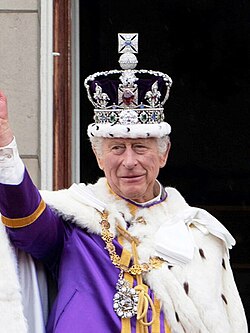
The Evolution and Divisibility of the Crown
Historically, the Crown was viewed as a single entity. However, as British dominions gained control over the royal prerogative (the customary powers of the monarch) during the 1930s, the concept evolved. Today, the Crown is considered divisible.
The Path to Autonomy
The 1926 Balfour Declaration was a pivotal moment, recognizing dominions as autonomous communities equal in status and not subordinate to one another, though still united by a common allegiance to the Crown. This was later enshrined in the Statute of Westminster 1931, which established that changes to the succession to the throne or royal titles would require the assent of both the UK Parliament and the dominion parliaments.
Challenges to Unity
This unity has faced practical challenges. For example, during the 1936 abdication of Edward VIII, the Irish Free State implemented the change a day later than the UK and other dominions, resulting in a 24-hour period where two different kings reigned across different realms. Conversely, the 2011 Perth Agreement showed modern cooperation, as Commonwealth realms worked together to end male-preference primogeniture, with changes taking effect simultaneously in March 2015.
![The mace of the Parliament of Queensland, symbolising the authority of parliament as derived from the Crown.[49]](/images/52/9b/529bfa866585e44c706a8064233310b87cf10261bb3109c0b9bfe976fe6dc1e5.jpg)
Symbolism and Representation
The Crown is visually represented in heraldry, government logos, uniforms, and cap badges. The specific design of the heraldic crown is chosen by the reigning monarch and has changed over the centuries:
- 1661 to Queen Victoria: St Edward's Crown was primarily used.
- Mid-19th Century: The Imperial State Crown appeared early in Victoria's reign, followed by the Tudor Crown from the 1860s.
- 1901 to 1952: The Tudor Crown design was standardized.
- 1952 to 2022: Elizabeth II restored the heraldic St Edward's Crown.
- 2022 to Present: Charles III opted for a modified Tudor Crown design.
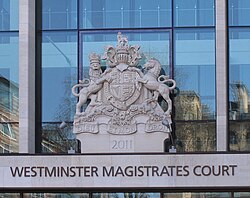
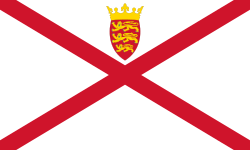
These symbols appear on various state buildings and official flags, such as the flag of Jersey, which features the badge of Jersey surmounted by a Plantagenet crown.
Summary of the Crown's Legal Framework
| Perspective | Meaning/Application | Key Characteristic |
|---|---|---|
| Legal/Corporate | Corporation Sole | Separates public office from private person |
| Administrative | The Executive Government | Includes ministers and civil servants |
| Political | The State/Country | Represents the entirety of the realm's authority |
| Constitutional | Divisible Crown | Operates independently in each realm |
Frequently Asked Questions
Is the Crown the same thing as the physical crown worn by the monarch?
No. While physical crowns (like the Imperial State Crown) are symbols of the office, "the Crown" as a political and legal concept refers to the institution of the state and the executive authority it wields.
What does it mean for the Crown to be a "corporation sole"?
It means the office of the monarch is treated as a legal entity that continues regardless of who the individual person holding the office is. This allows the state to own property and enter contracts that do not belong to the monarch personally.
How does the "divisibility of the Crown" work?
Divisibility means that the monarch acts as the head of state for each realm separately. For example, the Crown in right of Canada operates independently of the Crown in right of Australia, reflecting the autonomy of each nation.
Who represents the Crown in daily government operations?
The Crown is represented by the monarch and their direct representatives, as well as the executive government, including ministers and parliamentary secretaries who direct the civil service.