Governor-General: Evolution and Role within the Commonwealth Realms
The office of the Governor-General has undergone a profound transformation, evolving from a tool of imperial control into a symbol of national sovereignty. Once the primary agent of the British government in distant territories, the Governor-General now serves as the representative of the monarch within independent Commonwealth realms, balancing ceremonial duties with critical constitutional responsibilities.
The Imperial Era: Agents of the British Government
Until the 1920s, Governors-General were British subjects appointed on the advice of the British government. In this era, they functioned as dual entities: they were representatives of the monarch, but they also acted as agents of the British government in each Dominion. This allowed the British colonial secretary to instruct them on key functions, including whether to grant or withhold royal assent (the formal approval required for a bill to become law).
During this period, the Governor-General held significant executive and prerogative powers. They typically served as the commander-in-chief of the local armed forces, making the role as much a military appointment as a civil one. To reflect this status, they were entitled to wear a unique ceremonial uniform.
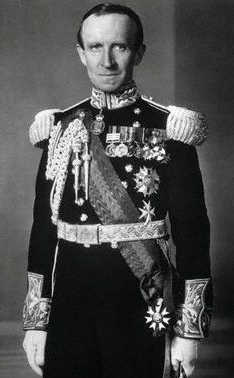
Transition to Commonwealth Realms
The nature of the office shifted following the 1926 Imperial Conference and the subsequent Balfour Declaration. This shift recognized the increasing independence of the Dominions (renamed realms in 1952). The declaration established that the Governor-General was the representative of the Crown alone, not the representative or agent of the British government.
These principles were legally entrenched by the Statute of Westminster in 1931. Consequently, the monarch became the sovereign of each territory independently, advised only by the ministers of that specific country. Diplomatic relations with the United Kingdom were transferred to a British High Commissioner.
Today, in independent Commonwealth realms, the Governor-General is the constitutional representative of the monarch (currently King Charles III). While the monarch remains the formal head of state, the Governor-General exercises executive authority on their behalf, acting primarily on the advice of the national prime minister.
Key Facts
- Appointment: Modern Governors-General are appointed by the monarch on the advice of the realm's own prime minister.
- Role: Primarily ceremonial, but they act as a non-partisan "umpire" to ensure the constitution is followed.
- Style: They and their spouses are accorded the style of His/Her Excellency.
- Residence: The official residence is typically known as Government House.
- Reserve Powers: In rare constitutional crises, they may exercise reserve powers independently of the prime minister.
Constitutional Authority and Reserve Powers
Under normal circumstances, the Governor-General follows constitutional convention by acting on the advice of the prime minister. However, they possess reserve powers to ensure governmental stability. While rare, these powers have led to significant historical events, such as the 1975 dismissal of Australian Prime Minister Gough Whitlam by Sir John Kerr, and the 1926 refusal of Viscount Byng of Vimy to dissolve the Canadian parliament.
In some realms, there is ongoing debate regarding the "head of state" designation. In Australia, while the King is the head of state, the Governor-General's performance of almost all regal functions leads some to refer to the office as the head of state in political discourse. Similar uncertainties exist in Canada.
Appointment and Succession
The tradition of appointing British citizens ended as realms sought greater autonomy. A pivotal moment occurred in 1929 when Australian Prime Minister James Scullin insisted on the appointment of Isaac Isaacs, an Australian. Since then, it has become standard for the Governor-General to be a citizen of the realm they serve.
If a Governor-General is unable to serve due to death, resignation, or incapacity, different realms have different temporary replacements:
- Australia: An Administrator of the Commonwealth (usually the longest-serving state governor).
- Canada, New Zealand, The Bahamas, and Jamaica: The Chief Justice.
- Papua New Guinea, Solomon Islands, and Tuvalu: The Speaker of Parliament.
Summary of Current Commonwealth Realms with Governors-General
| Commonwealth Realm | Office Title | Established/Joined |
|---|---|---|
| Australia | Governor-General of Australia | 1901 |
| Canada | Governor General of Canada | 1867 |
| New Zealand | Governor-General of New Zealand | 1917 |
| Jamaica | Governor-General of Jamaica | 1962 |
| Papua New Guinea | Governor-General of Papua New Guinea | 1975 |
| The Bahamas | Governor-General of the Bahamas | 1973 |
| Solomon Islands | Governor-General of Solomon Islands | 1978 |
| Tuvalu | Governor-General of Tuvalu | 1978 |
| Belize | Governor-General of Belize | 1981 |
| Antigua and Barbuda | Governor-General of Antigua and Barbuda | 1981 |
| Saint Lucia | Governor-General of Saint Lucia | 1979 |
| Saint Vincent and the Grenadines | Governor-General of Saint Vincent and the Grenadines | 1979 |
| Grenada | Governor-General of Grenada | 1974 |
| Saint Kitts and Nevis | Governor-General of Saint Kitts and Nevis | 1983 |
Frequently Asked Questions
Who appoints the Governor-General today?
The monarch appoints the Governor-General, but only on the direct advice of the prime minister of the specific Commonwealth realm concerned.
What are the reserve powers of a Governor-General?
Reserve powers are exceptional authorities that allow a Governor-General to act independently of the prime minister's advice, typically used only during constitutional crises to ensure the government is functioning legally.
Is the Governor-General the same as the Head of State?
Constitutionally, the monarch is the head of state. However, because the Governor-General performs almost all regal functions, they are sometimes referred to as the head of state in media or political discussions, particularly in Australia.
Do Governors-General still wear military uniforms?
While traditionally they wore a unique ceremonial uniform, this practice has largely been abandoned or is only used on very specific occasions. Most now wear appropriate medals on civilian clothing when required.
What happens if a Governor-General cannot fulfill their duties?
Depending on the realm, a temporary replacement is appointed. This may be the Chief Justice (as in Canada), the Speaker of Parliament (as in Tuvalu), or an Administrator (as in Australia).