The Atlanta Constitution: A Legacy of Southern Journalism
The history of The Atlanta Constitution is inextricably linked to the evolution of the American South. From its humble beginnings as a small local paper to its role as a Pulitzer Prize-winning powerhouse, the publication has mirrored the social, political, and industrial shifts of Georgia and beyond.
Founding and Early Growth
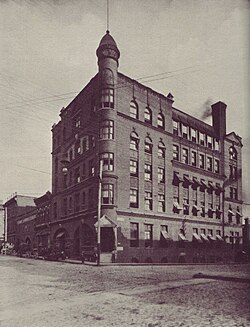
The publication began on June 16, 1868, when Carey Wentworth Styles, James Anderson, and future Atlanta mayor William Hemphill purchased the Atlanta Daily Opinion. They renamed the paper The Constitution, later changing it to The Atlanta Constitution in October 1869. Early ownership was volatile; Styles eventually surrendered his interest to Anderson and Hemphill due to financial difficulties regarding holdings in an Albany newspaper.
By 1870, Col. E. Y. Clarke purchased Anderson's half-interest. The paper's growth was fueled by aggressive competition; business manager William Hemphill even hired special trains consisting of one engine and car to deliver papers to the Macon marketplace. This strategy proved successful, and by 1871, the paper had overwhelmed the Daily Intelligencer, the only Atlanta newspaper to survive the American Civil War.
The Howell Era and the New South
In 1876, Captain Evan Howell purchased E. Y. Clarke's interest and became editor-in-chief. Under the Howell family's ownership, which lasted from 1902 to 1950, the paper became a cultural touchstone. This era saw the arrival of Joel Chandler Harris, who created the character Uncle Remus to share stories from African-American culture.
During the 1880s, editor Henry W. Grady used the paper as a platform to advocate for the New South—a vision emphasizing industrial development over a purely agrarian economy. Grady's influence extended beyond the page, as he encouraged the founding of Georgia Tech in Atlanta.
Broadcasting and Media Expansion
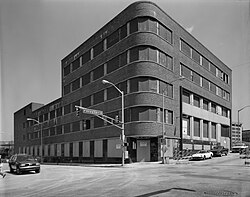
The Constitution was a pioneer in early media, launching one of the first radio stations, WGM, on March 17, 1922. Although WGM ceased operations after a year, its equipment was donated to the Georgia School of Technology, helping launch WBBF (which eventually became WGKA AM 920).
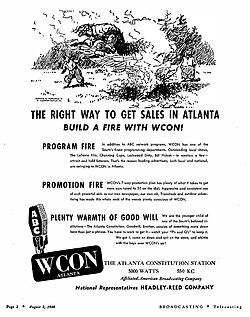
In late 1947, the paper expanded its reach again by establishing radio station WCON (AM 550), followed by WCON-FM 98.5 mHz and WCON-TV on channel 2.
The 1950 Merger and FCC Regulations
A 1950 merger with the Journal necessitated significant changes due to Federal Communications Commission (FCC) duopoly regulations—rules that prohibited owning more than one AM, FM, or TV station in a single market. Because the Atlanta Journal already owned WSB AM 750, WSB-FM 104.5, and WSB-TV channel 8, several adjustments were made:
- WCON and the original WSB-FM were shut down.
- The WCON-TV construction permit was canceled.
- WSB-TV moved from channel 8 to channel 2.
- WCON-FM was renamed WSB-FM to maintain brand consistency.
Notable Voices and Journalistic Excellence
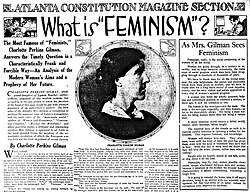
The paper has been home to some of the most influential writers in Southern history. Ralph McGill, an editor in the 1940s, was a rare Southern editor to support the American Civil Rights Movement. Other significant figures include J. Reginald Murphy, who later edited the San Francisco Examiner, and Celestine Sibley, a prolific author and columnist from 1941 to 1999. In honor of Sibley, the Georgia House of Representatives named its press gallery after her.
From the 1970s until 1994, Lewis Grizzard provided a unique perspective on Southern "redneck" culture, blending ridicule with respect in his popular humor columns.
Pulitzer Prize Achievements
The Atlanta Constitution's commitment to investigative and editorial excellence is evidenced by its numerous Pulitzer Prizes:
- 1931: Public Service (exposing local corruption).
- 1959: Editorial Writing (Ralph McGill's "A Church, A School...").
- 1960: Local Reporting (Jack Nelson's exposure of abuses at Milledgeville State Hospital).
- 1967: Editorials (Eugene Patterson).
- 1988: Editorial Cartooning (Doug Marlette).
- 1995 & 2006: Editorial Cartooning (Mike Luckovich).
- 2007: Commentary (Cynthia Tucker).
Key Facts
- Founded: June 16, 1868, as The Constitution.
- Key Visionary: Henry W. Grady promoted the "New South" and Georgia Tech.
- Broadcasting: Launched WGM in 1922 and WCON in 1947.
- Civil Rights: Editor Ralph McGill was a prominent supporter of the Civil Rights Movement.
- Accolades: Multiple Pulitzer Prizes spanning Public Service, Local Reporting, and Editorial Cartooning.
| Category | Details |
|---|---|
| Original Name | Atlanta Daily Opinion |
| Key Ownership Period | Howell Family (1902–1950) |
| First Radio Station | WGM (est. 1922) |
| Notable Columnists | Lewis Grizzard, Celestine Sibley |
| Major Merger | Merged with the Journal in 1950 |
Frequently Asked Questions
How did the paper get its name?
It was originally the Atlanta Daily Opinion, but was renamed The Constitution upon its purchase in 1868, eventually becoming The Atlanta Constitution in 1881.
What was the "New South" movement?
Promoted by editor Henry W. Grady in the 1880s, the "New South" encouraged the region to move away from a purely agricultural economy toward industrial development.
Why were WCON and the original WSB-FM shut down?
They were closed to comply with FCC duopoly regulations following the 1950 merger with the Journal, which prohibited owning multiple stations of the same type in one market.
Who was Ralph McGill?
Ralph McGill was an editor for the paper in the 1940s and a notable supporter of the American Civil Rights Movement, winning a Pulitzer Prize for Editorial Writing in 1959.
Which Pulitzer Prizes did the paper win for reporting?
The paper won for Public Service in 1931 for exposing local corruption and for local reporting in 1960 for exposing abuses at Milledgeville State Hospital.