Deep South: History, Demographics, and Political Evolution
The Deep South, often nicknamed the "Cotton States," is a distinct subregion of the United States defined by its complex history of agriculture, racial struggle, and political transformation. From its origins as a collection of British colonies to its modern identity as the "New South," the region has served as a focal point for some of the most significant social and political shifts in American history.
Origins and Early Economics
The foundations of the Deep South were laid during the colonial era, heavily influenced by the plantation system. The colony of South Carolina was dominated by a planter class that migrated from Barbados, bringing with them the Barbados Slave Code of 1661—a set of laws used to control and terrorize the enslaved African American population. This connection to the Caribbean ensured a steady flow of slave-produced sugar to North America and Europe.
In contrast, Georgia was founded by James Oglethorpe as a buffer state to protect British colonies from Spanish Florida. Oglethorpe originally envisioned a province of "sturdy farmers" and prohibited slavery in the colony's charter. However, this ban was lifted by 1751, and Georgia became a royal colony in 1752, eventually aligning with the plantation economies of its neighbors.
![A map of the Thirteen Colonies in 1770, showing the number of slaves in each colony[13]](/images/8e/b0/8eb058b893a1839890ae83cb7fc826223c7314392da3c6e1594374d911719514.jpg)
From Reconstruction to the Civil Rights Movement
Following the American Civil War in 1865, the region entered the Reconstruction era. This period saw emancipated formerly enslaved people and Free Blacks asserting their rights and taking significant roles in state governments, supported by the Federal government and the Union Army. This progress triggered a violent backlash, leading to the rise of the Ku Klux Klan and other white paramilitary groups.
After the Compromise of 1877, Federal forces withdrew from the region. For nearly a century, the civil rights of African Americans were systematically suppressed through Jim Crow laws—state and local laws that enforced racial segregation and white supremacy. It was not until the civil rights movement of the 1950s and 1960s that these systems were challenged, ushering in a transition toward what is now called the "New South."
Key Facts
- Nickname: Known as the "Cotton States" due to the historical dominance of cotton production.
- Demographic Shifts: Between 1916 and 1970, six million African Americans left the region during the Great Migration.
- Political Transition: The region shifted from a Democratic stronghold (the "Solid South") to a Republican stronghold starting around 1964.
- Colonial Influence: South Carolina's early legal codes were modeled after the Barbados Slave Code of 1661.
- Urban Centers: Atlanta, Georgia, stands as the largest metropolitan area in the subregion.
Demographics and the Great Migration
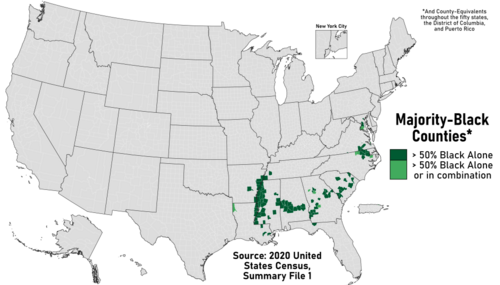
Historically, much of the Lower South had a Black majority. From the early 19th century to the early 20th century, Louisiana, South Carolina, and Mississippi all had populations that were majority-Black at various points. Georgia, Alabama, and Florida also maintained populations near 50% Black.
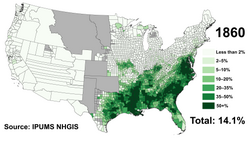
This demographic landscape changed drastically between the 1890s and 1950s during the Great Migration. Over 6.5 million African Americans fled the economically depressed and segregated Deep South for industrial cities in the North, Midwest, and West. For example, by 1940, one-fifth of Florida's Black population had left the state.
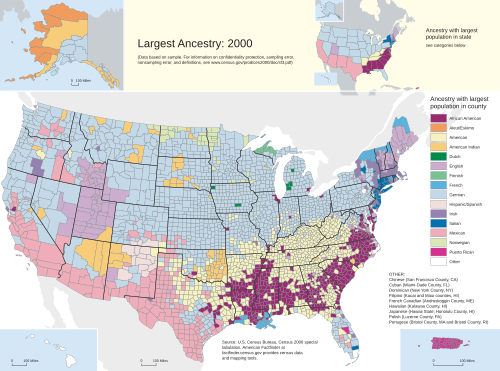
In recent decades, scholars have noted a "New Great Migration," where Black Americans are returning to Southern states, typically settling in "New South" cities with growing economies and better job opportunities.
Political Evolution: The "Solid South" to the Republican Shift
At the turn of the 20th century, Southern states passed constitutions that effectively disenfranchised Black voters and many poor whites. This created the "Solid South," a period where the region was dominated by white Southern Democrats who held immense power in the U.S. Congress.
A pivotal shift occurred during the 1964 presidential election. White conservative voters in the Deep South began moving away from the Democratic Party toward the Republican nominee, Barry Goldwater. This transition was largely driven by resistance to Black progress and the civil rights movement.
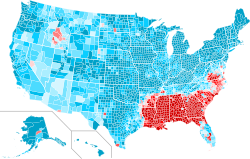
While the region has trended Republican in national elections, there have been notable exceptions. Democratic candidates like Jimmy Carter (1976, 1980), Bill Clinton (1992, 1996), and Joe Biden (2020) have won specific states or the region at different intervals.
Major Urban Centers
The Deep South is home to several major metropolitan hubs that drive its modern economy. Atlanta serves as the primary economic engine, while cities like New Orleans and Birmingham remain culturally and historically significant.
| City | State | City Population | MSA Population | National Rank (MSA) |
|---|---|---|---|---|
| Atlanta | Georgia | 499,127 | 6,222,106 | 6 |
| New Orleans | Louisiana | 369,749 | 1,246,176 | 47 |
| Birmingham | Alabama | 196,910 | 1,116,857 | 50 |
| Greenville | South Carolina | 72,310 | 958,958 | 60 |
| Baton Rouge | Louisiana | 221,453 | 873,060 | 66 |
Frequently Asked Questions
What is the "Solid South"?
The "Solid South" refers to the period in U.S. history when the Southern states were dominated by a single political party—the Democratic Party—which was controlled by white Southerners who held significant influence in national politics.
What was the Great Migration?
The Great Migration was the movement of approximately six million African Americans from the rural Deep South to the Northeast, Midwest, and West between 1916 and 1970 to escape racial violence and seek better economic opportunities.
How did the 1964 election change the region?
The 1964 election marked a turning point where many white conservative voters in the Deep South switched their support from the Democratic Party to the Republican Party, specifically supporting Barry Goldwater.
What are Jim Crow laws?
Jim Crow laws were state and local statutes that legalized racial segregation and disenfranchised African Americans, maintaining a system of white supremacy for nearly a century after Reconstruction.
Which states are traditionally considered part of the Deep South?
The core states typically include Alabama, Georgia, Louisiana, Mississippi, and South Carolina, with Texas and Florida often included in the definition.