Tails in Animals: Functions, Anatomy, and Evolution
In the biological world, a tail is defined as the elongated section at the rear end of a bilaterian animal (an animal with a symmetrical left and right side). Generally, this refers to a flexible appendage that extends backward from the midline of the torso. While we most commonly associate tails with vertebrates, certain invertebrates—including scorpions, springtails, snails, and slugs—possess tail-like structures that serve similar purposes.
In anatomical terms, objects shaped like tails are described as caudate, while the body parts located near the tail are referred to as caudal.
Key Facts
- Tails serve diverse roles, including locomotion, balance, communication, and defense.
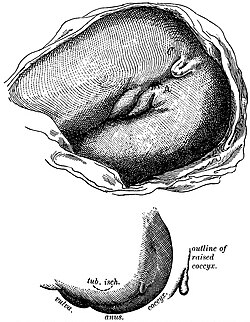
- The coccyx (tailbone) is the vestigial remnant of a tail in humans and other hominid primates.
- Some animals can self-amputate their tails to escape predators, a process known as casting.
- Birds use specialized tail feathers called rectrices for steering and balance.
- Recent research indicates that mouse tail movements for balance are controlled by a specialized vestibulospinal neural pathway.
The Diverse Functions of Tails
Tails are not merely ornamental; they are highly adapted tools that allow animals to survive in their specific environments.
Locomotion and Balance
For aquatic animals such as fish, cetaceans, otters, and crocodilians, the tail provides the primary source of thrust for swimming. On land, vertebrates like cats and kangaroos use their tails as counterweights for balance. Some species, such as opossums and monkeys, have evolved prehensile tails, which act like a fifth limb for grasping branches during arboreal (tree-dwelling) locomotion.
Utility and Survival
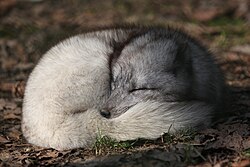
Many grazing animals, including oxen and horses, use their tails to sweep away biting insects and parasitic flies. In colder climates, animals with thick, furry tails—such as foxes—wrap them around their bodies to provide thermal insulation, effectively using their tails as blankets.
Defense and Predation
Some tails are evolved for combat or hunting. Scorpions possess a venomous stinger for killing prey or defending themselves, while stingrays use a thickened spine to cause penetrating trauma. Thresher sharks utilize long tails to stun prey, and some snakes wiggle their tails as a lure to trick prey into thinking they are worms. Historically, armored dinosaurs like ankylosaurs and stegosaurs used spiked or clubbed tails as defensive weapons.
Communication and Signaling
Tails are vital for social interaction. Canines, including domestic dogs, use tail position and movement to signal mood and intention. Other examples include:
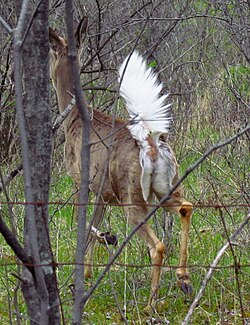
- Deer: Flashing the white underside of the tail to warn others of danger.
- Beavers: Slapping the water with their tails to signal a threat.
- Felids: Quivering their tails during scent-marking.
- Rattlesnakes: Vibrating their tails to create a warning noise.
Specialized Biological Adaptations
Escape Mechanisms
Certain lizards, such as geckos, can perform autotomy (self-amputation), or "casting," where they drop their tail to distract a predator. These tails typically grow back, though the replacement is usually darker and composed of cartilage rather than bone. Some rodents exhibit a similar survival tactic called degloving, where the outer layer of the tail is shed to facilitate escape.
Avian Tail Specialization
In birds, the tail consists of long feathers called rectrices. These act as a rudder for steering during flight and provide stability when perching. In species like peafowl and birds of paradise, modified feathers are used for courtship displays, while woodpeckers have stiff tail feathers that allow them to brace themselves against tree trunks.
The Science of Tail Control and Evolution
Neuronal Control in Mice
Recent scientific studies have uncovered a specialized neural system in mice that manages tail movement during balance-related activities. Motor neurons in the sacral and coccygeal spinal segments receive input from vestibulospinal neurons (specifically from the spinal vestibular nucleus). This pathway is most active during challenging balance conditions, such as walking on a narrow ridge, suggesting that the tail is recruited as part of a context-dependent postural stabilization system.
Tails in Humans
Humans are an acaudal (tailless) species. While human embryos possess a tail bud, this develops into the end of the spine rather than a functional tail. The coccyx, consisting of usually four fused vertebrae, is the homologous vestigial remnant of the ancestral tail.
In rare cases, infants may be born with a "soft tail" (composed of blood vessels, nerves, and muscle) or, more rarely, a "true tail" containing caudal vertebrae due to atavism (the reappearance of an ancestral trait). Fewer than 40 cases of true tails have been reported. In 2024, researchers identified a genetic mutation that likely contributed to the loss of the tail in the common ancestor of humans and other apes.
Summary of Tail Functions
| Primary Function | Examples of Animals | Mechanism/Purpose |
|---|---|---|
| Locomotion | Fish, Cetaceans, Crocodilians | Providing thrust for aquatic movement |
| Balance | Cats, Kangaroos, Birds | Counterweight and steering (rudder) |
| Grasping | Monkeys, Opossums | Prehensile grip for arboreal movement |
| Defense/Attack | Scorpions, Stingrays, Ankylosaurs | Venom, spines, or clubs |
| Communication | Dogs, Deer, Rattlesnakes | Signaling mood, danger, or aggression |
| Insulation | Foxes | Wrapping around the body for warmth |
Frequently Asked Questions
What is the difference between a soft tail and a true tail in humans?
A soft tail consists only of blood vessels, muscles, and nerves without any bone structure. A true tail is a result of atavism and contains actual caudal vertebrae.
How do geckos' tails grow back after being cast?
While the tail regenerates over time, the new growth is typically different from the original; it is usually darker in color and consists of cartilage instead of bone.
What are rectrices?
Rectrices are the long tail feathers found in birds that serve as a rudder for steering during flight and help the bird maintain balance while perched.
How do mice use their tails for balance?
Mice use a specialized neural pathway involving vestibulospinal neurons that trigger tail movements specifically during challenging balance perturbations or when navigating narrow surfaces.
Why do humans have a coccyx if we don't have tails?
The coccyx is a vestigial structure, meaning it is a remnant of a feature that was functional in our evolutionary ancestors but is no longer needed for its original purpose.