Animal Communication: How Creatures Exchange Information
Animal communication is the complex process of transferring information from one animal or group (the sender) to another (the receiver). This exchange is fundamental to survival, as it directly influences the current or future behavior of the receiver. Whether it is a deliberate courtship dance or the unintentional release of kairomones—chemical scents that a predator inadvertently leaves for its prey—these interactions shape the natural world.
In the scientific community, when a message successfully alters the receiver's behavior, it is termed a signal. According to signaling theory, for a specific signal to persist within a population, both the sender and the receiver typically derive some benefit from the interaction. This leads to a process of coevolution, where the production of the signal and the ability to perceive it evolve in tandem.
Key Facts
- Multimodal Signaling: Many animals use a combination of visual, auditory, and chemical signals simultaneously to ensure their message is understood.
- Intentionality: Communication can be intentional (like mating calls) or unintentional (like scent trails).
- Interspecific Exchange: Communication occurs not only within a species but also between different species, such as prey warning others of a predator.
- Coevolution: The mechanisms for sending and receiving signals evolve together to maximize efficiency and survival.
Modes of Animal Communication
Animals have evolved a diverse array of methods to transmit information, depending on their environment and biological capabilities.
Visual Communication
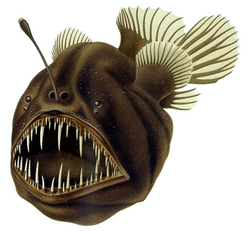
Visual signals are immediate and can convey a wealth of information through gestures, facial expressions, and gaze-following. Some species use more dramatic changes, such as rapid color shifts or bioluminescence—the production and emission of light by a living organism.



Auditory Communication
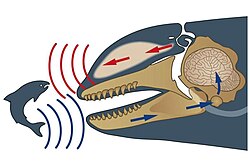
Sound is one of the most versatile modes of communication. It ranges from simple alarm calls that warn a colony of danger to complex songs used for mating and territory marking. Some marine mammals use echolocation, a biological sonar used to navigate and locate prey by emitting sound pulses and listening for the echoes.
![Bird calls can serve as alarms or keep members of a flock in contact, while the longer and more complex bird songs are associated with courtship and mating.[25]](/images/bf/29/bf291247cbddbc362e99107cef4651bdc0711c0860b000c50ef75727b58af29a.jpg)

Olfactory and Chemical Communication
Many animals rely on scent to mark territories, identify mates, or detect predators. This includes the use of pheromones and the Flehmen response, where an animal curls its upper lip to better direct scents to a specialized sensory organ.


Tactile and Other Specialized Modes
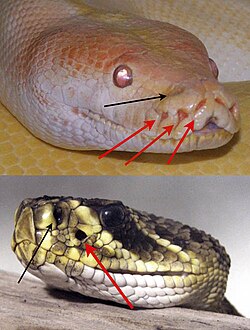
Touch is critical for social integration, mating, and huddling for warmth. Beyond touch, some animals use seismic vibrations (feeling movements through the ground), thermal detection (sensing heat via pit organs), or electric fields to communicate.
Functions of Communication
Communication serves several vital biological and social purposes. These include managing contests to avoid unnecessary injury, performing mating rituals to ensure reproductive success, and establishing ownership of a territory.
Food-related signals and alarm calls are essential for group survival, while meta-communication allows animals to provide context to their other signals. In domestic settings, animals can even be trained to use human-centric signals to communicate their needs.

Interspecific Communication
Communication is not limited to members of the same species. Interspecific communication occurs when animals of different species exchange information. This can be a cooperative effort, such as a sentry prairie dog alerting other animals to a threat, or a predatory interaction where a predator and prey exchange signals of intent or deterrence.


Summary of Communication Modes
| Mode | Examples | Primary Function |
|---|---|---|
| Visual | Bioluminescence, Gestures, Color Change | Courtship, Warning, Identification |
| Auditory | Bird songs, Echolocation, Alarm calls | Mating, Navigation, Danger alerts |
| Olfactory | Scent marking, Pheromones | Territory, Mate attraction |
| Tactile | Grooming, Huddling, Fighting | Social bonding, Mating |
| Specialized | Electric fields, Thermal pits, Seismic | Hunting, Navigation, Species-specific alerts |
Frequently Asked Questions
Do animals have a formal language?
While animals communicate complex information through signals, whether they possess a "language" in the human sense (with grammar and syntax) is a subject of ongoing study in linguistics and animal cognition.
What is the difference between a call and a song in birds?
Bird calls are typically shorter and used for alarms or maintaining flock contact, whereas songs are longer, more complex, and primarily associated with courtship and mating.
How does echolocation work?
Echolocation involves the sender emitting high-frequency sound pulses that bounce off objects in the environment. The receiver then interprets the returning echoes to determine the location and size of the object.
What is the Flehmen response?
The Flehmen response is a behavior where an animal (such as a tiger or horse) curls its upper lip to facilitate the transfer of scents into the vomeronasal organ for deeper chemical analysis.
Can animals communicate across different species?
Yes, this is called interspecific communication. Examples include prey animals using pursuit-deterrent signals to tell a predator they have been spotted, or domestic dogs learning to signal humans for entry into a home.