Syrian People: History, Culture, and Global Diaspora
The Syrian people are an ethnic group with a rich, multilayered history rooted in the Levant. With a total global population estimated at over 41 million, Syrians are defined by a complex blend of ancestral lineages, linguistic evolution, and a resilient cultural identity that spans from the heart of the Middle East to far-reaching communities in the Americas and Europe.
From the ancient civilizations of Mesopotamia to the modern Arab republic, the identity of the Syrian people has been shaped by successive waves of migration, imperial rule, and cultural synthesis.
Key Facts
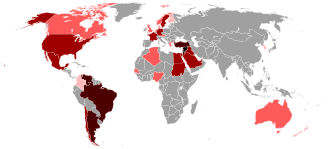
- Total Population: Approximately 41,974,216 globally.
- Primary Language: Arabic (Syrian and Mesopotamian dialects), with Syriac used liturgically.
- Major Religions: Predominantly Islam (Sunni, Shi'a, and Alawite), alongside Druze and Judaism.
- Genetic Profile: Closely linked to Eastern Mediterranean populations, including Cretans and Lebanese Armenians.
- Global Presence: Significant populations in Syria, Brazil, Turkey, Argentina, and Egypt.
Historical Evolution and Identity
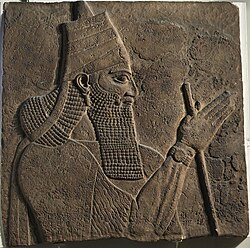
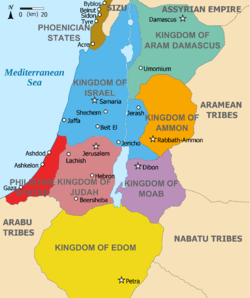
The identity of the Syrian people is not monolithic but is the result of millennia of interaction between various ethnic and linguistic groups. In antiquity, the region was a crossroads of empires, including the Neo-Assyrian Empire, which consolidated and expanded the territory under leaders like Tiglath-Pileser III.
Historically, the region saw the rise of powerful city-states such as Aram-Damascus, reflecting the deep influence of the Arameans on the region's early development.
Linguistic Arabization
A pivotal shift occurred with the process of Arabization—the gradual adoption of the Arabic language and culture. While Arabic became the dominant tongue, some groups retained the Aramaic language, which evolved into Syriac. This liturgical language remains a vital link to the region's Christian heritage.
An interesting linguistic hybrid known as Garshuni emerged, where Arabic is written using the Syriac alphabet, illustrating the intersection of these two linguistic traditions.

Genetics and Ancestry
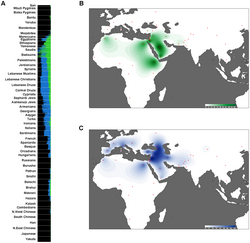
Genetic studies indicate that Syrians share a strong ancestral connection with other Levantine populations, such as Lebanese, Palestinians, and Jordanians. Research highlights specific genetic markers (such as A*24 and B*35) that distinguish Levantine Arabs from other Arab populations.
Furthermore, Syrians show a high degree of genetic proximity to Eastern Mediterranean groups, emphasizing the region's role as a biological and cultural bridge between Asia, Africa, and Europe.
Global Distribution and Diaspora
Due to economic migration and political instability, the Syrian diaspora is one of the most widespread in the world. While the largest population remains within Syria, millions of descendants and refugees have settled globally.
Latin America, particularly Brazil and Argentina, hosts some of the largest Syrian communities outside the Middle East. In recent years, Turkey, Germany, and Jordan have become primary destinations for those fleeing conflict.
| Country/Region | Estimated Population |
|---|---|
| Syria | 25,603,166 |
| Brazil | 4,000,000 |
| Turkey | 3,600,000 |
| Argentina | 2,000,000 |
| Egypt | 1,500,000 |
| Jordan | 1,200,000 |
| Lebanon | 1,129,624 |
| Germany | 712,000 – 1,281,000 |
Culture, Religion, and Society
Syrian society is characterized by its diversity. While the majority of the population practices Islam—primarily Sunni, with Alawite and Shi'a minorities—the country has a long history of religious pluralism, including Druze and Jewish communities.
The arts and literature have also flourished, with figures like the poet Nizar Qabbani gaining international fame for his works written in Arabic, reflecting the deep emotional and political currents of Syrian life.
![Syrian poet Nizar Qabbani wrote his works in the Arabic language was born into a Damascene Arab family. .[152][153][154][155][156][157][158][159][160][161][162]](/images/aa/b2/aab2734831f822b281f67ba4e9a21b0622aa22b80b50c11c8524b2f9d32548a3.jpg)
Culinary Traditions
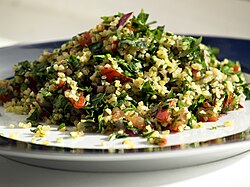
Syrian cuisine is renowned for its freshness and complexity. Dishes such as Tabbouleh (a parsley and bulgur salad) are iconic examples of the Levantine diet, emphasizing the use of olive oil, lemon, and fresh herbs.
Frequently Asked Questions
What are the primary languages spoken by Syrians?
The primary language is Arabic, specifically the Syrian and Mesopotamian dialects. Additionally, Syriac is used as a liturgical language by certain Christian communities.
Which countries have the largest Syrian diaspora populations?
Outside of Syria, Brazil, Turkey, and Argentina have some of the largest populations of Syrian descendants and refugees.
What is the genetic makeup of the Syrian people?
Syrians are genetically close to other Eastern Mediterranean populations, such as Cretans and Lebanese Armenians, and share strong markers with other Levantine Arabs.
What are the main religious groups in Syria?
The population is mainly Muslim (Sunni, Alawite, and Shi'a), but also includes Druze and Jewish minorities.
What is Garshuni?
Garshuni is a writing system where the Arabic language is written using the Syriac alphabet, representing a blend of the region's linguistic history.