Arabic Language: History, Structure, and Global Influence
Arabic is a powerhouse of global communication, serving as a primary language for hundreds of millions of people across the Arab world and beyond. As a member of the Afro-Asiatic language family—specifically the Semitic branch—Arabic is not just a means of communication but a vessel for rich history, religious significance, and complex artistic expression.
From its origins in the deserts of the Arabian Peninsula to its current status as an official language in 24 states and territories, Arabic has evolved into a sophisticated macrolanguage. It is characterized by a unique relationship between its formal written standard and the diverse spoken dialects used in daily life.
Key Facts
- Speakers: Approximately 411 million native speakers and 70 million second-language users (2020–2024).
- Family: Afro-Asiatic > Semitic > West Semitic > Central Semitic.
- Official Status: Official language in 24 countries, including Saudi Arabia, Egypt, Algeria, and Iraq.
- Writing System: The Arabic alphabet, written from right to left.
- Global Reach: Official language of major international organizations like the United Nations and the Arab League.
The Evolution of Arabic Script
The Arabic writing system has undergone significant transformations over centuries. Early forms, such as the Safaitic inscriptions, paved the way for more structured scripts. The Nabataean script is widely considered a direct precursor to the Arabic script we recognize today.
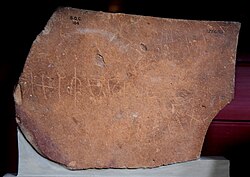
![The Namara inscription of the Lakhmid king Imru al-Qays I ibn Amr, a sample of Nabataean script, considered a direct precursor of Arabic script[46][67]](/images/40/dc/40dc8e496c3b96123ab6f4fd22782ba7661f943a10edb15fdbef080f054bf937.jpg)
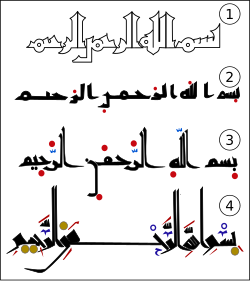
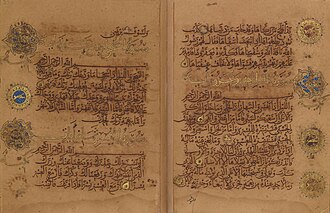
The development of the script was heavily influenced by the need to preserve the Quran. Early Hijazi script from the 7th century provided the foundation, while later Kufic scripts became prominent in early manuscripts. Over time, the system evolved to include dots (diacritics) and vowel marks to ensure precise pronunciation and meaning.
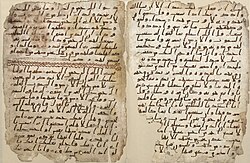
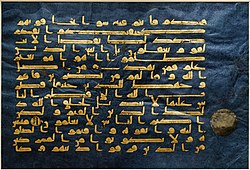
By the 11th century, the system refined by al-Farāhidi—which is still used today—introduced shapes resembling letters to transcribe long vowels. This evolution allowed Arabic to transition from a basic abjad (a system where only consonants are written) to a more comprehensive writing system.
Linguistic Structure: The Root and Pattern System
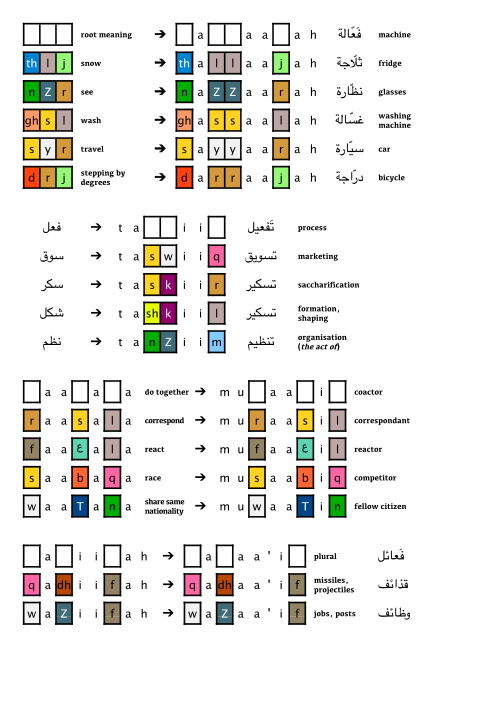
One of the most fascinating aspects of Arabic is its root and pattern system. Most words are derived from a three-letter root (usually consonants) that carries a core meaning. By applying different patterns (vowels and additional consonants), a vast array of related words can be formed.
For example, the root k-t-b relates to the concept of writing. From this single root, Arabic can derive:
- Kataba (He wrote)
- Kitāb (Book)
- Kātib (Writer)
- Maktaba (Library or bookshop)
- Maktūbun (Written)
Verbal Derivations
Arabic verbs are categorized into forms that modify the meaning of the root. For instance, Form I might denote a simple action, while Form II often implies causation (making someone do something) and Form X often implies a request or seeking.
Diglossia: Standard vs. Spoken Arabic
Arabic exists in a state of diglossia, meaning two distinct varieties of the language are used by the same community in different social contexts.
Modern Standard Arabic (MSA)
Modern Standard Arabic is the formal version used in writing, news broadcasts, official speeches, and education. It is the direct descendant of Classical Arabic, the language of the Quran and early literature. MSA serves as the unifying bridge that allows speakers of different dialects to communicate.
Spoken Dialects (Neo-Arabic)
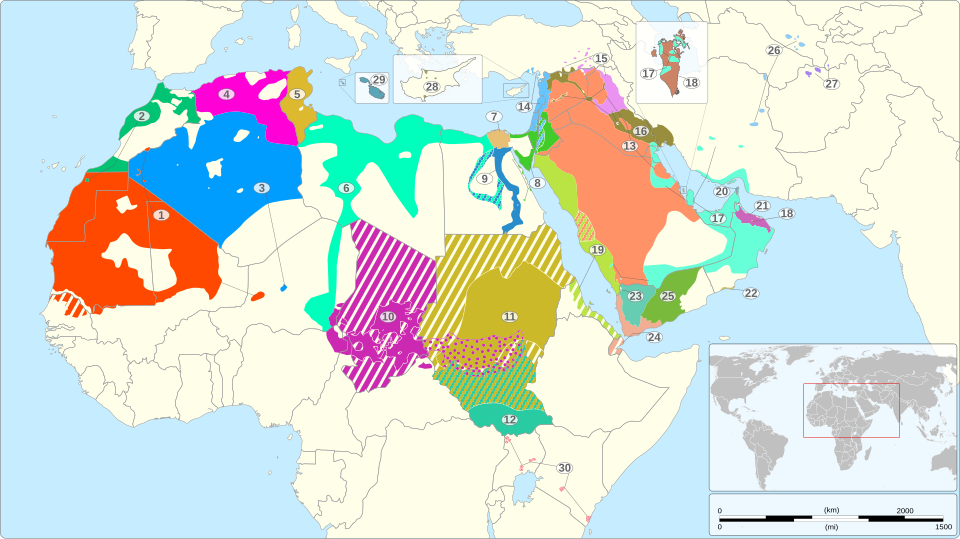
In daily conversation, people speak regional varieties known as dialects. These can vary significantly in pronunciation and vocabulary. Major dialect groups include:
- Maghrebi: Spoken in North Africa (e.g., Morocco, Algeria, Tunisia).
- Egyptian: Widely understood due to the influence of Egyptian media.
- Levantine: Spoken in Lebanon, Syria, Jordan, and Palestine.
- Mesopotamian: Spoken in Iraq and parts of Syria.
- Peninsular: Spoken in the Arabian Peninsula.
Global Distribution and Status
Arabic is the official language of 24 states and territories. Beyond the Arab world, it holds special constitutional status in countries like Iran and Israel and is recognized as a minority language in nations such as Senegal and South Africa.
| Category | Details |
|---|---|
| Native Speakers | ~411 Million |
| Language Family | Afro-Asiatic (Semitic) |
| Official Status | 24 States and Territories |
| Primary Script | Arabic Alphabet |
| Key Varieties | MSA, Egyptian, Levantine, Maghrebi, Gulf |
Artistry and Calligraphy
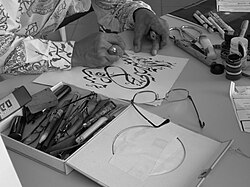
Because of its flowing script and spiritual importance, Arabic calligraphy has become a highly developed art form. It is used not only for religious texts but also as a decorative element in architecture and modern art across the globe, from the Middle East to Southeast Asia.
Frequently Asked Questions
What is the difference between Classical Arabic and Modern Standard Arabic?
Classical Arabic refers to the language of the Quran and early pre-Islamic poetry. Modern Standard Arabic (MSA) is the contemporary version used in formal settings, which has updated its vocabulary to include modern concepts while maintaining the same grammatical structure as Classical Arabic.
Can speakers of different Arabic dialects understand each other?
Generally, yes, but the level of mutual intelligibility varies. While an Egyptian and a Saudi might struggle with some local slang, they can usually communicate using a mix of their dialects and Modern Standard Arabic.
How does the root system work in Arabic?
Arabic uses a system where most words are built from a three-consonant root. By changing the vowels or adding prefixes and suffixes to this root, the language creates different but related meanings, such as turning a verb into a noun or an adjective.
Is Arabic written from left to right or right to left?
Arabic is written and read from right to left. This applies to the text itself, though numbers are typically written from left to right.
In which countries is Arabic an official language?
Arabic is official in 24 states, including Saudi Arabia, Egypt, Iraq, Morocco, Algeria, Jordan, Lebanon, the UAE, Oman, Kuwait, Qatar, Bahrain, Yemen, Syria, Libya, Tunisia, Mauritania, Djibouti, Somalia, Comoros, Chad, Mali, Palestine, and Sudan.