Arabization: The History and Sociology of Cultural Assimilation
Arabization (Arabic: تعريب, romanized: taʻrīb) is a complex sociological process of cultural change. It occurs when a non-Arab society adopts, is forced to accept, or becomes heavily influenced by the Arabic language, culture, literature, art, music, and ethnic identity. This specific form of cultural assimilation often involves a language shift—where a population moves from their native tongue to Arabic—and can sometimes be characterized as linguistic imperialism.
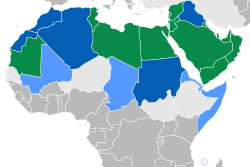
This process applies to entire societies as well as individuals who acclimate to Arab culture. Historically, Arabization followed the Muslim conquests of the Middle East and North Africa. In more recent history, it has been driven by Arab nationalist policies in modern states such as Algeria, Iraq, Syria, Egypt, Bahrain, and Sudan.
Key Facts

- Definition: A process of cultural assimilation where non-Arab societies adopt Arabic language and identity.
- Early Drivers: Spread through trade, marriage, and the early Muslim conquests.
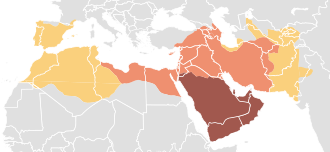
- Imperial Reach: The early Caliphates covered approximately 11,100,000 km², reaching from Iberia to Central Asia.
- Peak Influence: The process reached its zenith during the Islamic Golden Age (10th to 14th centuries).
- Modern Context: Often linked to state-led nationalist policies in North Africa and the Middle East.
The Mechanics of Cultural Spread
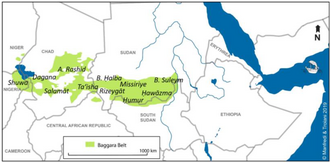
Following the rise of Islam in the Hejaz, Arab culture and language expanded beyond the Arabian Peninsula. This was not solely a result of conquest; trade and intermarriage between peninsular Arabs and local non-Arab populations played a vital role. Over time, Arabic became a lingua franca—a common language used for communication between people who do not share a native tongue—leading to the development of various regional dialects.
The migration of Arab tribes into the Levant and the Maghreb further accelerated this transition. The influence of Arabic extended even to countries where Islam was the primary driver of change, providing a massive source of vocabulary for numerous other languages. This cultural expansion peaked between the 10th and 14th centuries, a period known as the Islamic Golden Age.
Historical Waves of Arabization
The Early Caliphates
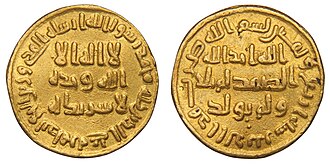
The most significant wave of Arabization occurred under the Rashidun and Umayyad Caliphates. These empires established one of the largest imperial expanses in history. A pivotal moment occurred in 686 CE, when Caliph Abd al-Malik established Arabic as the sole official language of the Umayyad Caliphate, formalizing the administrative shift toward Arabization.
Regional Developments
- The Levant: While Arabic inscriptions existed here prior to the conquests (such as the Safaitic inscriptions from the 1st century BCE to 4th century CE), the Islamic era solidified the region's Arab identity.
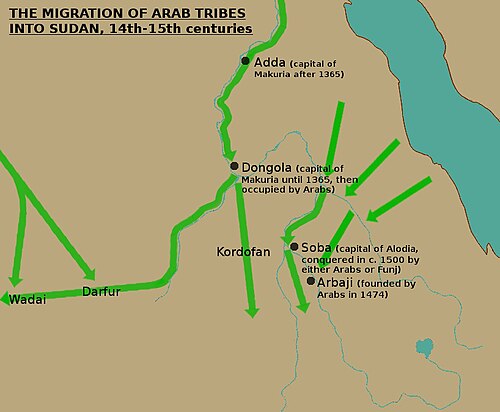
- Sudan: In the 12th century, the Arab Ja'alin tribe migrated into Nubia and Sudan. Later, in the 16th and 17th centuries, the establishment of the Funj Sultanate and the Sultanate of Darfur initiated a long period of gradual Islamization and Arabization.
The Maghreb and Al-Andalus
The spread of Arabic into North Africa (the Maghreb) and the Iberian Peninsula (Al-Andalus) created deep linguistic and cultural layers. However, these regions also saw the most significant tensions between Arab identity and indigenous cultures, such as the Berbers.
Arabization in the Modern Era
In the 20th century, Arabization shifted from a gradual social process to a deliberate state policy in several newly independent nations.
Algeria and the Berber Conflict
In Algeria, state-led Arabization policies aimed to replace French and indigenous Berber languages. This led to significant opposition, particularly among the Kabyles, who felt their ancestral culture was threatened. This tension contributed to the October Riots of 1988. Eventually, the government made concessions, recognizing Berber as a national language in 2002, though Arabic remains the primary language for civil and administrative procedures.
Sudan and Iraq
In Sudan, Modern Standard Arabic (MSA) and English are official languages. Prior to the independence of South Sudan in 2011, the central government in Khartoum enforced Arabization policies on southern populations who primarily spoke Nilo-Saharan languages or Juba Arabic.
In Iraq, Ba'athist policies pressured ethnic minorities to identify as Arabs and restricted their native languages and cultural expressions. These policies were so severe that they drove approximately 500,000 people out of the country between 1991 and 2003.

Reversions and Language Loss
Arabization is not always permanent. In Sicily, the Arab identity established between 827 and 902 CE began to fade following the Norman conquest of southern Italy (999–1139), largely disappearing by the mid-13th century.
Conversely, some languages are nearly extinct due to the dominance of Arabic. In Oman, the Bathari language is critically endangered, with estimates suggesting fewer than 100 speakers remain, as modern education is conducted solely in Arabic.
| Region | Primary Driver | Key Outcome/Conflict |
|---|---|---|
| Levant | Early Conquests | Widespread adoption of Arabic as primary tongue. |
| Algeria | State Policy | Tension between Arab identity and Berber culture. |
| Sudan | Tribal Migration/State Policy | Mixed Arab-Nubian identity; conflict in the South. |
| Iraq | Ba'athist Nationalism | Forced identification; displacement of minorities. |
| Sicily | Emirate of Sicily | Temporary Arabization reversed by Norman conquest. |
Frequently Asked Questions
What is the difference between Islamization and Arabization?
Islamization is the process of adopting the religion of Islam, whereas Arabization is the sociological process of adopting Arab culture, language, and ethnic identity. While they often happened simultaneously, they are distinct processes.
Was Arabization always forced?
No. While some modern state policies and early conquests involved coercion, much of the early Arabization occurred naturally through trade, marriage, and the use of Arabic as a lingua franca for commerce and administration.
Which regions experienced the most resistance to Arabization?
The Maghreb (particularly among Berber populations in Algeria) and the Kurdish regions of Iraq and Syria have shown significant resistance to state-led Arabization policies.
How did the Umayyad Caliphate accelerate Arabization?
The Umayyad Caliphate, specifically under Caliph Abd al-Malik in 686 CE, mandated that Arabic be the sole official language of government administration, making the language essential for social and political advancement.
Can Arabization be reversed?
Yes. The history of Sicily serves as a primary example, where the Arab identity was largely erased following the Norman conquest in the 11th through 13th centuries.