Swallows and Martins: Biology, Behavior, and Diversity of the Hirundinidae Family
Swallows and martins, members of the family Hirundinidae, are master aerialists of the bird world. These small, agile passerines (perching birds) are specialized aerial insectivores, meaning they hunt insects while flying. With a fossil record dating back to the Early Miocene, these birds have evolved highly efficient bodies designed for high-speed maneuvers and long-distance travel.
Key Facts
- Physical Range: Body lengths vary from 10 to 24 cm, with weights between 10 and 60 g.
- Diet: Specialized hunters that use a wide gape to catch insects mid-air.
- Migration: Temperate species migrate to avoid winter insect collapses, while tropical species are more sedentary.
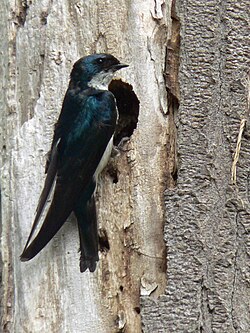
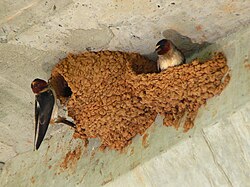
- Nesting: Diverse habits including mud nests, tree cavities, and artificial colonies.
- Taxonomy: The family comprises 21 different genera.
Physical Characteristics and Anatomy
Swallows are built for efficiency in the air. They possess long, pointed wings with nine primary feathers and tails consisting of 12 feathers. Depending on the species, tails may be square-ended, indented, or deeply forked. A longer tail generally increases maneuverability and often serves as a sexual signal; for example, male barn swallows have tails 18% longer than females, a trait females use when selecting mates.
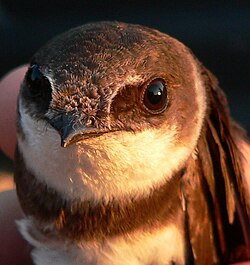
While they share a similar hunting style with swifts and nightjars, swallows are not closely related to them. They are characterized by short bills but possess strong jaws and a wide gape (the width of the open mouth), allowing them to scoop up insects during flight.
Size Variations
There is significant size diversity within the family. The Fanti saw-wing is among the lightest, with a mean mass of 9.4 g. Conversely, the purple martin and southern martin are the heaviest, both typically exceeding 50 g.
Distribution and Survival Strategies
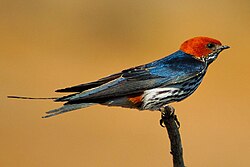
The distribution of Hirundinidae is global, with survival strategies varying by climate. In temperate regions, swallows migrate during winter when their food sources disappear. Tropical species are often more sedentary, though some are partial migrants.
Historically, it was believed that swallows hibernated underwater or in a state of torpor (a state of decreased physiological activity to save energy). While Aristotle and later observers like Rev. Gilbert White suspected this, it wasn't scientifically confirmed until a 1988 study on house martins. Some species, such as the white-backed swallow in Australia, are also suspected of using torpor to conserve energy during harsh weather.
Breeding and Nesting Habits
Swallow breeding is characterized by diverse nesting architectures and varying levels of parental cooperation. Eggs are typically white, though those of mud-nesting species may be speckled. Clutch sizes generally range from four to five eggs in temperate zones and two to three in the tropics.
Incubation and Care
Incubation duties vary by species. In cliff swallows, males and females share duties equally. In barn swallows, the American subspecies shows some male assistance, while the European subspecies does not. Even in species where males do not actively incubate, they may sit on the eggs to prevent heat loss while the female feeds. Eggs typically hatch within 10 to 21 days.
Species Diversity and Global Presence
The family Hirundinidae is broad, encompassing various genera such as Hirundo, Tachycineta, and Progne. Some species have attained significant cultural status; the barn swallow is the national bird of Estonia and is one of the most common birds depicted on global postage stamps.
![The barn swallow is the national bird of Estonia.[49] They also are one of the most depicted birds on postage stamps around the world.[50][51][52]](/images/52/5c/525ceaaf1cc05b621106eb1c0c1505220ed8d54b4733b11de64eb27e48feb2f5.jpg)
Conservation status varies across the family. While many are widespread, others are precarious; for instance, the Bahama swallow is currently listed as an endangered species.
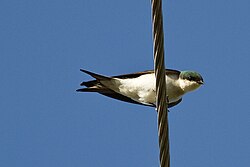
Human interaction with these birds often involves providing nesting opportunities, such as the artificial colonies used by purple martins.
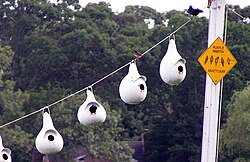
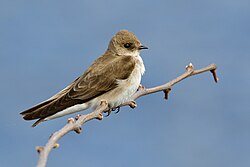
Summary of Swallow Characteristics
| Feature | Range/Detail | Notes |
|---|---|---|
| Body Length | 10–24 cm | Varies by species |
| Weight | 10–60 g | Fanti saw-wing is smallest; Purple martin is largest |
| Clutch Size | 2–5 eggs | Higher in temperate regions |
| Hatching Period | 10–21 days | 14–18 days is most typical |
| Primary Feathers | 9 | Standard across the family |
Frequently Asked Questions
Do swallows actually hibernate underwater?
No. While ancient thinkers like Aristotle believed swallows withdrew underwater for the winter, this is a myth. They actually migrate or, in some cases, enter a state of torpor to survive cold weather.
What is the difference between incubation and heat loss prevention?
Incubation involves actively warming the eggs to facilitate development. Some male swallows who do not incubate will still sit on the eggs to stop heat loss while the female is away, which is a protective measure rather than active incubation.
Why do male barn swallows have longer tails?
Longer tails increase flight maneuverability and serve as a sexual adornment. Females typically select mates based on tail length, as it is an indicator of fitness.
Which swallow is the heaviest?
The purple martin and the southern martin are the heaviest species in the family, both typically weighing over 50 g.
Are all swallows migratory?
Not all. While those in temperate regions must migrate when insect populations collapse, many species in tropical areas are sedentary or only perform short-distance migrations.