Barn Swallow
The Barn Swallow (Hirundo rustica) is a widespread and iconic member of the swallow family, Hirundinidae. Known for its graceful flight and distinctive deeply forked tail, this species is one of the most recognizable birds across the Northern Hemisphere. As an aerial insectivore—a bird that feeds on insects while flying—it plays a vital role in controlling insect populations across diverse ecosystems.
From the Arctic Circle to the shores of Africa and Asia, the barn swallow is a master of migration, covering thousands of kilometers annually to find optimal breeding and wintering grounds.

Key Facts
- Scientific Name: Hirundo rustica
- Conservation Status: Least Concern (IUCN 3.1)
- Distinctive Feature: Deeply forked "swallow tail" with elongated outer feathers.
- Diet: Aerial insects.
- Migration: Some populations travel up to 11,660 km (7,250 mi) annually.
- Flight Speed: Estimated between 11 m/s (40 km/h) and 20 m/s (72 km/h).
Physical Description
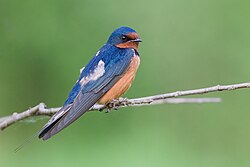
Adult males of the nominate subspecies (H. r. rustica) typically measure 17–19 cm in length, which includes 2–7 cm of elongated outer tail feathers. They possess a wingspan of 32–34.5 cm and weigh between 16 and 22 g. Their plumage is characterized by steel blue upperparts and a rufous (reddish-brown) forehead, chin, and throat. A broad dark blue breast band separates these warm tones from their off-white underparts.
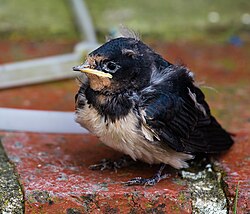
Females share a similar appearance but generally have shorter tail streamers, less glossy blue plumage, and paler underparts. Juveniles are noticeably browner with a paler rufous face, whiter underparts, and lack the long tail streamers seen in adults.


Taxonomy and Subspecies
The barn swallow is classified under the order Passeriformes. While there are six recognized subspecies, two of the most prominent include:
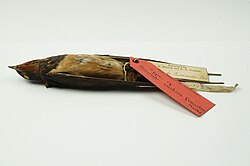
- H. r. rustica: The nominate European subspecies. It breeds from Europe and Asia (as far north as the Arctic Circle) to North Africa, the Middle East, and Sikkim. These birds migrate to winter in Africa, Arabia, and the Indian subcontinent. This subspecies was the first to have its genome sequenced.
- H. r. mandschurica: This subspecies breeds in northeastern China and winters in southeastern Asia.
Habitat and Distribution
Barn swallows are found across the Northern Hemisphere, breeding from sea level up to 2,700 m (8,900 ft), and reaching altitudes of 3,000 m (9,800 ft) in North America and the Caucasus. They are absent only from the coldest northernmost regions and arid deserts.
Their relationship with human settlements varies by region. In Europe, they typically avoid towns, where they are often replaced by the house martin. Conversely, in Honshū, Japan, the barn swallow is more urban, while the red-rumped swallow (Cecropis daurica) occupies rural areas.
Behavior and Ecology
Feeding and Flight
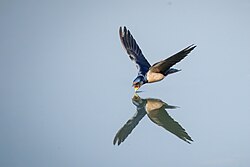
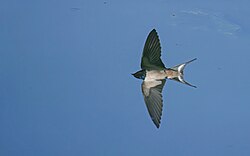
As aerial insectivores, barn swallows spend the majority of their active hours on the wing. They are not the fastest of the aerial hunters, with speeds ranging from 11 m/s to 20 m/s. Their wing beat rate is approximately 5 to 9 times per second, allowing for the high maneuverability required to catch insects mid-air.
Breeding and Development
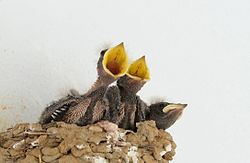
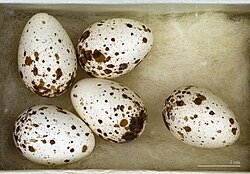
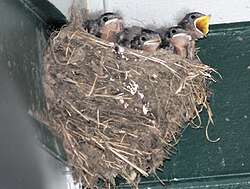
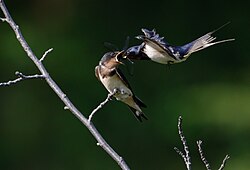
The breeding cycle involves the construction of nests and the rearing of young. The development of the chicks progresses from hatching to fledge, during which they are heavily dependent on parental feeding.
Parasites
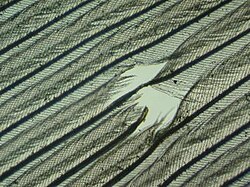
Like many bird species, barn swallows are subject to parasites. Research has identified feeding traces of Brueelia lice on their tail feathers, which can cause visible holes in the plumage.
Summary Table: Barn Swallow Specifications
| Feature | Details |
|---|---|
| Length | 17–19 cm (including tail streamers) |
| Weight | 16–22 g |
| Wingspan | 32–34.5 cm |
| Max Flight Speed | 20 m/s (72 km/h) |
| Max Migration Distance | 11,660 km (7,250 mi) |
| Conservation Status | Least Concern |
Frequently Asked Questions
What makes the barn swallow's tail unique?
The barn swallow is characterized by its deeply forked "swallow tail," created by elongated outer tail feathers known as streamers. These are more prominent in adult males than in females or juveniles.
How far do barn swallows migrate?
Migration distances vary by population, but some barn swallows wintering in southern Africa have been recorded traveling up to 11,660 km (7,250 mi) during their annual journey.
What do barn swallows eat?
They are aerial insectivores, meaning they feed exclusively on insects that they catch while flying through the air.
Where can barn swallows be found?
They breed across the Northern Hemisphere, from sea level to high altitudes (up to 3,000 m in some regions), excluding deserts and the extreme northern polar regions.
How do juveniles differ from adults?
Juvenile barn swallows are browner in color, have whiter underparts and a paler rufous face, and lack the long, distinctive tail streamers of the adults.