Sungshin Women's University: A Legacy of Academic Excellence
Founded on a vision of empowerment and education, Sungshin Women's University has evolved from a modest girls' school into a comprehensive institution of higher learning. Its journey reflects a commitment to academic diversification and the continuous expansion of opportunities for women in various professional fields.
The institution began its journey on April 28, 1936, when Dr. Lee Sook Chong established Sungshin Girls' School. This foundation set the stage for decades of growth, transitioning through various institutional statuses to meet the changing needs of the educational landscape.
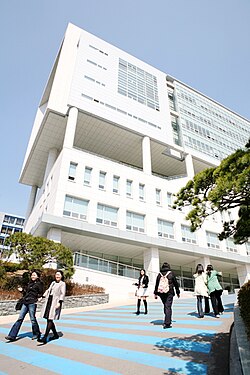
Key Facts
- Founded: April 28, 1936, as Sungshin Girls' School by Dr. Lee Sook Chong.
- University Status: Officially promoted to university status on July 31, 1981.
- Accreditations: Awarded the ISO 9001:2000 Certification for Academic and Business Management Systems in 2003.
- Recognition: Named a "University of Excellence with a Distinctive Project" by the Ministry of Human Resources and Education for three consecutive years (2004–2006).
- Expansion: Established the Woonjung Campus (Second Campus) following a vision proclaimed in 2008.
Institutional Evolution and Academic Expansion
Between 1965 and 1979, the institution underwent a period of rapid expansion. This era saw the creation of the Sungshin Women's Teachers College in January 1965, followed by the Sungshin Graduate School in January 1972, and the Sungshin Graduate School of Information and Industries in December 1979.
A pivotal shift occurred on October 18, 1979, when the school was renamed Sungshin Women's College. Just two years later, in 1981, it achieved full university status. This promotion allowed for a significant reorganization of its academic structure, leading to the creation of several specialized colleges:
- College of Humanities
- College of Social Sciences
- College of Natural Sciences
- College of Education
- College of Arts
Specialization and Departmental Growth
As the university matured, it further refined its academic offerings. In October 1982, the College of Natural Sciences was reorganized into the College of Family Sciences, which is known today as the College of Human Ecology. The Graduate School of Education was subsequently established on October 29, 1983.
The late 1980s and 1990s focused on artistic and industrial specialization. In 1988, the College of Arts was split into the College of Music and the College of Fine Arts. By 1994, the Graduate School of Industry was divided into the Graduate School of Plastic Industry (now the Graduate School of Arts and Design) and the Graduate School of Information Industry (now the Graduate School of Cultural Industry).
Infrastructure and Quality Assurance
The physical campus grew alongside its academic reputation. Key building dedications include the Woonjung Building (1988), the Soo-Jung Building (1995), the Nan-Hyang Building (1995), the Media Information Center (2003), and the Sungshin Building (2006). Additionally, the university opened the Family Health & Welfare Center on January 20, 2005.
The university's commitment to quality was validated by the Ministry of Education. In 1999, the undergraduate program was ranked as "excellent" and the graduate program as "most excellent." A similar evaluation in 2006 ranked both programs as "excellent." These achievements were complemented by the 2003 ISO 9001:2000 certification for its management systems.
| Year | Event/Milestone |
|---|---|
| 1936 | Founded as Sungshin Girls' School |
| 1981 | Promoted to University status |
| 1988 | Dedication of Woonjung Building |
| 2003 | ISO 9001:2000 Certification received |
| 2007 | Establishment of the College of Nursing |
| 2008 | Proclamation of the Woonjung Campus vision |
Recent Developments and Leadership
In 2007, the university expanded its healthcare offerings with the establishment of the College of Nursing. This period also saw the inauguration of Dr. Shim Hwa-jin as the eighth university president on August 11, 2007. However, this tenure ended in controversy when Dr. Shim was convicted of embezzling school funds by a Seoul court on February 7, 2017.
Looking toward the future, President Kim Ho-syung announced plans on January 23, 2018, to discuss transitioning the institution to a co-educational system. This proposal includes the potential change of the English trading name to "Sungshin University," removing the word "women's" to reflect a more inclusive student body.
Frequently Asked Questions
Who founded Sungshin Women's University?
The institution was founded by Dr. Lee Sook Chong on April 28, 1936, originally as Sungshin Girls' School.
When did the institution become a university?
Sungshin was promoted to university status on July 31, 1981, after previously serving as a college.
What is the Woonjung Campus?
The Woonjung Campus is the second campus of Sungshin Women's University, a project envisioned and proclaimed in April 2008.
Has the university received any official quality certifications?
Yes, in 2003, the university was awarded the ISO 9001:2000 Certification for Academic and Business Management Systems.
Is Sungshin Women's University planning to admit men?
In January 2018, President Kim Ho-syung announced plans to discuss making the university co-educational and updating the English name to Sungshin University to prepare for this transition.