West Texas A&M University: A Century of Academic Evolution
From its humble beginnings as a teacher-training college to its current status as a comprehensive regional university, West Texas A&M University (WTAMU) has mirrored the growth and shifting social landscapes of the Texas Panhandle. The institution's journey is marked by resilience, artistic prestige, and a continuous expansion of its academic mission.
Key Facts
- Founded: 1910 as West Texas State Normal College.
- Notable Faculty: Modernist artist Georgia O'Keeffe headed the Art Department (1916–1918).
- System Affiliation: Joined the Texas A&M University System on September 1, 1990.
- Historic Milestone: Helen Neal became the first Black student to graduate in 1962.
- Major Endowment: The Paul and Virginia Engler College of Business was named following a record $80 million gift.
The Early Years: Normal College and Artistic Roots
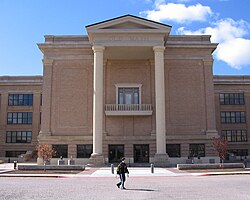
The institution opened in 1910 as West Texas State Normal College, a Normal College (an institution designed to train teachers). Under its first president, Robert B. Cousins, the school began with 16 faculty members and 152 white students. The early years were fraught with challenges; the original Administration Building, which housed all classrooms, the library, and laboratories, burned down on March 25, 1914. Undeterred, the college continued operations in vacant buildings, courthouses, and local churches until a new Administration Building opened in 1916.
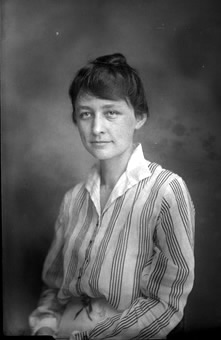
One of the most distinguished chapters of this era was the hiring of Georgia O'Keeffe, the "Mother of American modernism," who served as the head of the Art Department from the fall of 1916 until February 1918.
Expansion and the Transition to a Teachers College
By 1919, the school began granting its first four-year college degrees. This growth led to a name change in 1923 to West Texas State Teachers College and subsequent accreditation by several major bodies, including the American Association of Teachers Colleges (1922) and the Southern Association of Colleges and Secondary Schools (1925). During the 1930s, the campus became a cultural hub with the addition of the Panhandle-Plains Historical Museum.
Post-War Growth and Social Tension
The late 1940s brought a surge of enrollment due to the G.I. Bill of Rights, which provided assistance to returning World War II veterans. The influx was so great that soldiers slept in the gymnasium using beds sourced from a former prisoner of war camp in Hereford. This era also saw political friction; in 1948, sociology professor Joseph L. Duflot sparked controversy by criticizing "modern capitalism," leading to threats from legislator Sam Hanna regarding state funding. Despite an initial dismissal, Duflot was reinstated after support from regent H.L. Mills.
The Path to University Status
In 1949, the institution became West Texas State College. The 1950s and 60s were characterized by the Cold War's influence, with some faculty, such as history professor John Cook, labeling campus anti-communist films as propaganda. This period also saw the rise of conservative political figures like historian J. Evetts Haley.
The 1960s marked a pivotal shift toward inclusivity and academic diversification. In 1962, Helen Neal became the first Black student to graduate from the institution. In 1963, Governor John B. Connally signed the bill officially renaming the school West Texas State University. This transition expanded the curriculum to include a graduate school, a College of Arts and Sciences, and professional schools for business, agriculture, fine arts, and nursing.
Athletics and Financial Hurdles
The university's athletic history is notable for its football program, which served as a prolific pipeline for professional wrestling legends, including Dusty Rhodes, Terry Funk, and Ted DiBiase. While the school competed in NCAA Division I in the Missouri Valley Conference, it transitioned to Division II and the Lone Star Conference in 1984.
Financial instability hit in the 1970s as enrollment declined due to tuition hikes and changes in the Selective Service System. Later, in the 1980s, President Ed Roach faced protests over the cost of the Presidential House, which exceeded authorized spending, and was later indicted in 1991 for diverting scholarship funds.
The Texas A&M Era and Modern Development
On September 1, 1990, the university joined the Texas A&M University System, officially adopting the name West Texas A&M University in 1993. The "A&M" designation refers to "Agricultural and Mechanical," stemming from the Morrill Land-Grant Acts. Under the leadership of Presidents Barry B. Thompson and Russell C. Long, the university expanded its research capabilities, adding its first PhD in agriculture.
Philanthropy and Infrastructure
The university's relationship with T. Boone Pickens was complex. After years of service on the board and a $1.5 million gift to the business school, a 2004 misunderstanding regarding pledges led to the removal of his name from the college. While Pickens later endowed professorships in business and management, the business school was renamed the Paul and Virginia Engler College of Business in 2017 following a historic $80 million gift.
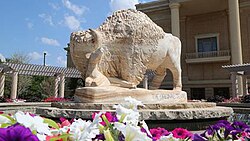
Under President J. Patrick O'Brien (appointed 2006), the campus underwent a massive transformation. Key projects included the Sybil B. Harrington Fine Arts Complex, the Buffalo Sports Park, and the Engineering and Computer Science Building renovation. Additionally, the "Share your Pride" campaign (2009–2014) successfully raised over $50 million for scholarships and faculty support.
Recent Developments
In recent years, the university has faced internal challenges. In 2023, the faculty senate voted "no confidence" in President Wendler following the cancellation of a student drag show and other leadership concerns. Most recently, in 2024, the university implemented a ban on accessing gambling sites via all university-owned devices and Wi-Fi networks.
| Year | Institutional Name | Key Milestone |
|---|---|---|
| 1910 | West Texas State Normal College | Founded as a teacher training school |
| 1923 | West Texas State Teachers College | Granted four-year degrees; expanded accreditation |
| 1949 | West Texas State College | Post-WWII enrollment surge via G.I. Bill |
| 1963 | West Texas State University | Transition to state university; added graduate schools |
| 1993 | West Texas A&M University | Joined Texas A&M University System |
Frequently Asked Questions
Who was the first Black graduate of the university?
Helen Neal became the first Black student to graduate from the institution in 1962.
What does the "A&M" in the university's name stand for?
The "A&M" stands for "Agricultural and Mechanical," a designation derived from the Morrill Land-Grant Acts.
Which famous artist taught at the college?
Georgia O'Keeffe, recognized as the "Mother of American modernism," served as the head of the Art Department from 1916 to 1918.
What is the largest gift the university has ever received?
The largest gift in the university's history was $80 million, provided by Paul and Virginia Engler, leading to the naming of the Paul and Virginia Engler College of Business.
Why did the university change its athletic division in 1984?
The university decided to change its status from NCAA Division I (Missouri Valley Conference) to Division II and joined the Lone Star Conference.