The Chinese University of Hong Kong: A History of Academic Evolution
The Chinese University of Hong Kong (CUHK) stands as a testament to the resilience of scholars and the evolution of higher education in the region. Established in 1963, the university began not as a single entity, but as a federation of three distinct colleges, each born from the tumultuous political and social shifts of the mid-20th century.
The Three Founding Pillars
The university's origins are rooted in three colleges that brought diverse academic and ideological perspectives to the federation.
New Asia College
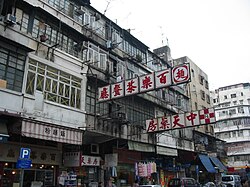
Founded in 1949 by anti-Communist Confucian scholars including Ch'ien Mu, Tang Junyi, and Tchang Pi-kai, New Asia College focused on Chinese heritage and social concerns. Its early years were marked by financial hardship and instability, with the school relocating several times across rented premises in Kowloon. It wasn't until 1956, with support from the Ford Foundation, that the college established a permanent campus in Kau Pui Lung.
Chung Chi College
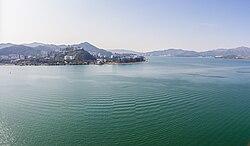
Established in 1951 by Protestant churches, Chung Chi College was created to maintain theological education following the closure of Christian institutions in mainland China. Starting with just 63 students in rented spaces on Hong Kong Island, the college moved to its current location in Ma Liu Shui in 1956. By 1962, it had grown to 531 students across 10 departments.
United College
United College was formed in 1956 through the merger of five private colleges from Guangdong province: Canton Overseas, Kwang Hsia, Wah Kiu, Wen Hua, and Ping Jing College of Accountancy. Under its first president, F.I. Tseung, the college initially operated from Caine Road on Hong Kong Island, hosting over 600 students.
The Path to University Status
In 1957, these three institutions formed the Chinese Colleges Joint Council. By 1959, the Hong Kong government signaled its intent to create a university that used Chinese as the primary medium of instruction. This led to the Post-Secondary Colleges Ordinance of 1960, which provided the funding necessary for the colleges to elevate their standards to university level.
The transition was guided by the Fulton Commission, led by Vice-Chancellor John Fulton of the University of Sussex. The commission recommended a federal structure, which was formalized by the Chinese University of Hong Kong Ordinance in September 1963. The university was officially inaugurated on October 17, 1963, by founding chancellor Sir Robert Brown Black, with Li Choh-ming appointed as the first vice-chancellor.
Campus Development and Structural Shifts
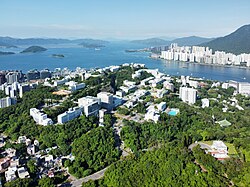
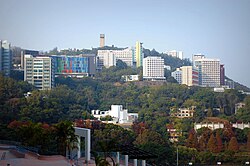
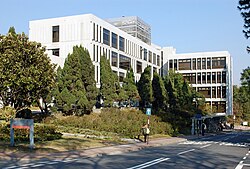
The university's physical identity grew around the Ma Liu Shui site. A development plan by W. Szeto and Partners utilized granite quarry plateaus to house the colleges and central administration. This era produced the university's signature concrete aesthetic and the monumental University Mall.
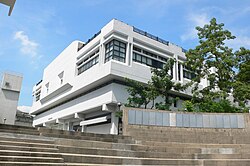
As the institution grew, so did its academic scope. The School of Education was founded in 1965, followed by the first Graduate School in Hong Kong in 1966. The School of Medicine arrived in 1977, later establishing the Prince of Wales Hospital in 1984.
From Federation to Unitary System
The 1970s brought a significant constitutional shift. A second Fulton Report recommended centralizing academic policy, finances, and degree awarding under the university administration, leaving colleges to focus on "student-oriented teaching." This move toward a unitary university was controversial; New Asia College and Chung Chi College officials feared the collegiate system would be reduced to "empty shells." Despite the opposition, these changes were enacted in December 1976.
Modern Expansion and Technological Milestones
The university continued to expand its footprint and influence through the late 20th and early 21st centuries:
- 1985-1990: Shaw College was established through a 500 million HKD donation from Sir Run Run Shaw.
- 1991: CUHK established Hong Kong's first internet connection.
- 1995: The Hong Kong Internet Exchange (HKIX) was founded, creating a regional internet hub.
- 2000s: To accommodate the 334 Scheme (a policy to increase university place quotas), five new colleges were added: Morningside, S. H. Ho, C. W. Chu, Wu Yee Sun, and Lee Woo Sing.
Campus Life and Political Tension
The university has often been a focal point for student activism and political expression.
The Goddess of Democracy Controversy
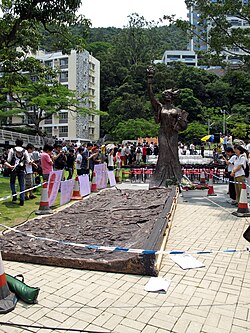
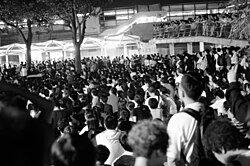
In 2010, a conflict arose when the university administration initially rejected a student union request to permanently install a "Goddess of Democracy" statue, citing the need for political neutrality. Following intense student protests and public outcry, the university relented on June 4, allowing the statue on campus.
The 2019 Protest Conflict
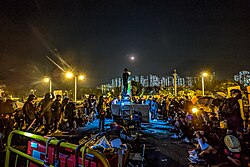
During the 2019–20 Hong Kong protests, the campus became a site of violent clashes. In November 2019, riot police entered the campus to disperse protesters, utilizing tear gas, rubber bullets, and bean bag rounds. The resulting two-day siege led to at least 70 student injuries and the eventual cancellation of the semester and a full university evacuation.
Key Facts
- Founded: 1963 as a federation of New Asia, Chung Chi, and United Colleges.
- Location: Main campus situated in Ma Liu Shui.
- Firsts: Established Hong Kong's first Graduate School (1966) and first internet connection (1991).
- Structure: Transitioned from a federal system to a unitary university in 1976.
- Expansion: Now includes nine colleges, including the founding three and later additions like Shaw College.
| College | Founded | Original Focus/Origin | Key Figures/Founders |
|---|---|---|---|
| New Asia College | 1949 | Confucian scholars; Chinese heritage | Ch'ien Mu, Tang Junyi, Tchang Pi-kai |
| Chung Chi College | 1951 | Protestant churches; theological education | Protestant churches in HK |
| United College | 1956 | Merger of five Guangdong private colleges | F.I. Tseung (First President) |
Frequently Asked Questions
How was the Chinese University of Hong Kong originally structured?
It was formed in 1963 as a federation of three existing colleges: New Asia College, Chung Chi College, and United College.
What was the purpose of the Fulton Commission?
The Fulton Commission was tasked with assessing whether the three government-funded post-secondary colleges were suitable to become constituent colleges of a new federal university.
Why was the transition to a unitary university controversial?
Colleges like New Asia and Chung Chi feared that centralizing academic and financial power would destroy the collegiate system, leaving the colleges as "empty shells" or mere estate managers.
What is the significance of the 334 Scheme for CUHK?
The 334 Scheme led to an increase in student numbers, which prompted the university to establish five new smaller colleges in the 2000s to provide housing and facilities.
What happened during the November 2019 campus conflict?
The campus experienced a two-day siege by riot police involving tear gas and rubber bullets, resulting in at least 70 student injuries and the cancellation of the academic semester.