Understanding Sub-orbital Spaceflight: From Ballistic Missiles to Space Tourism
When we think of space travel, we often imagine satellites orbiting the Earth or astronauts living on the International Space Station. However, there is a distinct and vital category of flight known as sub-orbital spaceflight. Unlike orbital flight, which requires enough speed to stay in constant freefall around the planet, a sub-orbital flight follows a trajectory that reaches the edge of space before falling back to Earth.
A flight is generally considered sub-orbital if it reaches the Kármán line—the internationally recognized boundary of space located between approximately 83 km (52 mi) and 100 km (62 mi) above sea level. While these flights do not stay in space, they are essential for scientific research, testing new technologies, and, increasingly, providing brief experiences of weightlessness for tourists.
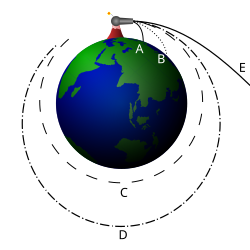
The Mechanics of Sub-orbital Flight
The primary difference between sub-orbital and orbital flight lies in velocity (speed). To achieve Low Earth Orbit (LEO), a spacecraft must reach an altitude of about 300 km and maintain a speed of approximately 7.7 km/s. This requires a massive amount of energy, known as delta-v (the change in velocity required to perform a maneuver).
In contrast, sub-orbital flights do not need to reach these extreme speeds. For example, a long-range intercontinental flight might reach a maximum speed of 7 km/s and an altitude of over 1,300 km, but it will still eventually return to the surface. Because these vehicles return to Earth, they must all undergo atmospheric reentry, where they face aerodynamic heating. The intensity of this heat depends heavily on the vehicle's maximum speed; a flight peaking at 1 km/s experiences significantly less heat than one traveling at 7 or 8 km/s.
Key Facts
- Space Boundary: Sub-orbital flights typically reach the Kármán line (83 km to 100 km).
- Velocity: Sub-orbital flights require significantly less delta-v than orbital flights.
- Primary Uses: Scientific sounding rockets, ballistic missile testing, and commercial space tourism.
- Reentry: All sub-orbital flights must undergo atmospheric reentry upon return.
Historical Evolution and Flight Profiles
The history of sub-orbital flight is deeply intertwined with military development. The first sub-orbital vehicles were ballistic missiles. The German V-2 rocket was the first to reach space on October 3, 1942, reaching an altitude of 85 km. Following World War II, both the US and USSR developed advanced versions of these rockets, leading to the creation of Intercontinental Ballistic Missiles (ICBMs).
Beyond weaponry, sub-orbital flight has served several critical roles:
- Scientific Research: Since the 1920s, researchers have used sounding rockets—uncrewed vehicles designed to carry instruments into the upper atmosphere—to study microgravity and the space environment.
- Testing Technology: Many sub-orbital missions serve as "testbeds" for vehicles intended for future orbital missions.
- Crewed Exploration: From early American pioneers to modern commercial passengers, humans have used sub-orbital paths to experience the edge of space.
Notable Milestones in Crewed Flight
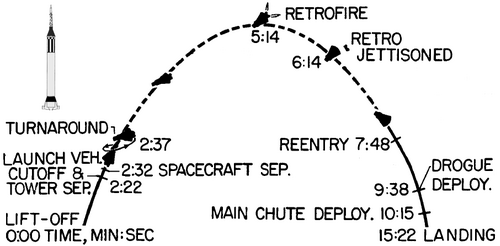
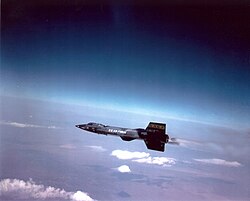
The era of human sub-orbital flight began in earnest in 1961. Alan Shepard became the first American in space aboard Mercury-Redstone 3, followed shortly by Virgil Grissom. Later, the X-15 program demonstrated the potential of winged, air-launched craft, with Joseph A. Walker becoming the first person to make two separate flights into space in 1963.
The Rise of Commercial Space Tourism
In recent years, the focus of sub-orbital flight has shifted toward the private sector. Companies like Virgin Galactic and Blue Origin are leading the charge in making space accessible to non-professional astronauts.
Virgin Galactic's SpaceShipTwo program utilizes a unique "feathered" reentry configuration and a mother-ship (WhiteKnightTwo) to carry the craft to high altitudes before it ignites its hybrid rocket motor. Meanwhile, Blue Origin's New Shepard rocket provides vertical launches, carrying passengers to altitudes exceeding 100 km, offering several minutes of weightlessness before returning via parachute.
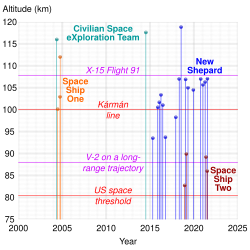
Summary of Notable Sub-orbital Missions
| Mission Name | Year | Type | Key Achievement/Note |
|---|---|---|---|
| V-2 Test Rocket | 1944 | Uncrewed | First sub-orbital flight to reach 176 km |
| Albert II | 1949 | Uncrewed | First mammal in space (rhesus macaque) |
| Mercury-Redstone 3 | 1961 | Crewed | First American in space (Alan Shepard) |
| X-15 Flight 90 | 1963 | Crewed | First winged craft in space |
| SpaceShipOne | 2004 | Crewed | First commercial spaceflight |
| Blue Origin NS-16 | 2021 | Crewed | First crewed Blue Origin flight |
Frequently Asked Questions
What is the difference between sub-orbital and orbital flight?
The main difference is speed and trajectory. Orbital flight requires enough velocity (about 7.7 km/s for LEO) to stay in orbit around the Earth. Sub-orbital flight reaches a high altitude but does not have the speed to stay in orbit, meaning the craft will eventually fall back to Earth.
How high is the edge of space?
The Kármán line, which is widely used to define the boundary of space, is located between 83 km (52 mi) and 100 km (62 mi) above sea level.
Can sub-orbital flights be used for transportation?
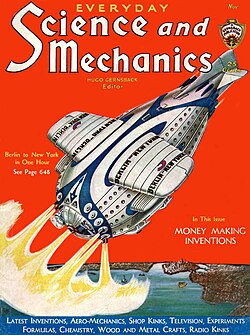
Yes, there is ongoing interest in using sub-orbital trajectories for point-to-point Earth-to-Earth transportation, potentially allowing for extremely fast intercontinental travel.
What are sounding rockets?
Sounding rockets are uncrewed sub-orbital vehicles used primarily for scientific research. They carry instruments into the upper atmosphere or space to conduct experiments in microgravity or above the Earth's atmosphere.
Who was the first person to fly a winged craft into space?
Joseph A. Walker was the first person to fly a winged craft into space, achieved during X-15 Flight 90 in 1963.