Aerospace Engineering: The Science of Flight and Space Exploration
The term aerospace encompasses the vast technology and industry dedicated to both the Earth's atmosphere and the reaches of outer space. It is a diverse field that integrates commercial, industrial, and military applications through two primary disciplines: aeronautics, which focuses on flight within the atmosphere, and astronautics, which deals with spacecraft and travel beyond it.
To distinguish between these two realms, scientists often refer to the Kármán line. This theoretical boundary is set at 100 kilometres (62.1 mi) above the ground, a point where the air density becomes too low for a traditional lifting body to generate sufficient lift without reaching orbital velocity.

Key Facts
- Aerospace engineering is divided into aeronautics (atmospheric flight) and astronautics (spaceflight).
- The Kármán line, located at 100 km altitude, marks the boundary between the atmosphere and space.
- Modern aviation concepts were pioneered by George Cayley, who proposed the fixed-wing design.
- The Space Age officially began with the launch of Sputnik 1 in October 1957.
- Aerospace spinoff technologies, such as endoscopes, generate billions in revenue across various industries.
A Brief History of Flight and Space
The foundations of modern aerospace were laid in 1799 by engineer George Cayley. He proposed an aircraft featuring a fixed wing and both horizontal and vertical tails—the fundamental characteristics of the modern aeroplane.
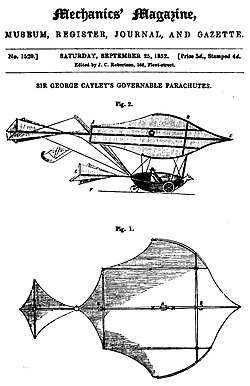
As the 19th century progressed, aeronautics evolved into a rigorous scientific discipline through the establishment of organizations like the Aeronautical Society of Great Britain. Pioneers such as Otto Lilienthal introduced cambered airfoils (curved wing shapes) using gliders to study aerodynamic forces. His work, along with that of Octave Chanute, heavily influenced the Wright brothers, who achieved the first powered, sustained flight at Kitty Hawk, North Carolina, on December 17, 1903.
The mid-20th century shifted focus toward the stars. The launch of Sputnik 1 in 1957 ignited the Space Age, followed by the historic Apollo 11 Moon landing in 1969. The 1980s brought regular crewed access to orbit via the Space Shuttle, eventually leading to a sustained human presence in space through the Mir station and the International Space Station.
Global Aerospace Manufacturing and Industry
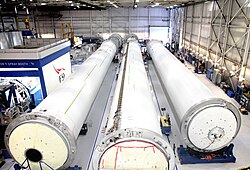
The aerospace industry is a massive global economic driver. In the United States, the largest consumers of this technology are NASA, the Department of Defense, and the commercial airline industry. Major American manufacturers include Boeing, SpaceX, Northrop Grumman, and Lockheed Martin.
Globally, the industry shows significant regional strengths:
- India: Bangalore serves as a major hub, home to the Indian Space Research Organisation (ISRO), which launched the Chandrayaan-1 Moon orbiter in 2008.
- China: Major centers in Beijing, Shanghai, and Chengdu drive extensive capabilities in military aircraft, missiles, and space vehicles.
- Pakistan: The Pakistan Aeronautical Complex in Kamra manufactures various aircraft, including the JF-17 Thunder, and develops unmanned aerial vehicles (UAVs).
- Canada: While relying more on imports from the US and Europe today, Canada has a history of significant development, such as the Avro Canada CF-105 Arrow.
Industry Consolidation
The aerospace and defense sectors have seen massive consolidation. Between 1988 and 2011, over 6,068 mergers and acquisitions were announced, totaling a known value of US$678 billion. Notable transactions include United Technologies Corporation's acquisition of Rockwell Collins for $30.0 billion in 2018.
Technological Innovations
Aerospace advancement is driven by constant technological breakthroughs. Key innovations that have shaped the industry include:
- Aerodynamics: The development of high-lift devices like flaps and slats, the use of swept wings to reduce drag, and the invention of retractable landing gear.
- Propulsion: The transition from piston engines to gas turbine jet engines, and the evolution of high-bypass ratio engines for better fuel efficiency.
- Materials and Safety: The introduction of Plexiglas for lighter windshields, the development of g-suits to protect pilots from high-gravity forces, and the invention of the modern ejection seat.
- Avionics and Computing: The creation of the first transistorized airborne digital computers and the development of sophisticated radar systems.
Functional Safety and Spinoffs
Because there is no room for error, the industry is governed by strict functional safety standards. Regulatory bodies like the European Aviation Safety Agency (EASA) ensure compliance with rigorous certification standards such as AS 9100.
Beyond flight, aerospace research produces valuable spinoffs—technologies originally designed for space that are repurposed for everyday use. These advancements have generated billions in revenue and impact fields like medicine (e.g., endoscopes), transportation, and consumer electronics.
Summary of Aerospace Industry Overview
| Category | Key Elements |
|---|---|
| Primary Disciplines | Aeronautics and Astronautics |
| Space Boundary | Kármán Line (100 km) |
| Major US Players | Boeing, SpaceX, Lockheed Martin, Northrop Grumman |
| Safety Standards | AS 9100, EN 9100, JISQ 9100 |
| Common Spinoffs | Medical endoscopes, cellular devices, computing technology |
Frequently Asked Questions
What is the difference between aeronautics and astronautics?
Aeronautics refers to the science and technology of flight within the Earth's atmosphere, while astronautics refers to the science and technology of spaceflight beyond the atmosphere.
Where does space officially begin?
While definitions vary, the Kármán line is a widely accepted physical explanation, marking the boundary at 100 kilometres (62.1 miles) above Earth where air density is too low for aerodynamic lift.
Who were the pioneers of modern flight?
George Cayley is credited with proposing the modern fixed-wing aircraft design, while the Wright brothers achieved the first powered, sustained flight in 1903.
What are aerospace spinoffs?
Spinoffs are technologies originally developed for aerospace or NASA missions that are later redesigned for use in other industries, such as medicine, energy, or consumer goods.
How is safety ensured in aerospace engineering?
Safety is maintained through strict regulation by bodies like the European Aviation Safety Agency and adherence to international functional safety standards like AS 9100.