Standard Stock: The Evolution of London's Early Tube Trains
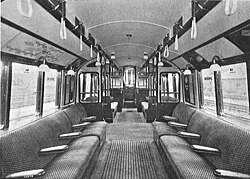
The introduction of Standard Stock marked a pivotal shift in the efficiency and capacity of the London Underground. Emerging in the 1920s, these trains were designed to modernize the network, specifically to support the expansion of the Hampstead tube and the integration of the City and South London Railway. By creating a fleet of interchangeable vehicles from various manufacturers, London established a versatile system that could adapt to the growing demands of the city.
The Birth of Standard Stock (1923–1925)
The first batch of Standard Stock arrived in 1923, with 191 cars ordered to support extensions from Golders Green to Edgware and Clapham Common to Morden. A significant challenge was the City and South London Railway, which had tunnels only 10 feet 6 inches (3.20 m) in diameter and previously relied on small electric locomotives. By 1925, the reconstruction of these tunnels allowed for the deployment of the new vehicles.
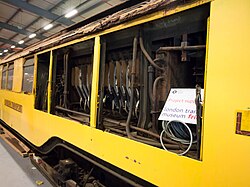
Technologically, this era saw a shift in traction control. While British Thomson-Houston (BTH) had previously dominated, most early cars used Metropolitan-Vickers equipment, featuring electro-magnetic contactors for automatic acceleration. A small number of cars used General Electric Co (GEC) equipment, which was designed to work in multiple with the Metropolitan-Vickers systems.
Early door operations were a point of trial and error. The initial C-type door engines proved inadequate, leading to the introduction of the D-type (later DL-type) engine in 1924, which became the standard until 1931.
Logistical Challenges in Delivery
Because the Hampstead Line lacked a mainline railway connection, delivery required a complex road-to-rail process. Bodies and bogies (the chassis/wheel assemblies) were transported by road to Morden and Golders Green depots. Using large gantries and steam cranes, the bodies were lifted and united with the bogies before being hauled away by steam engines.
Expanding the Fleet and Improving Operations
As the network grew, so did the trains. Between 1924 and 1927, hundreds of additional cars were ordered to increase train lengths from five to seven cars. This period saw the rise of BTH as the preferred supplier of traction control due to its superior reliability, leading to the retrofitting of earlier batches.
Operational efficiency also improved through crew reductions. Originally, trains required a three-person crew: a motorman, a front conductor, and a rear guard. By 1927, the successful implementation of air-operated doors, interlocks, and onboard telephones allowed the crew to be reduced to two people.
Technical Refinements and the 'Feltham Stock'
In 1927, the 'Z' bogie was introduced, increasing wheel diameter from 36 inches (91 cm) to 40 inches (100 cm). This necessitated the modification of GEC WT54 motors into WT54A motors to maintain compatibility across the fleet.
During this time, the 1927 Feltham Stock was introduced to replace aging Gate Stock on the Piccadilly and Bakerloo lines. While these cars were modern, their lightweight construction eventually led to structural fractures in the body bolsters and seat risers.
The 'All British' Train and Late-Era Innovations
The 1930 build introduced the 'All British' train, designed for the open sections of the Piccadilly line. These cars featured heaters for passenger comfort and were slightly longer—by 1 foot (0.30 m) for motor cars and 2 feet (0.61 m) for trailers—using tapered ends to navigate curves without fouling the structure gauge.
A major technical leap occurred with the introduction of electro-pneumatic braking alongside the existing Westinghouse air brake. While this initially created compatibility issues, most Standard Stock was updated with the necessary 10-core control jumpers by 1936.
Final Builds and Legacy
The final major expansion occurred in 1931 to support the Piccadilly line's growth to 40 miles (64 km). These trains featured 12 doors per trailer and weak-field control, which allowed for higher speeds and reduced the number of trains needed to maintain service intervals. The very last batch of 26 motor cars was delivered in 1934, some featuring roller bearing axle boxes to reduce maintenance.
Key Facts
- Total Fleet: 645 motor cars, 551 trailers, and 270 control trailers.
- Interoperability: Named "Standard Stock" because cars from different manufacturers and control systems could work together.
- Crew Evolution: Reduced from three members to two by 1927 thanks to air-door interlocks and telephones.
- Braking: Transitioned from standard air brakes to a combined electro-pneumatic and Westinghouse system.
- Wheel Sizes: Shifted from 36-inch (91 cm) 'Y' bogies to 40-inch (100 cm) 'Z' bogies.
| Vehicle Type | Seating Capacity | Key Features |
|---|---|---|
| Motor Car | 30 | Traction equipment, driver's cab |
| Trailer Car | 48 | Maximum passenger capacity |
| Control Trailer | 44 | Cab at one end, no switch compartment |
Frequently Asked Questions
Why was it called "Standard Stock"?
It earned the name because vehicles from several different manufacturers, utilizing three different types of traction control, were designed to be inter-operable within the same trains.
How did the crew size change over time?
Initially, trains were operated by a motorman, a front conductor, and a rear guard. By 1927, the introduction of air-operated door interlocks and communication telephones allowed the crew to be reduced to just two people.
What was the "All British" train?
This was a 1930 build used on the Piccadilly and Northern lines. It was marketed as "All British" to promote domestic materials during the industrial depression and featured heaters for above-ground sections.
What was the purpose of weak-field control?
Introduced in the 1931 build, weak-field control enabled trains to reach higher speeds. This efficiency allowed the Northern line to maintain the same service intervals while using four fewer trains.
How were the trains delivered to the Hampstead Line?
Since there was no mainline rail connection, bodies and bogies were delivered by road. They were assembled at Morden and Golders Green depots using gantries and steam cranes.