Euston Station: History, Evolution, and the High Speed 2 Future
London Euston stands as a pivotal hub in the United Kingdom's rail network. As the first inter-city railway terminal in London, it has evolved from a pioneering 19th-century gateway into a modern transit center. Located in the London Borough of Camden, the station serves as the primary terminus for services heading to the West Midlands, North West England, and Scotland.
Interestingly, the station is not named after its immediate location, but after Euston Hall in Suffolk, the ancestral home of the Dukes of Grafton, who were the primary landowners in the area during the mid-1800s.
Key Facts
- Opening Date: 20 July 1837.
- Management: Currently managed by Network Rail.
- Capacity: 16 platforms.
- Traffic: One of the ten busiest stations in Britain (as of 2023–2024).
- Connectivity: Major interchange for National Rail, London Overground, and the London Underground (Northern and Victoria lines).
- Fare Zone: Located in Travel Zone 1.
The Early Era and the Great Hall
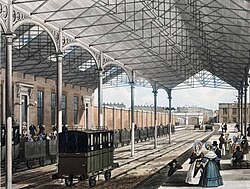
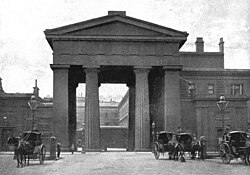
Planned by the legendary George and Robert Stephenson, Euston was designed by Philip Hardwick and constructed by William Cubitt. When it opened in 1837 as the terminus for the London and Birmingham Railway (L&BR), it featured a distinctive architectural landmark: the Euston Arch.
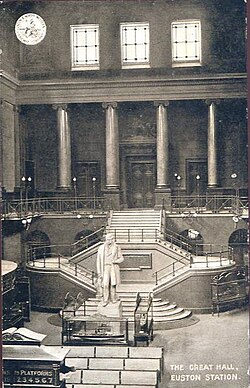
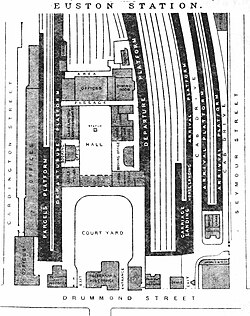
As the railway network grew and the L&BR merged with other companies to form the London and North Western Railway, the station expanded. In 1849, the original sheds were replaced by the Great Hall, and the number of platforms grew from two to fifteen by the end of the century. To accommodate the smoke from steam engines, the station roof was raised by 6 feet (1.8 m) in 1873.
Mid-Century Modernization and Controversy
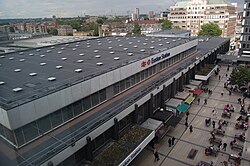
The mid-20th century brought a radical and controversial transformation. Between 1962 and 1968, the station was completely rebuilt to accommodate the electrification of the West Coast Main Line. This process involved the demolition of the beloved Euston Arch and the Great Hall, replacing them with a structure in the international modern style.
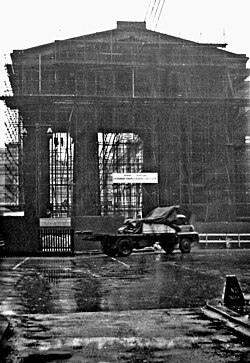
This architectural shift remains a point of criticism today, with many viewing the loss of the original neoclassical structures as a significant cultural blow. Despite the aesthetic debate, the rebuild was necessary to handle the increasing demands of modern electric rail travel.
Current Operations and Services
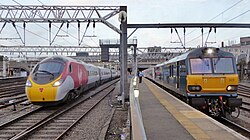
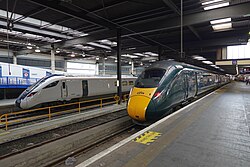
Today, Euston is a high-traffic terminal serving millions of passengers annually. It hosts a variety of operators, most notably Avanti West Coast, which provides InterCity services to cities such as Manchester, Liverpool, Birmingham, and Preston.
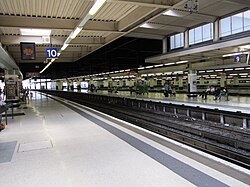
Other key services include:
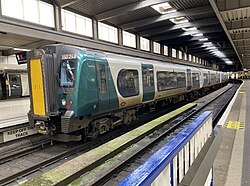
- London Northwestern Railway: Providing regional services to Milton Keynes, Crewe, and Birmingham.
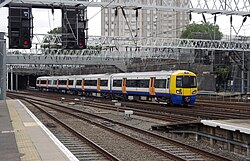
- London Overground: Operating the Lioness line to Watford Junction.
- Caledonian Sleeper: Offering overnight journeys to Glasgow Central and Edinburgh Waverley.
- Lumo: Providing direct services to Stirling.
Station Usage Statistics
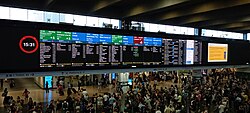
The station has seen a steady increase in passenger volume over recent years, reflecting the growth of rail travel in the UK.
| Year | Entry/Exit (Millions) | Interchange (Millions) |
|---|---|---|
| 2020–21 | 6.607 | 0.843 |
| 2021–22 | 23.098 | 3.121 |
| 2022–23 | 31.318 | 2.124 |
| 2023–24 | 36.185 | 2.680 |
| 2024–25 | 40.249 | 2.433 |
The Future: High Speed 2 (HS2)
Euston is currently at the center of one of the largest infrastructure projects in UK history: High Speed 2 (HS2). The station is being redeveloped to serve as the London terminus for these high-speed lines.
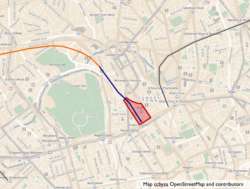
The planned expansion includes adding seven new platforms, bringing the total to 23. Ten of these will be dedicated specifically to HS2 services, while 13 will remain for conventional lines at a lower level. To support this influx of passengers—forecasted to increase by 10,000 per average day—the London Underground station will be rebuilt and connected to the adjacent Euston Square station.
Frequently Asked Questions
Why is the station called Euston?
The station is named after Euston Hall in Suffolk, which was the ancestral home of the Dukes of Grafton, the primary landowners of the area during the mid-19th century.
What happened to the original Euston Arch?
The Euston Arch and the Great Hall were demolished between 1962 and 1968 to make way for a modern station capable of supporting the electrified West Coast Main Line.
Which London Underground lines serve Euston?
Euston is served by the Northern line (both the Charing Cross and Bank branches) and the Victoria line.
How many platforms does Euston currently have?
The station currently has 16 platforms, though this is planned to increase to 23 as part of the HS2 redevelopment.
Who manages London Euston Station?
The station is currently managed by Network Rail.