Species Distribution and Range: Patterns of Life in the Natural World
In the study of biology, how organisms are arranged across space is a fundamental question. Species distribution, also known as species dispersion, refers to the specific manner in which a biological taxon is spatially arranged. This concept operates on multiple scales, from the arrangement of individuals within a single family unit to the broad patterns of an entire species across the globe.
It is important to distinguish distribution from dispersal. While distribution describes the existing spatial arrangement, dispersal refers to the actual movement of individuals away from their region of origin or from high-density population centers.
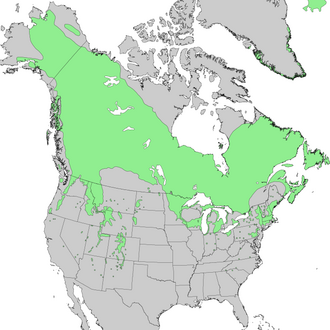
Defining Biological Range
The range of a species is the specific geographical area where that species can be found. Within this range, scientists differentiate between distribution (the general structure of the population) and dispersion (the variation in population density).
Ranges are often categorized by their historical or seasonal context:
- Native or Endemic Range: The area where a species historically originated and lived.
- Introduced or Non-native Range: Areas where a species has established itself more recently, often due to human transport across geographical barriers.
- Seasonal Ranges: Terms like summer range and winter range describe species that move based on the time of year.
- Breeding vs. Non-breeding Range: Distinguishes areas used specifically for reproduction.
- Disjunct Distribution: Occurs when two or more areas of a taxon's range are geographically separated from one another.
Factors Influencing Where Species Live
The patterns of where life exists are not random; they are shaped by a complex interplay of environmental and biological forces. These are generally divided into abiotic and biotic factors.
Abiotic Factors
Abiotic factors are the non-living components of an ecosystem. They include:
- Climatic factors: Sunlight, temperature, humidity, atmosphere, and salinity.
- Edaphic factors: Soil-related elements such as pH, aeration, geology, and soil coarseness.
- Social/Environmental factors: Water availability and land use.
Climate change is currently shifting these distributions. For example, researchers from the Arctic Ocean Diversity (ARCOD) project have documented warm-water crustaceans moving into the Arctic waters around Norway's Svalbard Islands as ocean temperatures rise. Notably, the snow crab has extended its range by 500 km north.
Biotic Factors
Biotic factors involve living interactions, such as predation, disease, and competition for resources like food, water, and mates. For instance, a quail's distribution is influenced by its prey (insects and seeds), competition with other quail, and predators like coyotes.
An organism's phenology—the timing of biological events—and its physiology also play critical roles. Individuals with higher metabolism or better locomotor performance may be more prone to dispersal, allowing them to explore new territories.
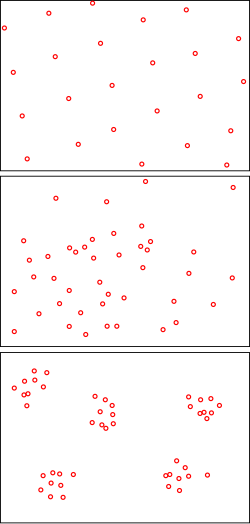
Patterns of Dispersion
On a small scale, researchers identify three primary patterns of dispersion:
Clumped Distribution
Also known as aggregated or patchy distribution, this is the most common pattern in nature. Individuals cluster together due to patchy resource availability, social factors (such as family groups or "selfish herds"), or the need for protection from predators. Clumping can also occur when offspring are immobile, such as eaglets in a bald eagle's nest.
Uniform and Random Distribution
Uniform (or regular) distribution often occurs when individuals compete for limited resources, such as trees in a forest competing for sunlight. Random distribution occurs when the position of an individual is independent of others, though this is less common in highly competitive environments.
Wildlife Corridors and Connectivity
Many species rely on specific geographic features to move through their range. These are often referred to as wildlife corridors. Examples include:
- Coastal strips: Land masses bordering oceans, rivers, or lakes.
- River corridors: Areas following a river or its entire drainage system.
- Mountain range corridors: Such as the Sierra Nevada or the Appalachian Mountains, which provide essential habitats for different species during different seasons.
Species using these corridors may be part of a contiguous range (connected to the main range) or may exist in an isolated, disjunct range.
Statistical Methods for Measuring Distribution
Ecologists use mathematical models to determine if a population is clumped, uniform, or random. Two common methods include:
| Method | Primary Metric | Interpretation (R or Ratio) |
|---|---|---|
| Clark–Evans Nearest Neighbor | Distance to nearest neighbor | R=1 (Random); R>1 (Uniform); R<1 (Clumped) |
| Variance/Mean Ratio | Count per sample plot | Ratio=1 (Random); Ratio>1 (Clumped); Ratio<1 (Uniform) |
Modern researchers increasingly prefer species distribution models based on probability rather than simple presence-absence data. These models help predict the likelihood of a species occupying a specific area, which is vital for conservation planning. However, scientists caution that the grid size used in these models (e.g., 50x50 km vs. 1x1 km) can significantly impact accuracy and may lead to the over-prediction of future ranges.
Key Facts
- Species distribution refers to the spatial arrangement of a taxon, while dispersal is the movement of individuals.
- Clumped distribution is the most common pattern found in nature.
- Abiotic factors like temperature and soil pH, and biotic factors like predation, both dictate where species live.
- Disjunct distribution occurs when a species' range is split into geographically separated areas.
- Climate change is actively expanding the ranges of certain species, such as warm-water crustaceans in the Arctic.
Frequently Asked Questions
What is the difference between range and distribution?
Range is the total geographical area where a species can be found, whereas distribution refers to the specific arrangement and structure of the population within that range.
What are abiotic factors?
Abiotic factors are non-living environmental elements that influence species, including climatic conditions (temperature, sunlight), edaphic factors (soil properties), and social factors like water availability.
Why do some species have a clumped distribution?
Species often clump together due to the uneven distribution of resources, social behaviors like family grouping, or to increase protection against predators.
How do humans affect species distribution?
Humans act as major distributors through globalization and transportation. For example, aquatic species can be transported across oceans via the ballast water of large tankers.
What is a wildlife corridor?
A wildlife corridor is a strip of habitat, such as a river corridor or a mountain range, that connects different parts of a species' range, allowing for movement and migration.