Soviet Union National Football Team: A Legacy of Power and Prestige
From its inception in the early 1920s to its dissolution in 1991, the Soviet Union national football team—famously nicknamed the Red Army—stood as a formidable force in global sports. Managed by the Football Federation of the Soviet Union, the team blended rigorous discipline with tactical innovation, securing a place among the elite of European and world football.
The team's journey was marked by historic triumphs, including the first-ever European Championship title and multiple Olympic gold medals. While they often faced the pressure of high expectations, the USSR produced some of the greatest individual talents the game has ever seen, most notably the legendary goalkeeper Lev Yashin and the prolific striker Oleg Blokhin.
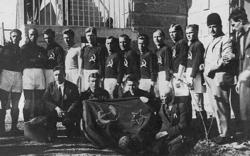
Key Facts
- Active Years: 1924–1991
- Major Achievement: Champions of the inaugural UEFA European Championship (1960).
- World Cup Peak: Fourth place finish in 1966.
- Olympic Success: Gold medals in 1956 and 1988.
- All-Time Record Holder: Oleg Blokhin holds the record for most caps (112) and most goals (42).
- Home Ground: Central Lenin Stadium in Moscow.
Early Years and International Emergence
The roots of Soviet international football trace back to September 1922, when a team representing the Russian SFSR defeated the Finnish Workers' Sports Federation 4–1 in Petrograd. This marked the first international sporting contact for the region following the 1917 October Revolution. By August 1923, the team secured a 2–1 victory over Sweden in Stockholm.
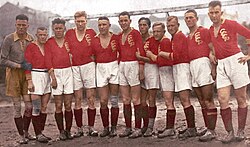
The official first international match for the Soviet Union took place on November 16, 1924, resulting in a 3–0 victory over Turkey in Moscow. This set the stage for decades of competition under the FIFA code URS.
The Golden Era: European and World Dominance
The 1960s represented the zenith of Soviet football. In 1960, the USSR became the first-ever UEFA European Championship winners, defeating Yugoslavia 2–1 in the final. They remained a powerhouse throughout the decade, finishing as runners-up in 1964 and 1972.
In the FIFA World Cup, the team's finest hour came in 1966. After dominating their group and defeating Hungary in the quarter-finals, they reached the semi-finals, eventually finishing in fourth place after losses to West Germany and Portugal. This 1966 squad remains one of the highest-scoring Soviet teams in World Cup history with 10 goals.
The Influence of Lev Yashin
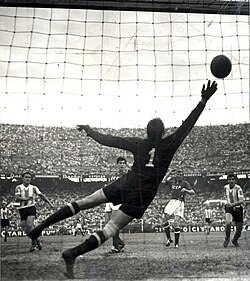
No discussion of the Soviet era is complete without Lev Yashin. The star goalkeeper was pivotal to the team's success in the 1960s, though his fluctuating form in the 1962 World Cup was cited as a reason for the team's quarter-final exit. Despite this, his presence defined the defensive identity of the Red Army for over a decade.
Olympic Games and the 'Amateur' Strategy
The Soviet Union enjoyed significant success at the Olympic Games, winning gold medals in 1956 (Melbourne) and 1988 (Seoul), along with bronze medals in 1972, 1976, and 1980.
A notable point of contention was FIFA's 1958 prohibition on professional players in the Olympics. The Soviet Union bypassed this by listing their top national team players as military personnel, effectively maintaining their status as "amateurs" while fielding world-class athletes.
The Later Years and Dissolution
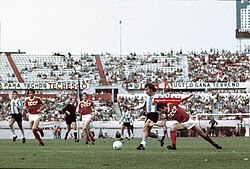
The 1980s saw a resurgence under the guidance of managers like Valeriy Lobanovsky. The team reached the final of the 1988 European Championship in West Germany, where they ultimately fell 2–0 to the Netherlands.
The final major tournament for the USSR was the 1990 FIFA World Cup. Despite a dominant 4–0 win over Cameroon, the team failed to progress past the group stage—the only time this occurred in their World Cup history.
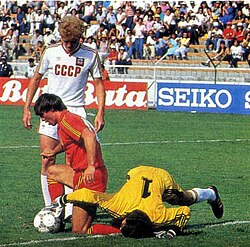
Following the breakup of the Soviet Union, the team's place in Euro 1992 was taken by the CIS (Commonwealth of Independent States) national team. Eventually, FIFA allocated the historical records of the Soviet Union to the Russia national team.
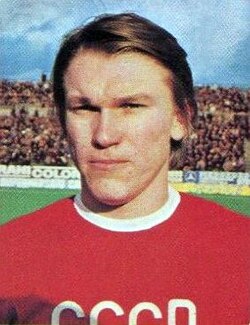
Soviet Union Football Summary
| Competition | Appearances | Best Result | Gold Medals |
|---|---|---|---|
| FIFA World Cup | 7 | Fourth Place (1966) | 0 |
| UEFA European Championship | 6 | Champions (1960) | 1 |
| Olympic Games | 6 | Gold Medal (1956, 1988) | 2 |
Frequently Asked Questions
Who is the most successful player in Soviet football history?
Oleg Blokhin is the most successful in terms of statistics, holding the records for both the most caps (112) and the most goals scored (42) for the national team.
Why did the Soviet Union use military players in the Olympics?
To circumvent FIFA's rules requiring Olympic players to be amateurs, the Soviet Union listed their professional stars as members of the military to maintain their amateur status.
What was the Soviet Union's biggest victory?
The team recorded two massive wins: an 11–1 victory over India in 1955 and a 10–0 win against Finland in 1957.
How did the Soviet Union lose the 1968 European Championship semi-final?
After a 0–0 draw with Italy in the semi-final, the winner was decided by a coin toss. Italy won the toss and advanced to the final.
What happened to the Soviet team's records after 1991?
Following the dissolution of the USSR, FIFA allocated the official records and history of the Soviet Union national team to the Russia national team.