Hungary National Football Team: A Legacy of Golden Eras and Olympic Glory
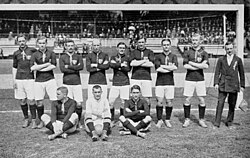
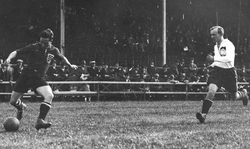
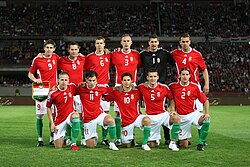
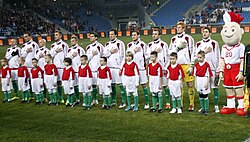
The Hungary national football team, known affectionately as the Magyarok (Magyars), the National Eleven, or the Tricolours, stands as one of the most storied programs in international football. From the early 20th century to the modern era, Hungary has consistently influenced the tactical evolution of the game, producing some of the greatest players and most dominant teams the world has ever seen.
Playing their home matches at the state-of-the-art Puskás Aréna, the team carries a heritage of excellence that spans over a century, characterized by a relentless attacking spirit and a rich trophy cabinet.
Key Facts
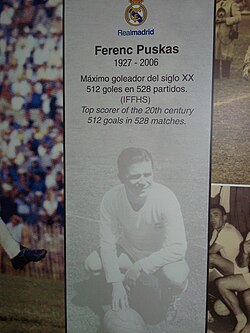
- All-Time Top Scorer: Ferenc Puskás with 84 goals.
- Most Caps: Balázs Dzsudzsák with 109 appearances.
- World Cup Peak: Runners-up in 1938 and 1954.
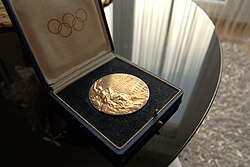
- Olympic Success: Three-time Gold Medalists (1952, 1964, 1968).
- European Peak: Third place finish in the 1964 UEFA European Championship.
- Current Captain: Dominik Szoboszlai.
The Golden Era and Historical Dominance
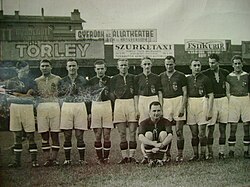
Hungary's footballing identity was forged in the early 20th century, but it reached its zenith during the 1950s with the legendary Golden Team (Aranycsapat). This era was defined by a revolutionary approach to the game, blending technical skill with tactical flexibility.
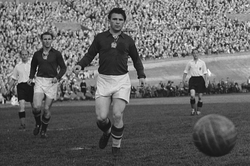
Led by the incomparable Ferenc Puskás and Sándor Kocsis, the Golden Team dominated the international scene, winning the gold medal at the 1952 Helsinki Olympics. Their dominance was further cemented by a series of staggering victories, including a 12-0 win over Poland in 1950 and a famous 7-1 victory over England in 1954.
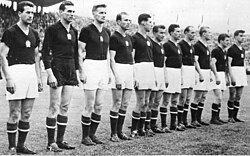
Despite their brilliance, the World Cup title narrowly eluded them, with Hungary finishing as runners-up in both 1938 and 1954. Puskás remains the definitive figure of this era, recognized as the top scorer of the 20th century with 84 international goals.
Olympic and Continental Achievements
While the World Cup provided high drama, the Olympic Games were a source of consistent triumph for Hungary. The nation secured three gold medals in 1952, 1964, and 1968, establishing themselves as a global powerhouse in the tournament.
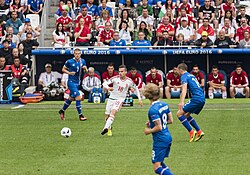
On the continental stage, Hungary was a pioneer in the UEFA European Championship, securing a third-place finish in the inaugural 1964 tournament. In more recent years, the team has seen a resurgence, notably reaching the Round of 16 in UEFA Euro 2016 and competing in UEFA Euro 2020 and 2024.
Modern Era and Current Standing
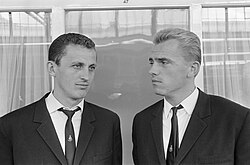
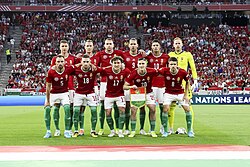
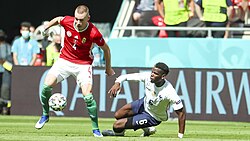
Under the guidance of head coach Marco Rossi, the Hungarian national team has worked to reclaim its place among Europe's elite. The current squad is led by captain Dominik Szoboszlai, representing a new generation of talent aiming to mirror the successes of the past.
The team continues to be competitive in the UEFA Nations League and FIFA World Cup qualifications, maintaining a strong presence in the FIFA World Rankings, with a historical peak of 18th place in 2016.
Statistical Summary
| Competition | Best Result | Years Achieved |
|---|---|---|
| FIFA World Cup | Runners-up | 1938, 1954 |
| Olympic Games | Gold Medal | 1952, 1964, 1968 |
| UEFA European Championship | Third Place | 1964 |
| Balkan Cup | Champions | 1947 |
Frequently Asked Questions
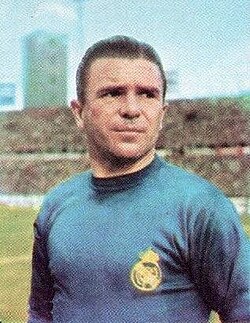
Who is the greatest player in Hungary's history?
Ferenc Puskás is widely regarded as the greatest, holding the record for most goals (84) and being a central figure of the 1950s Golden Team.
How many Olympic gold medals has Hungary won in football?
Hungary has won three Olympic gold medals, achieving this feat in 1952, 1964, and 1968.
What is the Puskás Aréna?
The Puskás Aréna is the current home stadium of the Hungary national team, named in honor of the legendary Ferenc Puskás.
What was the Golden Team?
The Golden Team (Aranycsapat) refers to the dominant Hungarian squad of the early 1950s, known for their revolutionary tactics and overwhelming success in international friendlies and tournaments.
Who currently captains the Hungarian national team?
The team is currently captained by Dominik Szoboszlai.