Sioux History: The Legacy of the Dakota and Lakota Peoples
The history of the Očhéthi Šakówiŋ (the Seven Council Fires) is a narrative of resilience, migration, and a persistent struggle for sovereignty. Comprising the Dakota and Lakota peoples, this cultural group has navigated centuries of territorial shifts, intertribal warfare, and complex relations with European and American settlers. From their ancestral origins in the Great Lakes region to the vast prairies of the West, the Sioux have maintained a deep spiritual connection to the land.
Creation and Ancestral Origins
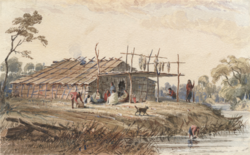
The spiritual foundations of the tribes are rooted in distinct creation stories. The Dakota people identify Bdóte—the confluence of the Minnesota and Mississippi Rivers—as their site of origin. In contrast, the Lakota people relate their emergence to Wind Cave in South Dakota.
During the seventeenth century, the Dakota resided primarily at the source of the Mississippi River and the Great Lakes. However, warfare with the Iroquois in 1659 forced a westward dispersion. By 1700, the Dakota were established in Wisconsin and Minnesota, while the Lakota expanded further into the Plains. This era was marked by hardship; the introduction of European diseases such as smallpox and malaria, combined with increased intertribal conflict, caused the Mississippi valley population to decline by an estimated one-third between 1680 and 1805.
Trade, Conflict, and Early Treaties
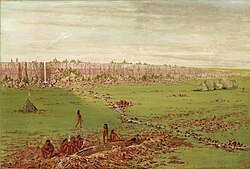
The 18th century saw rising tensions as the Dakota clashed with the Ojibwe over trade relations with the Cree and Assiniboine. These conflicts forced the Dakota south into the St. Croix River Valley and made the region perilous for French fur traders. Despite these tensions, trade with the French persisted until 1763.
The first formal treaty with the American government occurred in 1805, negotiated by Zebulon Pike. The Dakota ceded 100,000 acres near present-day Saint Paul and Hastings, Minnesota, to facilitate military outposts and trade. This led to the establishment of Fort Snelling in 1819.
The Reservation Period Begins
With the creation of the Minnesota Territory in 1849, the Eastern Dakota (Sisseton, Wahpeton, Mdewakanton, and Wahpekute) faced intense pressure to cede land. The 1851 Treaty of Mendota and the Treaty of Traverse des Sioux marked the beginning of the reservation era. While the treaties promised millions of dollars in compensation, the U.S. government withheld over 80% of the funds, paying only 5% interest for 50 years.
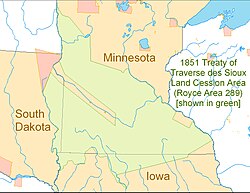
The U.S. government intended to force a transition from a nomadic hunting lifestyle to settled farming. By 1858, the Dakota were confined to a small strip of land along the Minnesota River, stripped of their traditional hunting grounds and dependent on late or missing federal payments.
The Dakota War of 1862 and Diaspora
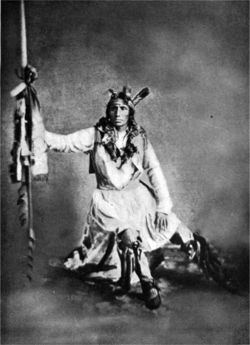
Economic desperation and starvation peaked in 1862. When federal payments were delayed and traders refused credit—famously exemplified by Andrew Myrick's suggestion that the hungry "eat grass"—violence erupted. On August 17, 1862, the Dakota War began with attacks on white settlements along the Minnesota River, led in part by Little Crow of the Mdewakanton band.
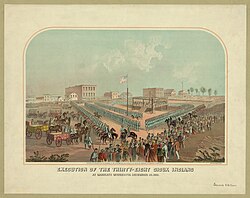
It is important to note that the war was not a unified effort; many Sisseton and Wahpeton members opposed the hostilities. Following the conflict, the U.S. Congress passed the Forfeiture Act of 1863, annulling all treaties and expelling the Eastern Dakota from Minnesota. This created a diaspora, with refugees fleeing to Canada, Nebraska, and other reservations across the Dakota Territory.
Lakota Expansion and the Plains Wars
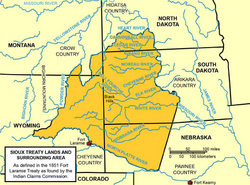
While the Dakota struggled in the east, the Lakota dominated the prairies west of the Missouri River. By 1776, they had defeated the Cheyenne to claim the Black Hills as their home.
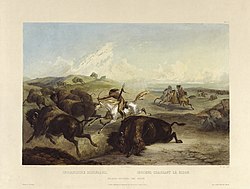
The mid-to-late 19th century was defined by a series of conflicts known as the Sioux Wars. This included Red Cloud's War (1866–1868), where the Lakota successfully resisted U.S. military encroachment in the Powder River country, leading to the Treaty of Fort Laramie of 1868.
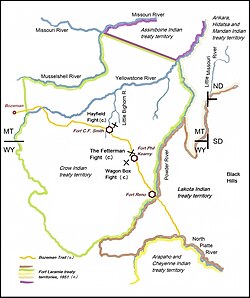
The Great Sioux War and Wounded Knee
The 1868 treaty was short-lived. The discovery of gold in the Black Hills led to an influx of settlers and a 1874 expedition by George Armstrong Custer. This sparked the Great Sioux War of 1876. The most famous engagement was the Battle of the Little Bighorn (known to the Lakota as the Battle of the Greasy Grass), where combined forces of the Lakota, Northern Cheyenne, and Arapaho defeated the 7th Cavalry.
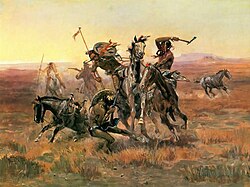
The era of open warfare effectively ended with the Wounded Knee Massacre in 1890, a tragic event that signaled the transition into an era of forced assimilation.
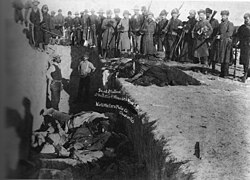
Assimilation and the Allotment Era
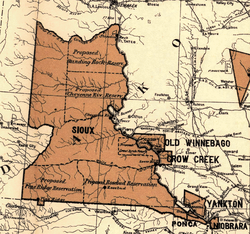
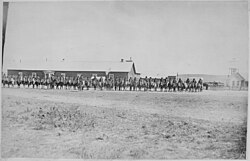
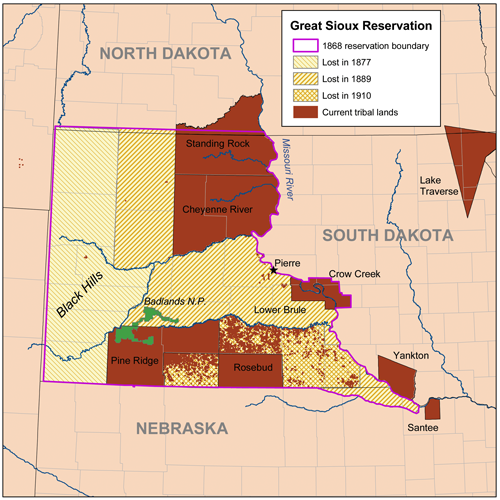
The late 19th and early 20th centuries focused on dismantling tribal structures. The Dawes Act (General Allotment Act) of 1887 forced the adoption of private property systems, ending traditional land tenure. In 1889, the Great Sioux Reservation was partitioned into five smaller reservations: Standing Rock, Lower Brule, Rosebud, Pine Ridge, and a fifth smaller entity. This process opened approximately 9 million acres to public purchase for ranching and homesteading.
Modern Era: Reorganization and Sovereignty
The Indian Reorganization Act (IRA) of the 1930s attempted to reverse assimilation by recognizing tribal governments and prohibiting non-consensual land seizure. However, some tribes, such as the Yankton Sioux, Spirit Lake, and Standing Rock, rejected the IRA to maintain traditional governance.
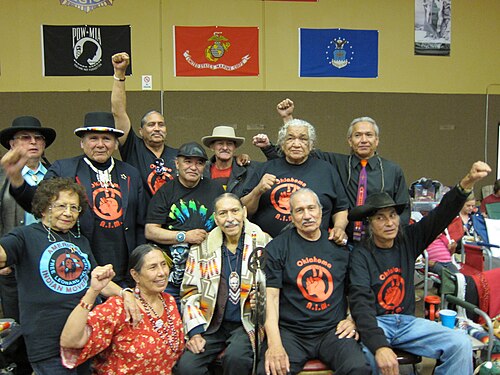
The mid-20th century brought the Indian Relocation Act of 1956, which encouraged tribal members to move to cities, leading to significant population losses on reservations like Santee. However, the 1970s saw a resurgence of activism, highlighted by the 1973 Wounded Knee incident and the later formation of the International Indian Treaty Council.
The Fight for the Black Hills
The legal battle for the Black Hills remains a central issue. In 1980, the Supreme Court ruled in United States v. Sioux Nation of Indians that the land had been taken illegally. While the court awarded compensation that has grown to over $1 billion with interest, the Sioux have refused the payment, maintaining that the land is not for sale and must be returned.
Recent years have seen continued activism, including global protests against the Dakota Access Pipeline (DAPL) in 2016 and 2017, and the repatriation of sacred artifacts from museums to the Lakota people.

Key Facts
- Očhéthi Šakówiŋ: The collective name for the Seven Council Fires of the Dakota and Lakota.
- Land Loss: The Treaty of Traverse des Sioux involved the cession of 21 million acres for roughly 7.5 cents per acre.
- Legal Victory: The 1980 Supreme Court ruling confirmed the illegal seizure of the Black Hills, though the tribes refuse the monetary settlement.
- Major Conflicts: Key wars include the Dakota War of 1862, Red Cloud's War, and the Great Sioux War of 1876.
- Cultural Sites: Bdóte (Minnesota/Mississippi confluence) and Wind Cave are central to creation stories.
| Event/Treaty | Year | Key Outcome |
|---|---|---|
| First US Treaty | 1805 | Cession of 100,000 acres for military/trade outposts. |
| Treaty of Traverse des Sioux | 1851 | Cession of 21 million acres; start of reservation period. |
| Dakota War | 1862 | Conflict leading to the Forfeiture Act and Dakota diaspora. |
| Treaty of Fort Laramie | 1868 | Established the Great Sioux Reservation; ended Red Cloud's War. |
| Battle of Little Bighorn | 1876 | Significant Lakota/Cheyenne victory over the 7th Cavalry. |
| Wounded Knee Massacre | 1890 | Marked the end of the Sioux Wars. |
Frequently Asked Questions
What is the difference between the Dakota and Lakota?
The Dakota and Lakota are branches of the Očhéthi Šakówiŋ. Historically, the Dakota resided further east (Minnesota/Wisconsin), while the Lakota expanded westward into the Plains (North and South Dakota, Wyoming, Montana).
Why do the Sioux refuse the Black Hills settlement money?
The tribes maintain that the Black Hills are sacred and were never for sale. They demand the return of the land rather than financial compensation, regardless of the amount.
What was the impact of the Dawes Act?
The Dawes Act of 1887 forced the assimilation of tribal members by replacing communal land tenure with private property allotments, resulting in the loss of millions of acres of tribal land.
What was the significance of the Battle of the Little Bighorn?
Also known as Custer's Last Stand, it was the most significant victory for the combined Lakota, Northern Cheyenne, and Arapaho forces during the Great Sioux War of 1876.
What is the Republic of Lakotah?
Declared in 2007 by a group of activists, it is a proposal to withdraw from all US treaties to regain sovereignty over a specific territory. It is generally not recognized by the US government or all Lakota tribal leaders.