Seoul's Name Evolution: From Ancient Capital to Modern Metropolis
The vibrant capital of South Korea, known today as Seoul, has carried a multitude of identities throughout its long and complex history. While the name "Seoul" is now globally recognized, it was not always the official designation. For centuries, the city was referred to by various formal and informal names, reflecting the shifting political landscapes and dynasties that shaped the Korean peninsula.
Interestingly, the word "seoul" was originally a common noun in the Korean language, simply meaning "capital city." It was used colloquially to refer to the seat of power long before it became the official name of the city following Korea's liberation from Japanese rule after the Second World War.
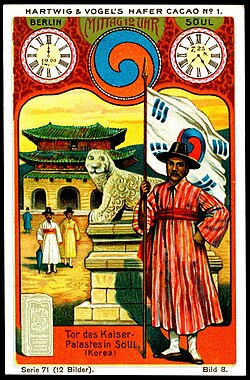
Key Facts
- Original Meaning: The word "Seoul" is a native Korean common noun meaning "capital city."
- Etymological Roots: It is believed to have originated from Seorabeol, the ancient capital of the Silla kingdom.
- Historical Names: The city has been known as Wiryeseong, Hanyang, Hanseong, and Gyeongseong.
- Official Adoption: The name "Seoul" became the official designation after liberation from Japan post-WWII.
- Hanja Status: Unlike most Korean place names, "Seoul" has no corresponding Hanja (Chinese characters).
The Etymology of Seoul
The linguistic roots of Seoul are deeply embedded in ancient Korean. Scholars believe the name originated from Seorabeol (also appearing in old texts as Seonabeol, Seobeol, or Seoyabeol), which was the name for Gyeongju, the capital of the Silla kingdom. At that time, Gyeongju was known as Geumseong.
The term Seorabeol is theorized to be a combination of two ancient words: seora, meaning "high and holy," and beol, meaning "field." This suggests that the very concept of a "capital" in Korea has long been associated with sacred or elevated ground.
A Journey Through History
The area surrounding the modern city has been a strategic center for millennia. During the Korean Three Kingdoms Period, the Baekje kingdom (18 BC – 660 AD) was the first to conquer the Han River basin. In 18 A.D., King Onjo established the capital at Wiryeseong, a fortress also referred to as Hanseong.
The city's identity continued to shift with the rise and fall of various powers:
- Goguryeo Era: After attacking Wiryeseong in 475, Goguryeo forces established the commandery of Bukhansangun (also called Nampyeongyang).
- Goryeo Period: The city was known as Namgyeong and later Hanyangbu.
- Joseon Dynasty: The city was primarily called Hanyang or Hanseong. During this era, the public began using the term "Seoul" more frequently, though the older names remained the formal standard.
The Colonial Era and Gyeongseong
During the period of Japanese colonial rule, the city was referred to by the Japanese exonym Keijō. In Korean, this was read as Gyeongseong, a Sino-Korean term meaning "capital city" (where Gyeong means capital and seong means walled city). This name saw significant use, even appearing on the city's main railway station, which operated as Gyeongseong Station between 1923 and 1947.
The Challenge of Hanja and Modern Translation
A unique linguistic quirk of Seoul is that it lacks corresponding Hanja. Most Korean place names are written using Chinese characters, which allows for direct translation into Chinese. Because "Seoul" is a native Korean word, it created translation difficulties. For example, using the older name "Hanseong" to refer to Seoul in Chinese could cause confusion with Hansung University.
To resolve this, the Seoul City Government designated a new Chinese term, Shǒu'ěr (首爾), in 2005. This name is a phonetic transliteration of "Seoul" in Mandarin. While effective for Chinese speakers, some linguists note that the pronunciation does not perfectly mirror the Korean sound in other Sinitic languages like Cantonese or Shanghainese.
Summary of Historical Names
| Period/Context | Name(s) Used |
|---|---|
| Baekje Kingdom | Wiryeseong, Hanseong |
| Goguryeo Period | Bukhansangun, Nampyeongyang |
| Goryeo Period | Namgyeong, Hanyangbu |
| Joseon Dynasty | Hanyang, Hanseong |
| Japanese Colonial Rule | Gyeongseong, Keijō |
| Post-WWII to Present | Seoul |
Frequently Asked Questions
Why does Seoul not have Chinese characters?
Unlike most Korean place names that are derived from Sino-Korean roots, "Seoul" is a native Korean word. This lack of Hanja historically made translation into Chinese more complex until the modern transliteration "Shǒu'ěr" was adopted.
What did the name Gyeongseong mean?
Gyeongseong is a Sino-Korean term where "Gyeong" means capital and "seong" means walled city. It was used extensively during the Japanese colonial period.
How did the name "Seoul" become official?
While the term was used colloquially for a long time to mean "the capital," it was officially adopted as the city's name following Korea's liberation from Japan after World War II.
Is "Hanyang" still used today?
Hanyang was a primary formal name during the Joseon dynasty. While not the name of the city today, the term "Gyeong" (capital) still appears in the names of several major infrastructure routes connecting Seoul to other cities, such as the Gyeongbu Line.
What is the origin of the word Seorabeol?
Seorabeol is believed to be the ancestor of the word Seoul. It is thought to be composed of seora (high and holy) and beol (field), referring to the ancient capital of Silla.