Seattle: The Emerald City of the Pacific Northwest
Known affectionately as the Emerald City, Jet City, and Rain City, Seattle is the largest city in Washington and a primary economic hub of the United States. Founded on November 13, 1851, and named after Chief Seattle, the city has evolved from a frontier settlement into a global center for technology, aviation, and culture.
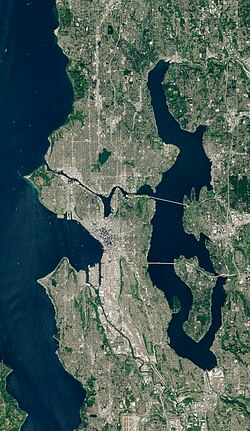
From its iconic skyline featuring the Space Needle to the bustling stalls of Pike Place Market, Seattle blends natural beauty with urban innovation. Its unique position between Puget Sound and Lake Washington makes it a critical port and a gateway to the Pacific Rim.
Key Facts
- Founded: November 13, 1851
- Population: 737,015 (2020 Census); estimated 784,777 by 2025
- Metro GDP: $604.065 billion (2024)
- Nickname: The Emerald City
- Mottoes: The City of Flowers; The City of Goodwill
- City Symbols: Great blue heron (bird) and Dahlia (flower)
History and Evolution
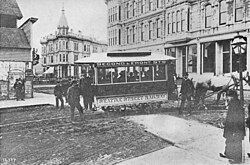
Seattle's early development was marked by rapid growth and resilience. In the late 19th century, the city established its first streetcar system in 1884, though much of the early downtown was destroyed by the Great Seattle Fire of 1889.
By the early 20th century, Seattle had transformed into a major metropolitan center. The construction of landmarks like the Smith Tower and the expansion of the port solidified its status as a commercial powerhouse.
![An 1891 aerial view of Seattle and surrounding King County[27]](/images/8f/c2/8fc2f0e3348d6ab286c8138ece9fde488807dc5e2448f1afc0da2aa1fb8a3510.jpg)
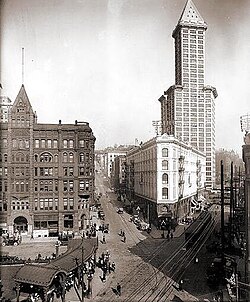
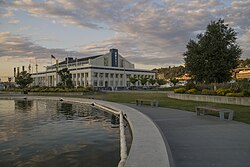
The mid-20th century brought global attention to the city, particularly with the 1962 World's Fair, which led to the creation of the Seattle Center and the Monorail.

Geography and Climate
Seattle is located in King County, Washington, with a total area of 142.07 square miles, comprising 83.99 square miles of land and 58.08 square miles of water. The city's topography is characterized by its proximity to the Olympic Mountains and Mount Rainier.
The climate is known for its moderate temperatures and significant precipitation. While often associated with rain, the city experiences distinct seasonal shifts, with the highest average precipitation occurring in November (6.31 inches) and the lowest in July (0.60 inches).
| Metric | Winter (Jan) | Spring (Apr) | Summer (Jul) | Autumn (Oct) |
|---|---|---|---|---|
| Mean Max Temp (°F) | 57.0 | 74.3 | 91.2 | 72.0 |
| Mean Min Temp (°F) | 26.1 | 35.6 | 51.5 | 36.8 |
| Avg Precipitation (in) | 5.78 | 3.18 | 0.60 | 3.91 |
| Avg Sunshine Hours | 69.8 | 207.3 | 312.0 | 142.6 |
Demographics and Society
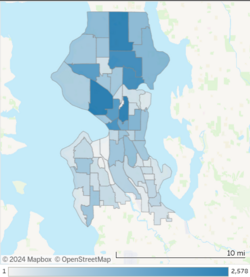
Seattle has seen steady population growth, rising from just 188 residents in 1860 to over 737,000 by 2020. The city is increasingly diverse; as of 2024, the racial composition includes 56.9% White (non-Hispanic), 18.1% Asian and Pacific Islander, 9.1% Hispanic or Latino, and 6.7% Black or African American.
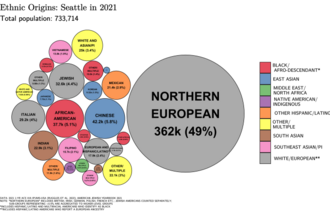
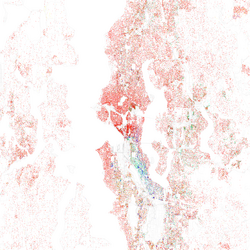
The city is also known for its inclusive culture, highlighted by events such as the Seattle Pride Fest.
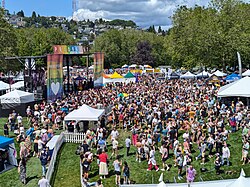
Economy and Infrastructure
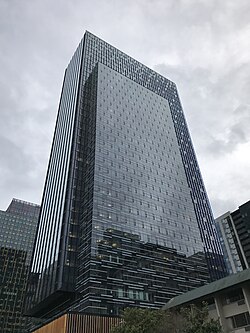
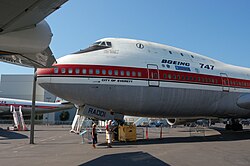
Seattle's economy is driven by global giants in technology and aviation. The city hosts the corporate headquarters of Amazon, specifically the Day 1 campus in the Denny Triangle, and has a deep history with Boeing, evidenced by the 747 prototype "City of Everett" at the Museum of Flight.
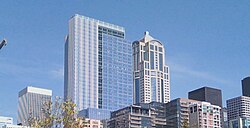
The city's financial district features prominent structures like the Russell Investments Center (formerly the WaMu Center) and the 1201 Third Avenue Tower.
Transportation and Utilities
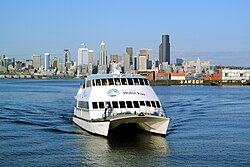
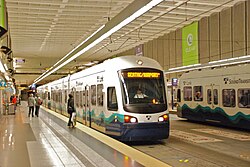
Seattle employs a multi-modal transportation system including the 1 Line light rail, the King County Water Taxi, and a comprehensive highway system centered around Interstate 5.
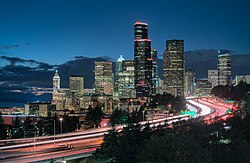
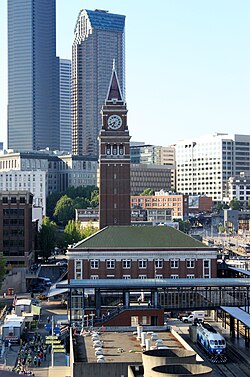
King Street Station serves as a vital hub, ranking as the 15th-busiest Amtrak station in the United States.
Culture, Arts, and Recreation
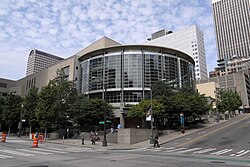
The city is a hub for the performing arts, featuring Benaroya Hall (home of the Seattle Symphony) and the Marion Oliver McCaw Hall at the Seattle Center.
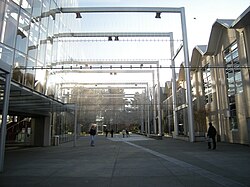
Tourism is a major driver, with the Seattle Great Wheel and the Port of Seattle attracting hundreds of thousands of cruise passengers annually.
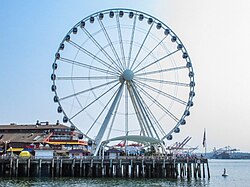
![210 cruise ship visits brought 886,039 passengers to Seattle in 2008.[206]](/images/ac/4c/ac4c3c5b64bf445b1a60953ed93d4584db08d95a0993241e8889d07f91b2923b.jpg)
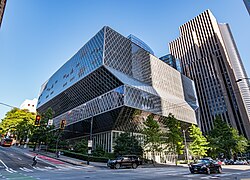
The Seattle Central Library stands as a modern architectural landmark, reflecting the city's commitment to literacy and public knowledge.
Professional Sports
Seattle supports a wide array of professional sports teams across multiple leagues:
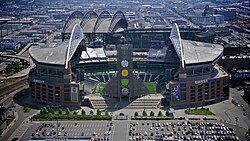
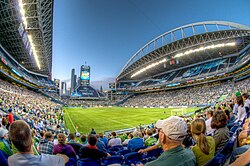
- NFL: Seattle Seahawks (Lumen Field)
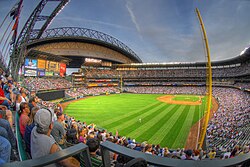
- MLB: Seattle Mariners (T-Mobile Park)
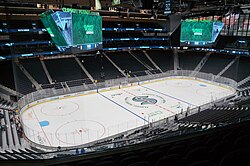
- NHL: Seattle Kraken (Climate Pledge Arena)
- MLS: Seattle Sounders FC (Lumen Field)
- WNBA: Seattle Storm (Climate Pledge Arena)
Government and Education
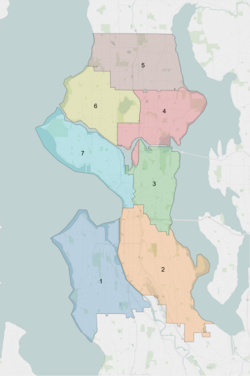
Seattle operates under a mayor-council government. The Seattle City Council consists of two at-large positions and seven district seats.
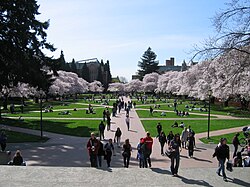
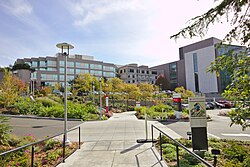
Education and healthcare are anchored by world-class institutions, including the University of Washington and Seattle Children's Hospital.
Frequently Asked Questions
What is the population of Seattle?
As of the 2020 Census, the city population was 737,015, with estimates projecting a growth to 784,777 by 2025.
Which major companies are headquartered in Seattle?
Seattle is home to the corporate headquarters of Amazon, and it has a long-standing historical and economic connection to Boeing.
What are the primary sports venues in the city?
The primary venues are Lumen Field (Seahawks, Sounders, Reign FC), T-Mobile Park (Mariners), and Climate Pledge Arena (Kraken, Storm, Torrent).
How does Seattle's climate typically behave?
Seattle has a moderate climate with significant rainfall, particularly in the winter months, and mild summers with the highest sunshine hours occurring in July.
What is the significance of the "Emerald City" nickname?
The nickname refers to the lush evergreen forests that surround the city, contributing to its scenic beauty and identity.