Sea Cucumbers: Biology, Diversity, and Ecological Importance
Sea cucumbers are fascinating marine invertebrates belonging to the class Holothuroidea. While they may appear simple—often resembling oversized sausages or caterpillars—these creatures are vital components of marine ecosystems. As members of the phylum Echinodermata, they are related to starfish and sea urchins, though they have evolved a distinct body plan suited for scavenging the ocean floor.
From the shallow reefs of Florida to the deepest trenches of the ocean, sea cucumbers play a critical role in nutrient cycling. Their ability to adapt to extreme environments makes them one of the most resilient groups of echinoderms on Earth.
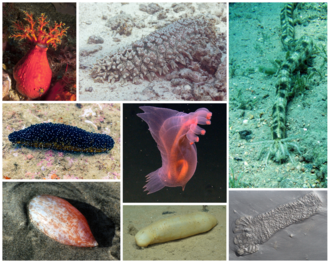
Key Facts
- Temporal Range: They have existed since the Middle Ordovician period.
- Size Variance: They range from as small as 3 millimeters to over 3 meters in length.
- Habitat: Found globally, including depths exceeding 10,000 meters.
- Body Plan: Generally soft, cylindrical bodies with a mouth surrounded by tentacles.
- Conservation: Highly valued in Asian markets, leading to significant commercial harvesting and the creation of protected reserves.
Anatomy and Physical Characteristics
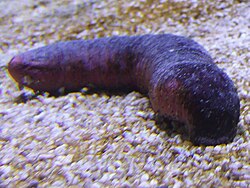
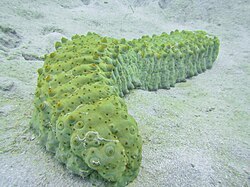
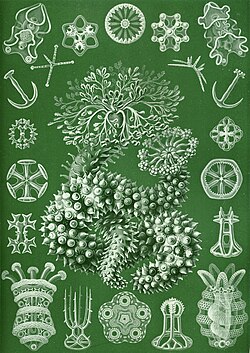
Most sea cucumbers possess a soft, cylindrical body that is rounded at the ends. Unlike their starfish cousins, they lack solid arms. Their physical forms vary widely: some are nearly spherical (known as "sea apples"), while others are serpent-like or sausage-shaped.
The anatomy of a sea cucumber is oriented differently than other echinoderms. The anterior end contains the mouth, which corresponds to the oral pole, while the posterior end contains the anus (the aboral pole). This means that, effectively, sea cucumbers live lying on their sides.
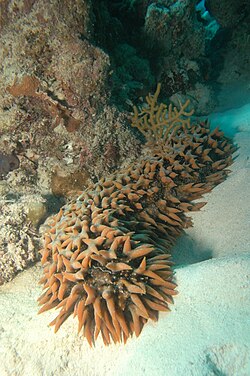
Locomotion and Sensory Organs
Most species utilize podia (tube feet) arranged in five rows for movement. On the dorsal (top) surface, these podia are often transformed into papillae, which serve sensory functions rather than locomotive ones. However, the order Apodida lacks podia entirely and moves by crawling.
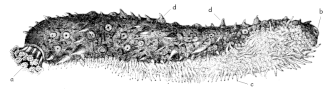
Feeding Mechanism
The mouth is surrounded by a crown of tentacles, which are actually modified podia. These tentacles are used to gather food from the sediment and can be retracted inside the body when necessary.
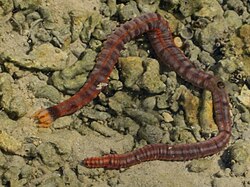
Classification and Diversity
Sea cucumbers are categorized into several orders based on their physical characteristics and tentacle structures.
| Order | Body Shape | Tentacle Type | Distinguishing Feature |
|---|---|---|---|
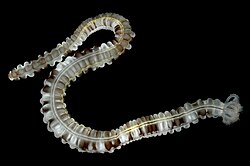
| Apodida | Snake-shaped | Pinnate | Lack podia; move by crawling |
| Holothuriida | Sausage-shaped | Peltate | Classic cylindrical form |
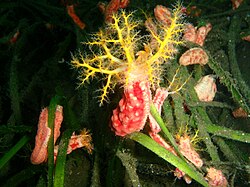
| Dendrochirotida | Curled-bodied | Arborescent | Complex, tree-like tentacles |
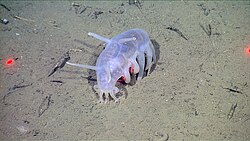
| Elasipodida | Translucent/Varied | Specific appendages | Includes "sea pigs" of the abyss |
| Synallactida | Varied | Varied | Currently lacks a strict definition |
Habitat and Extreme Adaptation
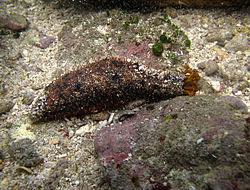
Sea cucumbers are the echinoderms best adapted to the deep sea. While many species thrive in shallow tropical waters, others are found at staggering depths. Members of the family Elpidiidae (sea pigs) live beyond 9,500 meters, and species of the genus Myriotrochus have been identified as deep as 10,687 meters.
In shallower waters, they can reach incredible population densities. For example, the strawberry sea cucumber (Squamocnus brevidentis) in New Zealand can reach densities of 1,000 animals per square meter in certain rocky coastal areas.
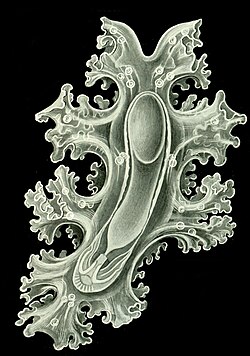
Ecological Interactions and Defense
Sea cucumbers engage in various symbiotic relationships. For instance, the Emperor shrimp (Periclimenes imperator) is often found living on the Bohadschia ocellata sea cucumber.
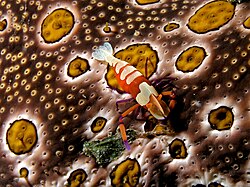
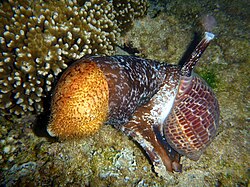
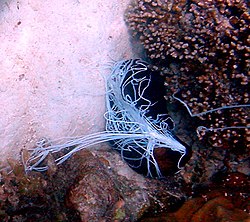
To survive predators, such as the Tonna perdix snail, sea cucumbers have developed unique defense mechanisms. Some species can eject sticky filaments from their anus to entangle and deter attackers.
Human Relation and Commercial Value
Sea cucumbers are highly prized in Asian markets, particularly in China, Japan, Korea, Indonesia, and Malaysia. They are typically harvested and dried for sale as a food delicacy and for medicinal purposes.
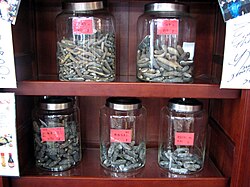
The high demand has led to significant ecological challenges. In the 20th century, intensive commercial fishing caused many stocks to collapse. This led to the rise of a black market, where rare species once sold for hundreds of dollars per pound. In response, governments have implemented crackdowns and conservation efforts. Notably, India established the Dr. K.K. Mohammed Koya Sea Cucumber Conservation Reserve in 2020, the first of its kind in the world.
Frequently Asked Questions
How large can sea cucumbers grow?
While most are between 10 and 30 centimeters, they exhibit extreme size variation. The smallest are only 3 millimeters, while the largest species, such as Synapta maculata, can exceed 3 meters in length.
What are "sea pigs"?
Sea pigs are deep-sea holothurians from the family Elpidiidae. They are characterized by their translucent bodies and specialized appendages, allowing them to survive in the abyss at depths over 9,500 meters.
How do sea cucumbers defend themselves?
Some sea cucumbers use a unique defense mechanism where they eject sticky, adhesive filaments from their anus to trap or repel predators.
Why are sea cucumbers commercially valuable?
They are highly valued in various Asian cultures as a food source and for their perceived medicinal properties. This demand has led to both large-scale aquaculture and, unfortunately, illegal harvesting in some regions.
Are all sea cucumbers the same shape?
No, their shapes vary by order. They can be spherical (sea apples), sausage-shaped, serpent-like (Apodida), or even resemble caterpillars.