Scops Owls: Taxonomy, Ecology, and Evolution of the Genus Otus
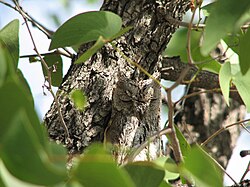
Scops owls are small, compact birds of prey belonging to the genus Otus within the family Strigidae. Restricted to the Old World, they represent the largest genus of owls, encompassing 59 species. These birds are master mimics of their environment, sporting various brownish hues that provide essential camouflage against tree bark. Some species exhibit polymorphism, meaning they can appear in either greyish or reddish-brown forms. In most species, females are slightly larger than their male counterparts.
Key Facts
- Genus Size: The largest owl genus with 59 recognized species.
- Distribution: Found exclusively in the Old World.
- Camouflage: Brownish plumage allows them to blend seamlessly with tree bark.
- Vocalizations: Characterized by whistling calls or high-pitched hoots (under 4 notes per second).
- Diet: Generalist predators eating insects, small mammals, reptiles, and amphibians.
Taxonomy and Classification
The genus Otus was first established in 1769 by Welsh naturalist Thomas Pennant, using the Indian scops owl (O. bakkamoena) as the type species. The name is derived from the Greek word ōtos, meaning "horned" or "eared," referring to the distinctive ear tufts found on these owls.
The Evolution of Generic Boundaries
Throughout the 19th and 20th centuries, the classification of scops owls underwent significant shifts. By the mid-1800s, researchers began splitting Otus into several distinct genera based on physical differences. For example, the New World screech owls were moved to Megascops in 1848, and the African white-faced owls were placed in Ptilopsis in 1851. Other specialized groups, such as the Puerto Rican owl (Gymnasio) and the Palau scops owl (Pyrroglaux), were also separated.
In the early 20th century, a trend toward "lumping" taxa saw many of these groups merged back into Otus. However, the advent of DNA sequence data in the late 1990s—specifically studies of mitochondrial DNA (mtDNA) cytochrome b—revealed that these groups were genetically distinct. This led to the formal re-acceptance of separate genera, such as Megascops, in 2003.
Species Diversity
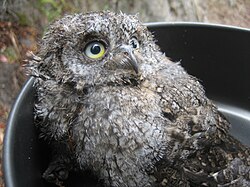
The genus Otus is remarkably diverse, with species ranging from the Giant scops owl (Otus gurneyi) to the tiny Eurasian scops owl (Otus scops). The genus includes several extinct species, such as those from Réunion, Mauritius, and Rodrigues. Recent discoveries continue to expand the list; for instance, the Principe scops owl (Otus bikegila) was photographed in 2016 and formally described in 2022.
| Category | Details |
|---|---|
| Scientific Name | Genus Otus (Family Strigidae) |
| Total Species | 59 (including 3 extinct) |
| Primary Range | Old World (Africa, Asia, Europe) |
| Key Feature | Ear tufts and cryptic brownish plumage |
| Dietary Type | Insectivorous and small vertebrate predator |
Evolutionary History
Scops owls and screech owls are considered sister lineages. They occupy nearly identical ecological niches but are separated by geography (allopatric ranges). Fossil evidence suggests a long history for both: screech owl fossils from the Late Pliocene in Kansas and scops owl fossils from Mallorca indicate that these lineages diverged roughly 5 million years ago, likely during the Miocene epoch.
Because their ecomorphology—the relationship between their physical structure and their ecological role—has remained so stable over millions of years, they are osteologically (bone-structure) very similar. Current genetic data tentatively suggests the group evolved from Old World stock.

Ecology and Behavior
Scops owls are primarily solitary, nocturnal hunters. They utilize a "sit-and-wait" strategy, hunting from perches in semi-open landscapes. They are particularly fond of old trees with hollows, which serve as both nesting sites and hubs for their prey.
Diet and Hunting
Their diet is broad, consisting of insects, reptiles, small mammals (such as mice and bats), and other small birds. They also consume earthworms, amphibians, and aquatic invertebrates. To capture this prey, they rely on an acute sense of hearing, powerful raptorial claws, and a curved bill for tearing food into swallowable pieces.
Vocalizations and Social Life
Vocalizations are the most reliable way to distinguish between scops owl species. Unlike screech owls, which produce piercing trills of more than four notes per second, scops owls produce whistling calls or high-pitched hoots at a frequency of four calls per second or less. These calls are used for social interaction and territorial defense.
In terms of reproduction, scops owls are monogamous and provide biparental care. They typically nest in cavities created by other animals, with the male feeding the female during the incubation period. Most species fledge only one young per year, and the chicks are altricial (born underdeveloped and requiring significant care) to semialtricial.
Frequently Asked Questions
What is the main difference between a scops owl and a screech owl?
The most striking difference is their vocalization: scops owls produce slower whistles or hoots (under 4 notes per second), while screech owls produce rapid, piercing trills (over 4 notes per second). Additionally, scops owls often have brown undersides, which is rare in screech owls.
How do scops owls camouflage themselves?
They possess plumage in various brownish hues that mimic the texture and color of tree bark, allowing them to remain nearly invisible to predators and prey while roosting during the day.
Where are scops owls found?
They are restricted to the Old World, meaning they are found across Africa, Europe, and Asia.
How many species of scops owls are there?
There are 59 recognized species in the genus Otus, which includes three extinct species.
What do scops owls eat?
They are generalist predators that eat insects, small mammals like bats and mice, reptiles, small birds, amphibians, earthworms, and aquatic invertebrates.