Scape Botany: Defining the Leafless Flowering Stem
In the diverse world of plant morphology, certain structures serve specialized roles in reproduction and growth. One such structure is the scape. While often mistaken for a simple stem, a scape is a specific type of floral axis that allows a plant to elevate its flowers above its foliage or the ground, ensuring better visibility for pollinators or more efficient seed dispersal.
At its most basic, a scape is a long, leafless flowering stem. It typically emerges directly from a subterranean or underwater structure, such as a bulb or a rhizome (a continuously growing horizontal underground stem). Because it arises from a very compressed stem, the lower sections—known as internodes—are exceptionally long, resulting in a stalk that lacks bracts (small, leaf-like structures) except near the very top.
Key Facts
- Definition: A leafless peduncle (flower stalk) arising from a subterranean or compressed stem.
- Structure: Botanically, it is essentially a single, elongated internode.
- Origin: Typically rises directly from a bulb, rhizome, or the ground.
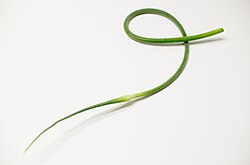
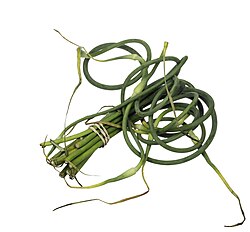
- Culinary Use: Scapes from garlic, chives, garlic chives, and scallions are edible vegetables.
- Occurrence: Found in families such as Liliaceae, Amaryllidaceae, and Papaveraceae.
The Evolution of the Botanical Definition
The term scape originates from the Latin scapus and the Greek σκᾶπος. Historically, the term was used vaguely to describe any stem or stalk. However, modern botanical standards have refined the definition to distinguish it from more general terms like peduncle (the stalk of an individual flower or an entire inflorescence) and inflorescence (the complete flower head of a plant).
Current professional definitions describe a scape as a peduncle arising at or beneath the ground surface in an acaulescent plant (a plant that appears to have no stem). While some descriptive sources focus on the visual aspect—a naked stalk rising from a rosette of leaves—morphological analysis identifies the scape specifically as an internode.
Morphological Characteristics
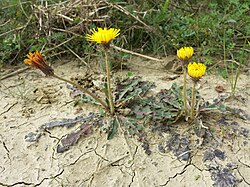
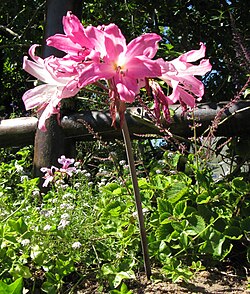
In a strict botanical sense, a scape is a smooth stem without branches or leaves, functioning as a single internode. This differs from a compound peduncle, which is derived from a branch or an entire shoot. Depending on the species, a scape may support a single flower, such as in the genus Tulipa, or it may bear a complex inflorescence at its peak, as seen in Amaryllis.
It is important to note that not all tall flower stalks are scapes. For example, the peduncle of an Agave is not considered a scape in the strict sense because it does not meet the specific morphological criteria of arising from a compressed subterranean stem as a single internode.
Summary of Scape Characteristics
| Feature | Scape | General Peduncle |
|---|---|---|
| Leaf Presence | Leafless or nearly naked | May have leaves or bracts |
| Origin | Directly from bulb, rhizome, or ground | Can arise from other stems or branches |
| Morphology | Essentially a single internode | Can be a compound shoot or branch |
| Examples | Garlic, Amaryllis, Cyclamen | Agave |
Frequently Asked Questions
What is the difference between a scape and a regular stem?
A scape is a specialized type of stem that is leafless and arises directly from a subterranean structure like a bulb or rhizome, whereas a regular stem typically has nodes, leaves, and branches along its length.
Which plants have edible scapes?
The scapes of garlic, scallions, chives, and garlic chives are commonly used as vegetables in various cuisines.
Can a scape have more than one flower?
Yes. While some scapes bear a single flower, others support a terminal inflorescence containing multiple flowers, such as those found in the Amaryllis genus.
In which plant families are scapes commonly found?
Scapes are found across many families, including Amaryllidaceae, Asphodelaceae, Balsaminaceae, Liliaceae, Papaveraceae, Droseraceae, and Violaceae.
Is every flower stalk a scape?
No. To be a scape, the stalk must arise from a subterranean or very compressed stem and function morphologically as an internode. For instance, the peduncle of an Agave is not a scape.