San Juan: The Oasis City of the Cuyo Region
Known as the Oasis City, San Juan serves as the capital and largest urban center of the Argentine province of San Juan. Nestled within the Tulúm Valley in the Cuyo region, this city is a striking example of human resilience and adaptation, thriving in a rocky mountainous landscape west of the San Juan River. Founded in 1562 by Juan Jufré, the city has evolved into a vital hub of culture and agriculture.
With an elevation of approximately 640 to 650 meters above mean sea level, San Juan balances a rugged natural environment with a sophisticated urban layout. While the city proper has a population of around 109,123, the broader metropolitan area supports over 453,000 residents, all known by the demonym sanjuanino.
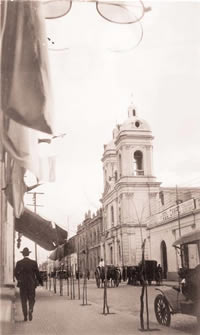
Key Facts
- Founded: 1562 by Juan Jufré.
- Nickname: Oasis City.
- Climate: Desert climate (BWh/BWk) characterized by high sunshine hours.
- Economic Driver: Viticulture, ranking second in wine production among Argentine provinces.
- Major Landmark: San Juan de Cuyo Cathedral (completed 1979).
- Critical Infrastructure: Quebrada de Ullum Dam for water and electricity.
Geography and Climate
San Juan is situated in a fertile valley surrounded by mountains. According to the Köppen climate classification—a system used to categorize climates based on temperature and precipitation—San Juan possesses a desert climate. This is evidenced by its minimal rainfall and abundant sunshine, averaging 3,361.3 hours of bright sunshine annually.
The temperature swings are significant. Summers are hot, with average highs between 19°C and 35°C, reaching a record peak of 46.7°C in December 1995. Winters are generally mild, averaging between 1°C and 16°C, though temperatures can plummet below −9°C.
| Metric | Winter (June/July) | Summer (Dec/Jan) | Annual Average/Record |
|---|---|---|---|
| Mean Daily Max | 16.7°C to 17.3°C | 34.4°C to 35.1°C | 26.4°C (Yearly Mean) |
| Mean Daily Min | 0.3°C to 1.5°C | 18.0°C to 19.8°C | 10.5°C (Yearly Mean) |
| Precipitation | Very Low (1.3–1.8 mm) | Moderate (12.4–17.4 mm) | 90.6 mm (Total) |
Due to the arid conditions, the city relies heavily on the San Juan River. The Quebrada de Ullum Dam was constructed to create a reservoir that ensures a steady water supply for the population and generates electrical power for the region.
Agriculture and the Wine Industry
Agriculture is the backbone of the local economy, with 65% of the surrounding area's production dedicated to wine. San Juan is the second-largest wine-producing province in Argentina, utilizing 116,700 acres of cultivated land at altitudes ranging from 601 to 1,399 meters.
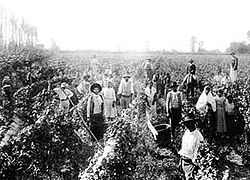
Because of the semi-desert environment, viticulture (the cultivation of grapevines) is entirely dependent on irrigation systems fed by the Jáchal and San Juan Rivers. The region is renowned for several varieties, including:
- Red Varieties: Malbec, Cabernet Sauvignon, Syrah, and Bonarda.
- White Varieties: Chardonnay and Torrontés.
History and Notable Residents
The city's history has been marked by both growth and tragedy. A devastating earthquake on January 15, 1944, claimed approximately 10,000 lives and left half of the provincial population homeless, leading to significant reconstruction efforts.
San Juan has also been home to influential figures across various fields:
- Arts & Music: Juan Pablo Jofre, a renowned bandoneon musician and composer.
- Science & Medicine: Telma Reca, a pioneer in child and adolescent psychiatry.
- Politics: Borja Toranzo, a key participant in the May Revolution.
- Sports: Racing drivers Henry Martin and Ricardo Zunino, and former footballer César Garipe.
Frequently Asked Questions
What is the nickname of San Juan?
San Juan is known as the "Oasis City" because it is a fertile urban center located within a rocky, arid mountainous region.
How does San Juan manage its water supply in a desert climate?
The city utilizes the Quebrada de Ullum Dam to reservoir water from the San Juan River, providing a consistent water source and electrical power.
Which wine varieties are most common in San Juan?
The region specializes in Malbec, Cabernet Sauvignon, Syrah, Bonarda, Chardonnay, and Torrontés.
What was the impact of the 1944 earthquake?
The earthquake on January 15, 1944, was catastrophic, killing roughly 10,000 people and leaving 50% of the province's population homeless.
What is the climate like in San Juan?
San Juan has a desert climate with very sunny weather, hot summers (reaching up to 46.7°C), and mild winters that can occasionally drop below −9°C.