Rusk: From Civil War Commander to Secretary of Agriculture
The life of Rusk is a testament to the diverse paths of leadership in 19th-century America. Born in Malta, Ohio, as the younger brother of Allen Rusk, he began his professional life as a planter before transitioning into innkeeping and banking. A member of the Republican Party, his trajectory shifted dramatically with the onset of the American Civil War, launching a career that would span military command, legislative governance, and national cabinet service.
Military Service in the American Civil War
Rusk entered the Union Army on August 14, 1862, serving as a major in the 25th Wisconsin Volunteer Infantry Regiment. His leadership capabilities were quickly recognized, leading to a promotion to lieutenant colonel on September 16, 1863. A pivotal moment in his military career occurred on July 22, 1864, during the Battle of Atlanta. When Colonel Milton Montgomery was wounded and captured at Decatur, Georgia, Rusk assumed command of the regiment.
Even after Montgomery was exchanged, Rusk remained in command because Montgomery had been elevated to lead the brigade. Rusk's service was marked by bravery and sacrifice; he was wounded at the Salkehatchie River in Georgia on January 20, 1865. He was mustered out of the volunteers on June 7, 1865, having received a brevet colonel appointment effective March 13, 1865. A brevet is an honorary promotion that grants a higher rank without the corresponding pay or permanent authority. On April 10, 1866, the United States Senate confirmed President Andrew Johnson's nomination of Rusk as a brevet brigadier general of volunteers.
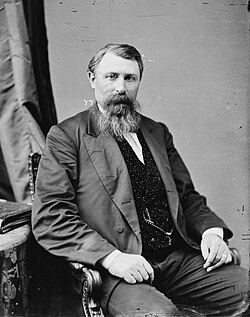
Political Career and Congressional Service
Following the war, Rusk transitioned into the political arena, serving in the United States House of Representatives. He was first elected to the Forty-second Congress, representing Wisconsin's 6th congressional district from March 4, 1871, to March 3, 1873. Due to redistricting, he was elected to represent the newly created 7th District for the Forty-third Congress and was subsequently reelected to the Forty-fourth Congress, serving until March 3, 1877.
During his tenure in Congress, Rusk held a significant leadership role as the chairman of the Committee on Invalid Pensions during the Forty-third Congress, overseeing benefits for disabled veterans.
Governorship and the Bay View Tragedy
After his congressional terms, Rusk successfully ran as a Republican for Governor of Wisconsin. His tenure as governor is most remembered for his response to the May Day Labor Strikes of 1886. As strikers shut down nearly every business in Milwaukee—with the exception of the North Chicago Rolling Mills in Bay View—Rusk deployed the National Guard to maintain order.
The situation escalated into the Bay View Tragedy. While the original orders were to shoot to kill if strikers entered the Mills, a misunderstanding by the captain led to orders to pick out individuals and shoot them. This resulted in the deaths of seven workers.
National Service and Legacy
In 1889, following his third term as governor, Rusk was appointed by President Benjamin Harrison to serve as the Secretary of Agriculture. This cabinet position marked the peak of his federal service. Rusk eventually retired to Viroqua, Wisconsin, where he lived, died, and was buried.
His legacy is preserved in the geography of the state; Rusk County, Wisconsin, was named in his honor. The county was originally known as Gates County until its name was changed in 1905.
Key Facts
- Military Rank: Brevet Brigadier General of Volunteers.
- Congressional Service: Represented Wisconsin's 6th and 7th districts (1871–1877).
- Executive Roles: Governor of Wisconsin and U.S. Secretary of Agriculture.
- Notable Event: Oversaw the National Guard response during the 1886 May Day Labor Strikes.
- Geographic Honor: Rusk County, Wisconsin (renamed from Gates County in 1905).
| Period | Role/Position | Key Detail |
|---|---|---|
| 1862–1865 | Union Army Officer | Commanded 25th Wisconsin Volunteer Infantry |
| 1871–1877 | U.S. Congressman | Chairman of Committee on Invalid Pensions |
| Post-1877 | Governor of Wisconsin | Managed 1886 May Day Labor Strikes |
| 1889 | Secretary of Agriculture | Appointed by Benjamin Harrison |
Frequently Asked Questions
How did Rusk come to command the 25th Wisconsin Volunteer Infantry?
Rusk took command on July 22, 1864, after Colonel Milton Montgomery was wounded and captured during the Battle of Atlanta. He remained in command even after Montgomery's exchange because Montgomery was promoted to lead the brigade.
What was the Bay View Tragedy?
The Bay View Tragedy occurred during the May Day Labor Strikes of 1886 in Milwaukee. Due to a misinterpreted order by the National Guard, seven workers were shot and killed while attempting to strike at the North Chicago Rolling Mills.
Which congressional districts did Rusk represent?
Rusk represented Wisconsin's 6th congressional district from 1871 to 1873, and subsequently represented the newly created 7th District from 1873 to 1877.
What was Rusk's role in the Benjamin Harrison administration?
Rusk served as the Secretary of Agriculture, a cabinet position he accepted in 1889 after completing his third term as Governor of Wisconsin.
How is Rusk remembered in Wisconsin today?
Rusk is honored through the naming of Rusk County, Wisconsin, which was renamed from Gates County in 1905.