history of slaverytransatlantic slave tradechattel slaveryabolitionist movementsancient Mesopotamia

Slavery in Global History: From Ancient Civilizations to Modern Abolition

Slavery in Global History: From Ancient Civilizations to Modern Abolition The history of slavery is a complex and harrowing narrative that spans nearly every culture, nationality, and rel...

Slavery in Global History: From Ancient Civilizations to Modern Abolition

The history of slavery is a complex and harrowing narrative that spans nearly every culture, nationality, and religion known to humanity. From the earliest hunter-gatherer societies to the sophisticated legal frameworks of the modern era, the practice of enslavement has evolved in form and scale. While the social, economic, and legal status of the enslaved varied wildly across different eras, the core of the institution remained the exercise of power and control over another human being.

Slavery was institutionalized as early as the first civilizations. In Mesopotamia, the Code of Hammurabi (c. 1750 BC) documented slavery as an established social institution. While some early forms of servitude were hereditary or based on debt, the rise of large-scale agriculture and economic complexity paved the way for chattel slavery—a system where enslaved people are treated as personal property to be bought and sold.
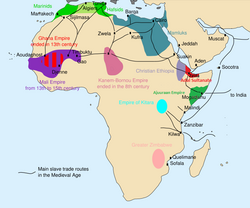
13th-century Africa – Map of the main trade routes and states, kingdoms and empires.

Key Facts

13th century slave market in Yemen.[21]
  • Ancient Origins: Slavery dates back to at least 4000 BC in Sumer, Mesopotamia.
  • Global Reach: The practice was widespread across Europe, Asia, the Middle East, Africa, and the Americas.
  • Transatlantic Trade: Initiated by Portuguese merchants in the 16th century, this trade forcibly moved millions of Africans to the Americas.
  • Legal Evolution: Systems ranged from domestic servitude and debt bondage to industrial-scale plantation slavery.
  • Abolition: Movements in the 18th and 19th centuries led to national bans, though contemporary forms like human trafficking persist.

Regional Systems of Enslavement
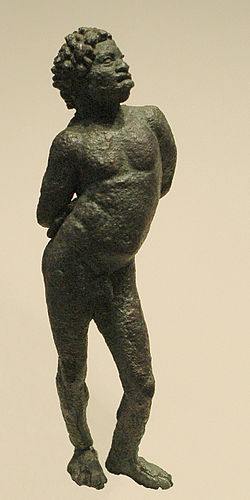
Black slave, Ptolemaic Egypt, 2nd/1st century BC.

Africa and the Islamic World

Islamic slavery operated from the 7th to the 20th century, encompassing Western and Central Asia, Northern and Eastern Africa, and parts of Europe. Under Islamic law, the enslavement of non-Muslims was permitted, leading to extensive trafficking networks. These included the Trans-Saharan, Red Sea, and Indian Ocean trade routes, as well as the Balkan and Crimean trades in the north.
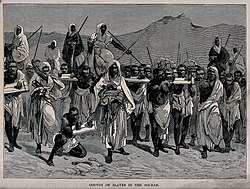
Arab slave-trading caravan transporting Sub-Saharan African slaves across the Sahara, 19th-century engraving

The Transatlantic Slave Trade

Beginning in the 16th century, European merchants—led initially by Portugal—established the transatlantic trade. To avoid tropical diseases and inland violence, traders primarily dealt with West African kingdoms, exchanging guns, gunpowder, cloth, and copper manillas for imprisoned Africans. These captives were then transported across the Atlantic to fuel the labor demands of colonies in the Americas.
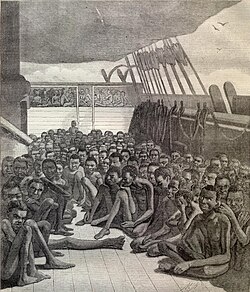
Illustration of slave ship used to transport slaves to Europe and the Americas

Asia and Europe

In Asia, slavery existed in ancient India and China, with records from the Tang dynasty detailing the purchase of slaves for silk and coins. In Europe, while slavery declined during the Early Middle Ages, it persisted through the capture of prisoners of war. During the Mediterranean conflicts, both Christians and Muslims enslaved one another, with the Barbary pirates and Ottoman Empire playing significant roles in the trafficking of captives.
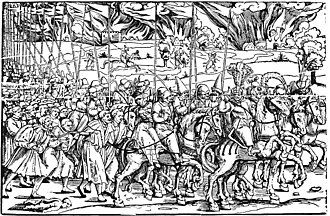
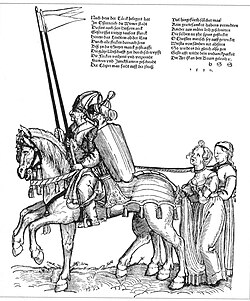
Ottoman Turks with captives from the Hundred Years' Croatian–Ottoman War

The Americas and the Plantation Economy
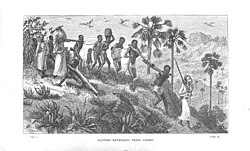
Arab slave traders and their captives along the Ruvuma river (in today's Tanzania and Mozambique), 19th-century drawing by David Livingstone.

In the New World, slavery became the backbone of the colonial economy. In Brazil and the Caribbean, enslaved people were forced into grueling labor on sugar plantations. In the United States, the system evolved through colonial law into a rigid racial hierarchy, eventually becoming a primary cause of the American Civil War.
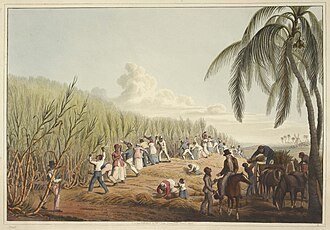
Slaves cutting the sugar cane, British colony of Antigua, 1823

Summary of Major Historical Slave Trade Networks
Trade Network Primary Regions Involved Key Characteristics
Transatlantic Africa, Europe, Americas Industrial scale, racialized, plantation-based labor.
Trans-Saharan Sub-Saharan Africa, North Africa Caravan-based transport across the desert.
Indian Ocean East Africa, Middle East, India Maritime trade involving diverse ethnic groups.
Balkan/Crimean Eastern Europe, Ottoman Empire Captives from warfare and regional raids.

Resistance and the Path to Abolition

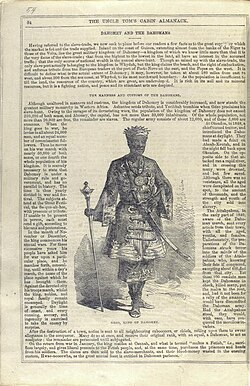
Gezo, King of Dahomey

The fight against slavery grew in intensity during the late 18th century. Abolitionist movements in Britain and France pushed for legislative changes, leading to the curtailment of the slave trade. In the United States, the struggle culminated in the American Civil War and the subsequent emancipation of enslaved people.

Efforts to enforce these laws included the British Preventative Squadron and the American African Slave Trade Patrol. Despite these victories, the 20th century saw the emergence of new forms of forced labor, such as those implemented by the Nazi regime during World War II.
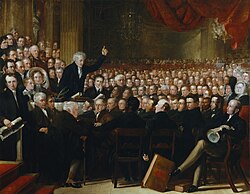
A painting of the 1840 Anti-Slavery Conference.

Frequently Asked Questions
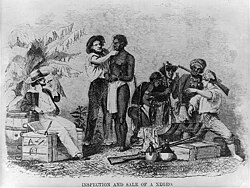
The inspection and sale of a slave.
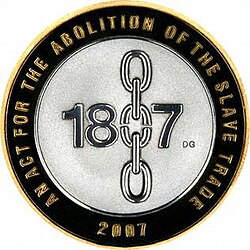
200th anniversary of the British act of parliament abolishing slave trading, commemorated on a British two pound coin.
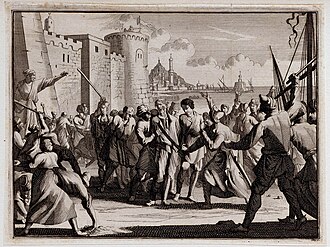
Christian slaves in Algiers, 1706
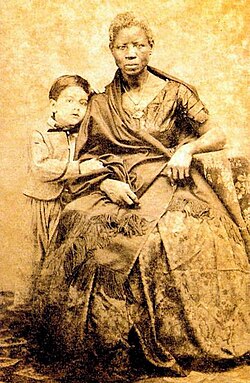
A young boy with an enslaved woman, Brazil, 1860.
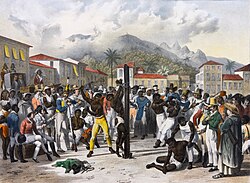
Slavery in Brazil, Johann Moritz Rugendas.
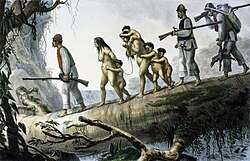
A Guaraní family captured by Indian slave hunters. By Jean Baptiste Debret
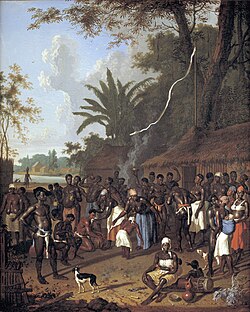
18th-century painting of Dirk Valkenburg showing plantation slaves during a Ceremonial dance.
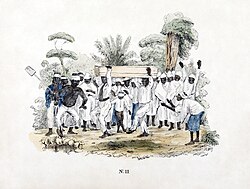
Funeral at slave plantation during Dutch colonial rule, Suriname. Colored lithograph printed circa 1840–1850, digitally restored.
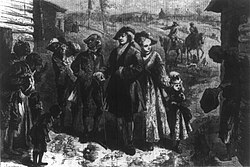
Well-dressed plantation owner and family visiting the slave quarters.
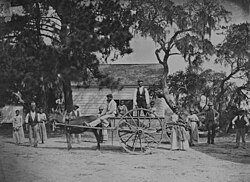
James Hopkinson's plantation, South Carolina ca. 1862.
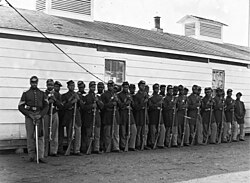
Company E of the 4th US Colored Infantry Regiment USCT
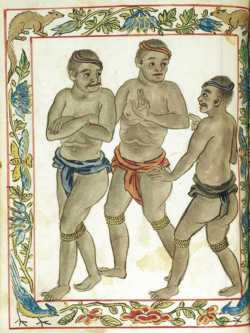
A plate in the Boxer Codex possibly depicting alipin (slaves) in the pre-colonial Philippines.
A contract from the Tang dynasty that records the purchase of a 15-year-old slave for six bolts of plain silk and five Chinese coins.
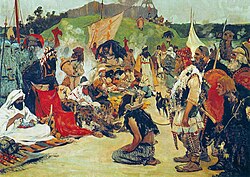
The Slave Trade in Eastern Europe during the High Middle Ages, painting by Sergei Ivanov (1864-1910)
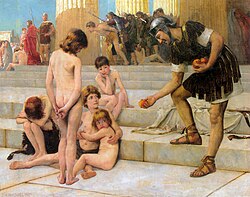
Captives in Rome, a nineteenth-century painting by Charles W. Bartlett
A Meccan merchant (right) and his Circassian slave. Entitled, "Vornehmer Kaufmann mit seinem cirkassischen Sklaven" [Distinguished merchant and his circassian slave] by Christiaan Snouck Hurgronje, c. 1888.
Ottoman advances resulted in many captive Christians being carried deep into Muslim territory.
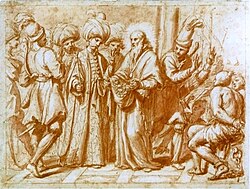
Giovanni Maria Morandi, The ransoming of Christian slaves held in Turkish hands, 17th century
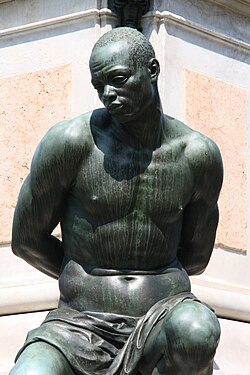
One of the four chained slaves depicted at the bottom of the 17th-century Monument of the Four Moors in Livorno, Italy.
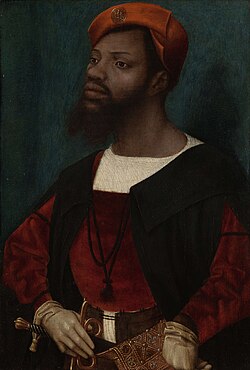
Portrait of an African Man, c. 1525–1530. The insignia on his hat alludes to possible Spanish or Portuguese origins.
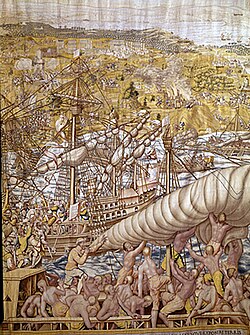
Emperor Charles V captured Tunis in 1535, liberating 20,000 Christian slaves
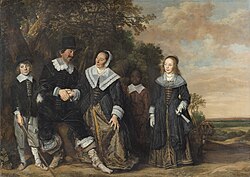
Domestic slave at the center of the composition of "Family Group in a Landscape" (1645-1648) by Fran Hals, now in Thyssen-Bornemisza National Museum, Madrid.
A domestic slave[365] in a Dutch family, as painted by Frans Hals. Display at Thyssen.
Burning of a Village in Africa, and Capture of its Inhabitants (p. 12, February 1859, XVI)[372]
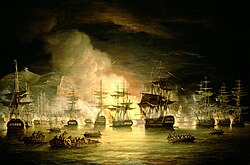
Bombardment of Algiers by Lord Exmouth in August 1816, Thomas Luny
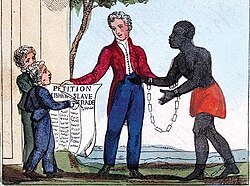
Illustration from the book: The Black Man's Lament, or, how to make sugar by Amelia Opie. (London, 1826)
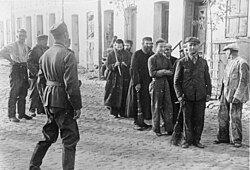
Polish Jews are lined up by German soldiers to do forced labour, September 1939, German-occupied Poland
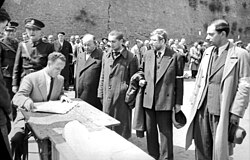
Registration of Jews by Nazis for forced labor, 1941
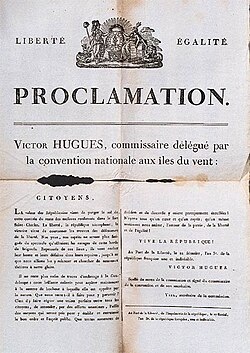
Proclamation of the abolition of slavery by Victor Hugues in the Guadeloupe, 1 November 1794
Protector of Slaves Office (Trinidad), Richard Bridgens, 1838.[413]
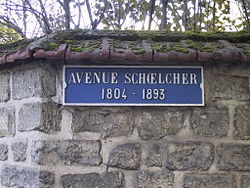
"Avenue Schœlcher 1804-1893", Houilles (France)
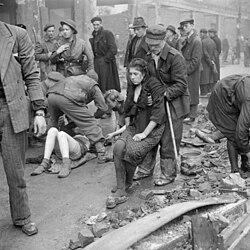
Liberated Russian slave workers, Nazi Germany, April 1945
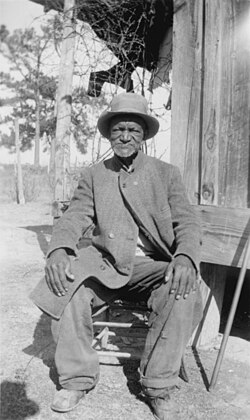
Wes Brady, ex-slave, Marshall, Texas, 1937. This photograph was taken as part of the Federal Writers' Project Slave Narrative Collection, which has often been used as a primary source by historians.

What is the difference between chattel slavery and other forms of servitude?

Chattel slavery is a specific system where the enslaved person is legally considered the personal property of the owner, who can buy, sell, or inherit them. Other forms, such as debt bondage or indentured servitude, are often temporary or based on a contractual obligation.

How did the transatlantic slave trade impact West African societies?

The demand for enslaved people by European merchants drove local warfare and instability, as African kingdoms captured and sold prisoners in exchange for desired goods like firearms and textiles.

When was slavery officially abolished in the Americas?

Abolition happened at different times across the region; for example, France abolished slavery in its colonies in 1794 (though Napoleon later restored it), while the United States ended it following the Civil War in the 1860s.

Does slavery still exist today?

Yes, although legal chattel slavery is abolished worldwide, contemporary slavery exists in the form of human trafficking, forced labor, and debt bondage.

References

  1. Klein, Herbert S.; III, Ben Vinson (2007). African Slavery in Latin America and the Caribbean (2nd ed.). New York [etc.]: Oxford University Press. ISBN 978-0195189421.
  2. Hunt, Peter (2015). "Slavery". The Cambridge World History: Volume 4: A World with States, Empires and Networks 1200 BCE–900 CE. 4: 76–100. doi:10.1017/CBO9781139059251.006. ISBN 9781139059251. Somewhat more convincing are statistical surveys of large numbers of societies that show that slavery is rare among hunter-gatherers, is sometimes present in incipient agricultural societies, and then becomes common among societies with more advanced agriculture. Up to this point slavery seems to increase with increasing social and economic complexity.
  3. Smith, Eric Alden; Hill, Kim; Marlowe, Frank; Nolin, David; Wiessner, Polly; Gurven, Michael; Bowles, Samuel; Mulder, Monique Borgerhoff; Hertz, Tom; Bell, Adrian (February 2010). "Wealth Transmission and Inequality Among Hunter-Gatherers". Current Anthropology. 51 (1): 20–34. Bibcode:2010CurrA..51...19S. doi:10.1086/648530. ISSN 0011-3204. PMC 2999363. PMID 21151711. Summary characteristics of hunter-gatherer societies in the Standard Cross-Cultural Sample (SCSS). [...] Social stratification [: ...] Hereditary slavery 24% [...].
  4. Hunt, Peter (2015). "Slavery". The Cambridge World History: Volume 4: A World with States, Empires and Networks 1200 BCE–900 CE. 4: 76–100. doi:10.1017/CBO9781139059251.006. ISBN 9781139059251. Slavery was a widespread institution in the ancient world (1200 BCE – 900 CE). Slaves could be found in simpler societies, but more important and better known was the existence of slavery in most advanced states. Indeed, it is hard to find any ancient civilizations in which some slavery did not exist. Slave use was sometimes extensive.
  5. Tetlow, Elisabeth Meier Jr. (2004). "Sumer". Women, Crime and Punishment in Ancient Law and Society: Volume 1: The Ancient Near East. Women, Crime, and Punishment in Ancient Law and Society. Vol. 1. New York: A&C Black. p. 7. ISBN 9780826416285. Retrieved 17 March 2019. In Sumer, as in most ancient societies, the institution of slavery existed as an integral part of the social and economic structure. Sumer was not, however, a slavery based economy.