Retired Production Buses of New Jersey Transit History
The evolution of public transportation in New Jersey is mirrored in the diverse fleet of buses that have served its roads over the decades. From the iconic silhouettes of the mid-century to the high-capacity hybrid models of the 2000s, the retired production buses of Transport of New Jersey, NJDOT-owned fleets, and NJ Transit tell a story of changing urban needs and engineering advancements.
This comprehensive look at retired assets covers vehicles acquired across two distinct eras: those entering service before 1980 and the modernized fleet acquired from 1980 onward.
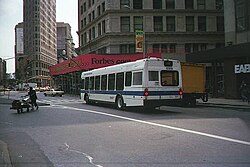
Acquisitions Before 1980
The early fleet was characterized by a mix of inherited vehicles and secondhand purchases. A significant portion of these buses came from the Transport of New Jersey and the Maplewood Equipment Company.
The GMC and MCI Era
Between 1960 and 1973, the GMC "New Look" was a staple of the fleet. This era also saw the introduction of the MCI MC-7 in the late 1960s, many of which were former Greyhound buses. By the 1970s, the fleet expanded to include the GMC PD-4106 and PD-4107, colloquially known as "Buffalo" style buses due to their distinct design.
Specialized and Private Carrier Assignments
In 1973, Highway Products, Inc. TC-31 units were assigned to the Passaic-Athenia Bus Lines. The mid-to-late 1970s saw a surge in Flxible models, including the 35096-8-1 (30 ft), 45102-8-1 (35 ft), and the larger 53096-8-1 and 53102-8-1 (40 ft). Many of these Flxible units were assigned to private carriers, with some featuring single doors and suburban-style seating.
Toward the end of the decade, the fleet was supplemented by secondhand Flxible 870s—purchased to replace destroyed ex-NYCT units—as well as various other secondhand GM Buffalo and Flxible "New Look" models.
Acquisitions After 1980
Post-1980 acquisitions shifted toward standardized production and specialized funding. Notably, buses with a "PA" prefix were purchased using funds from the Port Authority of New York and New Jersey.
The Transition to Modern Transit
The 1980s were dominated by the Grumman-Flxible 870 series and the MCI MC-9. The 1985 introduction of the Volvo B10M articulated bus marked a significant increase in capacity, with 60-foot vehicles serving high-density routes. By the late 80s, the Flxible Metro-B became a common sight, utilizing Detroit Diesel engines and Allison transmissions.
The Rise of the RTS and Hybrid Technology
The 1990s and early 2000s saw the dominance of the Nova Bus RTS (Rapid Transit Series), which offered various configurations from 30 to 40 feet. This era also experimented with alternative fuels, including Compressed Natural Gas (CNG) models like the Flxible Metro-C and the later DesignLine EcoCoach.
Environmental concerns led to the introduction of hybrid systems, such as the Orion 06.501 Low-Floor Hybrid and the Nova Bus RTS-06 82VN hybrid, which utilized the ThunderVolt TB-40 system.
High-Capacity Suburban Coaches
For longer commutes, Motor Coach Industries (MCI) provided the backbone of the suburban fleet. Models like the D4000 and D4500, often equipped with Jacobs engine brakes for safety on inclines, served until the early 2020s.
Key Facts
- Diverse Sourcing: The fleet included inherited vehicles from Transport of New Jersey and secondhand units from Greyhound and NYCT.
- Capacity Range: Vehicle lengths varied from short 30-foot transit buses to 60-foot articulated Volvo models.
- Engine Evolution: Powerplants transitioned from Detroit Diesel series 6V71N and 6V92TA to Cummins ISC and Caterpillar C13 ACERT engines.
- Fuel Innovation: The fleet integrated CNG (Compressed Natural Gas) and hybrid-electric drive systems to reduce emissions.
- Funding: Specific units (PA prefix) were funded by the Port Authority of New York and New Jersey.
Fleet Summary Table
| Builder | Model | Length | Primary Engine | Retirement Period |
|---|---|---|---|---|
| Grumman-Flxible | 870-B / 870-A | 40 ft | Detroit Diesel 6V71N/6V92TA | 1993–2004 |
| Volvo | B10M Articulated | 60 ft | Volvo THD100 | 2003–2004 |
| Nova Bus | RTS-06 Series | 30–40 ft | Cummins ISC / C8.3 | 2011–2017 |
| MCI | D4000 / D4500 | 40–45 ft | Detroit Diesel Series 60 / Cat C13 | 2016–2024 |
| Neoplan | AN459 | 40 ft | Caterpillar C9 | 2020–2021 |
Frequently Asked Questions
What were "Buffalo" buses?
"Buffalo" refers to the distinct styling of certain GMC models, specifically the PD-4106 and PD-4107, which were used in the 1970s.
Which buses were used for suburban routes?
Suburban routes typically utilized MCI models (such as the MC-9, D4000, and D4500) and specific Flxible Metro configurations designed with suburban-style seating.
Did NJ Transit use alternative fuel vehicles?
Yes, the fleet included Compressed Natural Gas (CNG) buses, such as the Flxible Metro-C and the DesignLine EcoCoach, as well as various hybrid-electric models from Orion and Nova Bus.
What does the "PA" prefix signify on some buses?
The "PA" prefix indicates that the vehicle was purchased using funds provided by the Port Authority of New York and New Jersey.
Which was the longest bus in the retired fleet?
The longest vehicles were the Volvo B10M articulated buses, which measured 60 feet in length.