A Comprehensive Guide to the Reptile Database
In the vast and complex study of biology, taxonomy—the science of naming, describing, and classifying organisms—is essential for understanding the natural world. For researchers and enthusiasts interested in the scaled inhabitants of our planet, the Reptile Database serves as a vital scientific resource. This specialized database provides a centralized repository of taxonomic information for all living reptile species, offering a window into the diversity of these ancient creatures.
What is the Reptile Database?
The Reptile Database is a dedicated scientific platform that focuses on the classification of living reptiles. It is important to note that the database specifically tracks extant species, meaning it does not include fossilized remains such as dinosaurs. Instead, it concentrates on the current biological landscape of reptiles.
The database is highly detailed, providing much more than just a list of names. It includes scientific and common names, synonyms (alternative names for the same taxon), and extensive literature references. Users can also find information regarding the distribution (the geographic area where a species is found), etymology (the study of the origin and meaning of the names), and type information. Type information refers to the specific physical specimen used by scientists to formally describe and name a species.
The History and Evolution of the Database
The journey of the Reptile Database began in 1995, when it was founded as the EMBL Reptile Database. Its founder, Peter Uetz, was a graduate student at the European Molecular Biology Laboratory (EMBL) in Heidelberg, Germany, at the time. In its early years, the database utilized a web interface originally developed by Thure Etzold for the EMBL DNA sequence database.
As the project grew, so did its institutional affiliations. In 2006, the database moved to The Institute of Genomic Research (TIGR). Following the merger of TIGR into the J. Craig Venter Institute (JCVI), where Uetz served as an associate professor until 2010, the database underwent further transitions. Since 2010, the Reptile Database has been maintained on servers in the Czech Republic under the joint supervision of Peter Uetz and the Czech programmer Jirí Hošek. In 2021, the database celebrated its 25th anniversary, a milestone shared with the related AmphibiaWeb project.
Data Scope and Scale
The Reptile Database is a constantly expanding resource. Over the last decade, the database has seen an average increase of 100 to 200 new species being described and added each year. As of August 2024, the database contains approximately 12,200 species and roughly 2,200 subspecies. It also features a comprehensive list of primary type specimens, which are the original specimens used to define a species.
Beyond names and classifications, the database is a massive repository of scientific media and documentation, housing more than 60,000 literature references and approximately 22,000 photos.
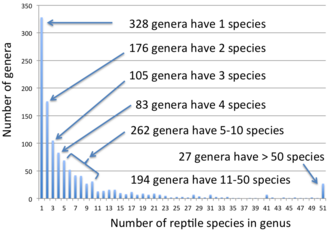
Database Statistics Summary
| Metric | Approximate Value |
|---|---|
| Total Species | 12,200 |
| Total Subspecies | 2,200 |
| Total Genera | 1,250 |
| Literature References | 60,000+ |
| Photos | 22,000 |
Global Scientific Collaboration
The Reptile Database does not exist in isolation; it is a key player in a global network of biological data. It is a member of the Species 2000 project, which contributes to the Catalogue of Life (CoL). The CoL acts as a meta-database, aggregating information from over 150 different species databases to catalog all living species on Earth, which in turn provides data to the Encyclopedia of Life (EoL).
Furthermore, the database maintains several important scientific connections, including:
- Collaboration with the World Register of Marine Species (WoRMS).
- Integration with the citizen science platform iNaturalist.
- Links to the IUCN Red List of threatened species.
- Links from the NCBI taxonomy database.
Key Facts
- Focus: The database tracks all currently recognized living reptile species and subspecies.
- Exclusions: It does not include fossil species, such as dinosaurs.
- Growth: Approximately 100 to 200 new species are added to the database annually.
- Leadership: It is currently supervised by Peter Uetz and Jirí Hošek.
- Data Types: Includes scientific names, synonyms, distribution, etymology, and literature references.
Frequently Asked Questions
Does the Reptile Database include information on extinct reptiles?
No, the database focuses exclusively on living (extant) reptile species and does not include fossil species like dinosaurs.
How current is the information in the database?
While the database is updated regularly, there is typically a lag time of up to a few months before newly described species are available online.
What kind of scientific data can I find there?
You can find scientific and common names, synonyms, literature references, distribution information, etymology, and details regarding type specimens.
Is the Reptile Database part of a larger biological network?
Yes, it is a member of the Species 2000 project and contributes to the Catalogue of Life, and it collaborates with organizations like iNaturalist and the IUCN Red List.
Who is responsible for maintaining the database?
Since 2010, the database has been maintained in the Czech Republic under the supervision of Peter Uetz and Jirí Hošek.