Subspecies: The Nuances of Biological Classification
In the vast effort to categorize life on Earth, scientists use a hierarchical system to organize organisms based on shared characteristics. While most people are familiar with the concept of a species, nature is rarely uniform. Often, populations of the same species develop distinct differences based on where they live. This is where the concept of the subspecies becomes essential.
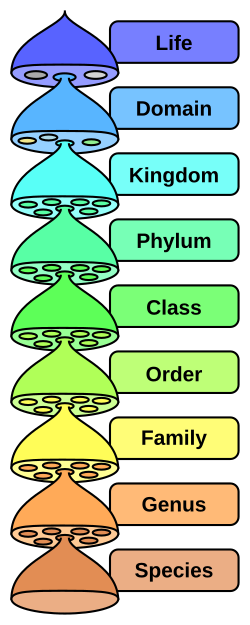
A subspecies is a taxonomic rank—a level of classification—that sits directly below the species level. It is used to describe populations that live in different geographic areas and exhibit variations in morphology (their physical size, shape, or other structural characteristics) but are still capable of successfully interbreeding. For a species to be considered as having subspecies, there must be at least two distinct groups identified.
How Subspecies Are Identified
The decision to recognize a population as a subspecies is made by a taxonomist. One of the primary criteria used is the ability of two populations to interbreed and produce offspring, even if some male offspring happen to be sterile. This distinguishes them from full species, which generally cannot interbreed.
In the wild, however, subspecies typically do not interbreed. This is usually due to geographic isolation (being physically separated by mountains, oceans, or distance) or sexual selection (preferences in mating behaviors). Because they are still part of the same species, the physical differences between subspecies are generally less pronounced than the differences between two entirely separate species.
The Rules of Scientific Naming (Nomenclature)
The way a subspecies is named depends on the scientific field and the specific code of nomenclature—the formal set of rules for naming organisms—being followed.
Zoology and the Trinomen
In zoology, governed by the International Code of Zoological Nomenclature (ICZN), the subspecies is the only rank below the species level that can be officially named. While a species uses a binomen (a two-word Latin name consisting of the genus and the species), a subspecies uses a trinomen.
A trinomen adds a third word to the binomen to identify the specific subspecies. For example, the leopard's binomen is Panthera pardus. To identify the Indian leopard, the trinomen Panthera pardus fusca is used. In these cases, all three parts of the name are written in italics.
Botany, Mycology, and Bacteriology
Other fields have more flexible systems for naming ranks below the species level:
- Botany and Mycology: Under the International Code of Nomenclature for algae, fungi, and plants, scientists can use several ranks, such as variety, subvariety, form, and subform. To specify a subspecies, the name must be preceded by "subspecies" or its abbreviation "subsp." (or occasionally "ssp."). An example is Schoenoplectus californicus subsp. tatora.
- Bacteriology: In the naming of bacteria, the subspecies is the only rank explicitly regulated by the code, though other "infrasubspecific" taxa are often used. Names published as "varieties" before 1992 are now treated as subspecies. An example is Bacillus subtilis subsp. spizizenii.
Special Classifications and Naming Conventions
Nominotypical Subspecies and Autonyms
When a species is first described and later split into multiple subspecies, the original population is designated as the nominotypical subspecies (also called the nominate or definitive subspecies). In zoology, this subspecies repeats the species name. For instance, the white wagtail (Motacilla alba) has a nominotypical subspecies called Motacilla alba alba.
In botanical nomenclature, this repeating name is referred to as an autonym, and the taxon itself is called an autonymous subspecies.
Handling Taxonomic Disagreements
Taxonomy is not always settled. When zoologists disagree on whether a population is a distinct species or merely a subspecies, they may place the species name in parentheses. For example, Larus (argentatus) smithsonianus refers to the American herring gull. This notation indicates that some experts view it as a subspecies of a larger group (Larus argentatus smithsonianus), while others view it as a full species (Larus smithsonianus).
Polytypic vs. Monotypic Species
Biologists categorize species based on whether they possess these divergent populations.
Polytypic Species
A polytypic species consists of two or more subspecies, races, or populations that are genetically and phenotypically (physically) different enough to warrant separate descriptions. While they are isolated in nature, they can produce fertile offspring if brought together, such as in captivity.
Monotypic Species
A monotypic species is one where all populations share the same genetic and physical characteristics. This occurs in three main scenarios:
- All members are so similar that they cannot be divided into meaningful subcategories.
- Individuals vary, but the variation is random and not genetically passed down in a consistent pattern.
- Variation exists but is clinal—meaning it changes gradually across a landscape without clear dividing lines. This suggests a steady flow of genes between groups, maintaining the species as a single unit.
Summary of Subspecific Nomenclature
The following table summarizes how different biological disciplines handle the naming and ranking of subspecies.
| Field | Governing Code | Naming Format | Other Lower Ranks? |
|---|---|---|---|
| Zoology | ICZN | Trinomen (Three words) | No |
| Botany/Mycology | ICN | Binomen + "subsp." + name | Yes (Variety, Form, etc.) |
| Bacteriology | Bacterial Code | Binomen + "subsp." + name | Recommended, but not strictly required |