Genus: The Bridge of Biological Classification
Ever wondered how scientists organize the millions of species on Earth? To make sense of the vast diversity of life, biologists use a hierarchical system of classification. One of the most critical levels in this hierarchy is the genus (plural: genera). Positioned above the species and below the family, the genus serves as a vital grouping tool for living organisms, fossils, and even viruses.
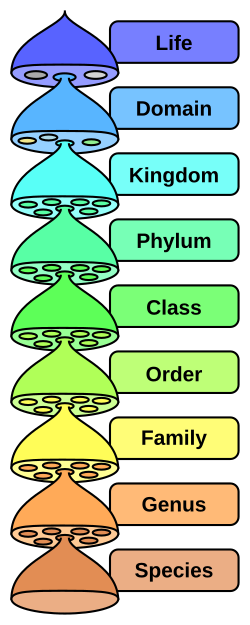
In the system of binomial nomenclature—the formal process of naming species using two parts—the genus name forms the first half of an organism's scientific name. For example, the lion (Panthera leo) and the jaguar (Panthera onca) both belong to the genus Panthera, which in turn is part of the family Felidae. This system allows scientists worldwide to communicate clearly, avoiding the confusion of regional common names.
How is a Genus Defined?
The composition of a genus is determined by taxonomists (scientists who specialize in classification). While there is no single, rigid rulebook, most experts agree that a newly defined genus should meet three primary criteria to be scientifically useful:
- Monophyly: The genus must be monophyletic, meaning it includes all descendants of a single common ancestor. This is typically proven through phylogenetic analysis, which maps evolutionary lineages.
- Reasonable Compactness: To remain useful, a genus should not be expanded needlessly; it should remain a focused group.
- Distinctness: A genus must be distinguishable from others based on evolutionarily relevant criteria, such as morphology (physical structure), ecology, or biogeography. While DNA sequences are often used to confirm these splits, they are viewed as a result of evolution rather than the primary condition for defining a genus.
The Rules of Scientific Naming
The naming of genera is governed by strict nomenclature codes to ensure every organism has a unique, standardized name. These rules differ slightly between zoology (animals) and botany (plants, fungi, and algae), but several core conventions apply across the board.
Formatting and Style
The generic name is always capitalized and, by convention, written in italics. When combined with the specific epithet (the second part of the name, which is written in lowercase), it forms the full species name. For instance, the gray wolf is Canis lupus, where Canis is the generic name. If the genus has already been mentioned in a text, it can be abbreviated to its first letter, such as C. lupus.
The Type Concept
To maintain stability, every genus should have a designated type. In zoology, this is a type species. The generic name is permanently linked to the type specimen of that species. If a specimen is later moved to a different genus, the original generic name may become a junior synonym, requiring a reassessment of all other species within that group.
Synonyms and Homonyms
Because taxonomy evolves as new data emerges, naming conflicts can occur:
- Synonyms: These are different names that have been applied to the same genus over time. This often happens when two separate genera are consolidated into one.
- Homonyms: This occurs when the same name is accidentally given to two different genera. Within a single kingdom, this is not allowed. For example, the name Platypus was used for both a beetle and the platypus; because both are animals, the platypus was renamed Ornithorhynchus. However, the same name can exist in different kingdoms (e.g., Aotus refers to both a type of pea and a type of monkey).
Genus by the Numbers
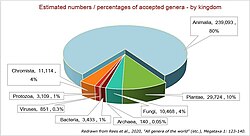
Precisely counting every genus on Earth is challenging because new ones are discovered and others are merged constantly. According to estimates by Rees et al. (2020), there are approximately 310,000 accepted genus names out of roughly 520,000 published names, with about 2,500 new generic names published every year.
| Kingdom | Estimated Accepted Genera |
|---|---|
| Animalia | 239,093 (± 55,350) |
| Plantae | 28,724 (± 7,721) |
| Chromista | 11,114 (± 1,268) |
| Fungi | 10,468 (± 182) |
| Bacteria | 3,433 (± 115) |
| Protozoa | 3,109 (± 1,206) |
| Viruses | 851 (± 0) |
| Archaea | 140 (± 0) |
Variations in Genus Size
The number of species within a genus varies dramatically across different groups of life. In some cases, a genus may contain only a single species, while in others, it may encompass thousands.
For example, among non-avian reptiles, the majority of genera are small; over 300 of the roughly 1,180 reptile genera contain only one species. In contrast, some insect genera, such as the bees Lasioglossum and Andrena, contain over 1,000 species each. The flowering plant genus Astragalus is even larger, boasting more than 3,000 species.
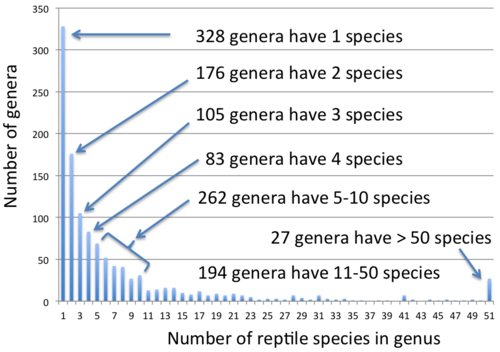
This disparity often leads to debate among taxonomists. Some argue that "mega-genera" are too large to be practical for identification and should be split into smaller, more manageable subsets. A current example of this debate involves the lizard genus Anolis, which some scientists suggest should be divided into approximately eight different genera to better organize its 400 species.