Rearguard Actions: Military Tactics and Strategic Defense
In the complex choreography of warfare, protecting a force while it is in motion is as critical as the attack itself. A rearguard, also known as rear security, is a specialized military detachment tasked with protecting a force from attacks originating from the rear. Whether an army is advancing toward an objective or conducting a strategic withdrawal, the rearguard ensures that the main body remains secure from ambush or pursuit.
Beyond the immediate protection of troops, the term also extends to the safeguarding of vital communication lines located behind an army. In a broader, non-military sense, the term has evolved into an idiom describing a desperate attempt to prevent an outcome that is likely already inevitable.
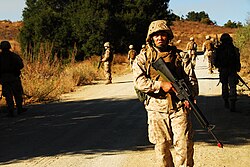
Key Facts
- Primary Purpose: To protect the main body of a force from rear attacks during advance or retreat.
- Tactical Methods: Can be defensive (holding strongpoints) or offensive (spoiling attacks).
- Historical Evolution: Transitioned from cavalry-led operations to mechanized and armored force tactics.
- High Risk: Rearguard units often face heavy casualties to ensure the survival of the larger force.
- Etymology: Derived from the Old French reregarde, meaning "the guard which is behind."
Origins and Historical Evolution
Medieval Foundations
The concept of the rearguard dates back to medieval military customs, where armies were typically divided into three "wards" or battles: the Van (front), the Main (middle), and the Rear. The Rear Ward followed the other two during marches. When deployed in a column, they formed the back of the line; when deployed in a line, they typically occupied the left-hand ward.
The Shift to Modern Tactics
The tactical definition of the rearguard was largely solidified during the battles of the late 19th century. Before the advent of mechanization, these roles were primarily filled by cavalry due to their speed and mobility. As warfare evolved, these responsibilities were extended to highly mobile infantry and eventually to armored and mechanized forces.
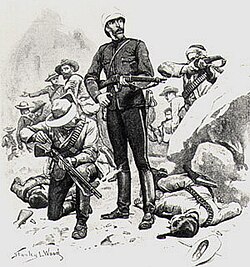
Tactical Applications of the Rearguard
Narrow vs. Expansive Definitions
In a narrow tactical sense, a rearguard is a covering detachment. Its specific charge is to execute defensive or retrograde movements (movements away from the enemy) to prevent the opponent from interfering with the main body's movement.
During the world wars, a more expansive definition emerged. Rearguards became units of regular or irregular troops used to protect the withdrawal of large numbers of personnel—both military and civilian. By blocking or delaying the enemy, they buy precious time for the main force to regroup or reorganize.
Defensive and Offensive Strategies
Rearguard actions are not always passive. They can be executed in two primary ways:
- Defensive: Holding tactically important terrain or fortified strongpoints to stall the enemy.
- Offensive: Launching a spoiling attack—a defensive strike intended to preempt or impair an enemy's assault while the enemy is still assembling or preparing.
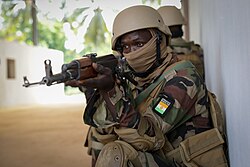
Notable Historical Examples
The history of warfare provides several stark examples of rearguard actions, often characterized by desperate combat and significant sacrifice:
| Event | Date | Context/Outcome |
|---|---|---|
| Rorke's Drift | 1879 | Zulu War defensive action. |
| Battle of Tirad Pass | 1899 | Strategic delaying action. |
| Serbian Army Retreat | 1915–1916 | Protected 125,000–145,000 soldiers and refugees through Albania and Montenegro. |
| Battle of Dunkirk | 1940 | Large-scale evacuation of Allied forces. |
| 97th Foreign Legion Group | 1940 | Conducted a spoiling attack against German tanks to protect French withdrawal; unit was entirely lost. |
The Idiomatic Use of "Rearguard Action"
Outside of military science, "fighting a rearguard action" is a common idiom. It describes a situation where someone is working intensely to prevent a failure or a negative event, despite the fact that it is likely too late to stop it. This phrasing is frequently used in political commentary and by sportswriters to describe teams trying to avoid an inevitable defeat.
Frequently Asked Questions
What is the main difference between a vanguard and a rearguard?
While the vanguard is the leading part of an advancing military force, the rearguard is the detachment that protects the rear of the force during movement or retreat.
What is a spoiling attack in the context of a rearguard?
A spoiling attack is an offensive maneuver used defensively. It aims to disrupt the enemy's preparations for an assault by attacking them while they are still assembling their forces.
Why are rearguard actions often described as "desperate"?
Rearguard units are often tasked with holding back a superior force to allow others to escape. This frequently requires the rearguard to incur heavy casualties or sacrifice their entire strength to ensure the main body's survival.
Can a rearguard consist of non-military personnel?
While the rearguard itself consists of combat troops (regular or irregular), their purpose is often to protect a wider group that may include civilian refugees, as seen during the Serbian retreat of 1915–1916.